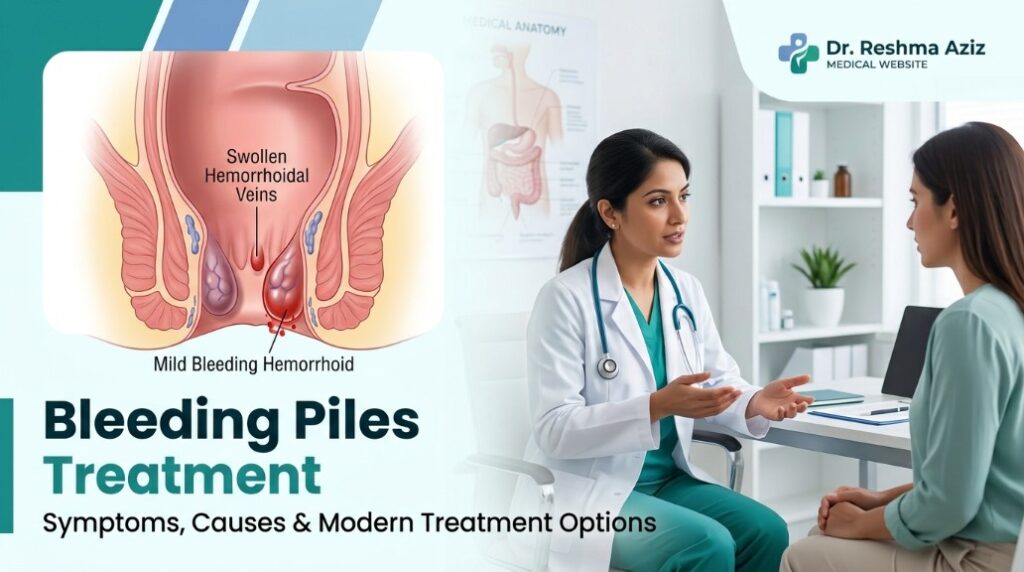
Seeing blood after a bowel movement is alarming, even when the cause turns out to be something as common as piles. If you’ve noticed bright red blood on the tissue, in the toilet bowl, or streaked on your stool, you’re likely searching for reliable information on bleeding piles treatment and rightly so, because bleeding is one symptom you should never simply ignore or self-diagnose. This guide explains what causes bleeding piles, how doctors grade severity, which treatments actually work (including options without surgery), and when blood in your stool could signal something more serious than hemorrhoids.
What Are Bleeding Piles?
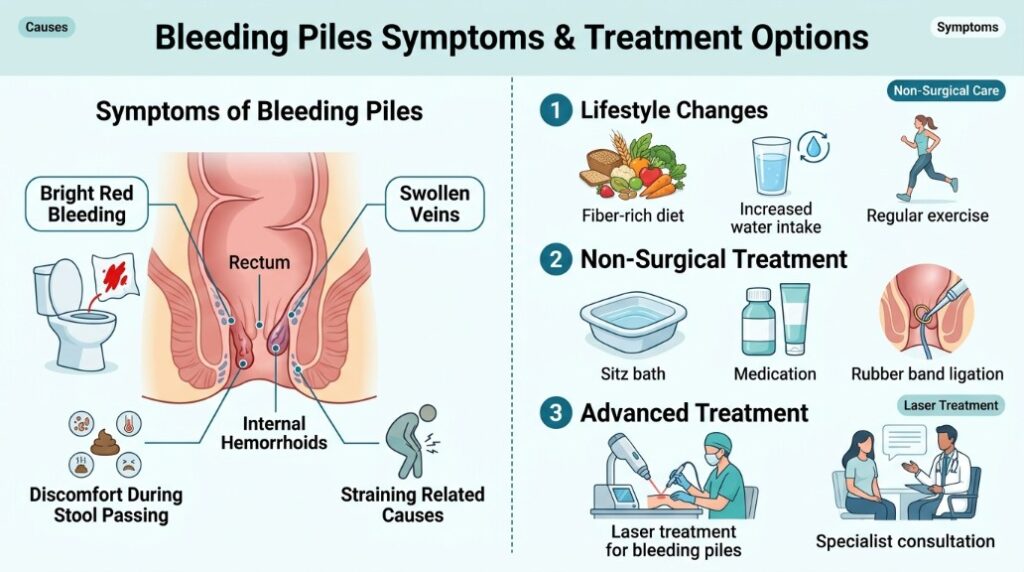
Bleeding piles are hemorrhoids swollen veins inside or around the anus that have become irritated or damaged enough to bleed, usually during or after passing stool. Internal piles are the most common source of rectal bleeding because the swollen tissue sits along the path stool travels and can tear or rupture under pressure.
Quick Answer: Bleeding piles occur when hemorrhoidal tissue becomes inflamed and its surface breaks, usually from straining. The blood is typically bright red, appears during or right after a bowel movement, and is usually painless when the piles are internal.
This painless quality is actually a useful clue. Internal piles bleeding is common precisely because the upper rectum has fewer pain nerves than the lower anal canal which is why many people bleed for weeks before they even notice discomfort.
Common Causes of Bleeding Piles
Understanding what triggers bleeding helps guide both treatment and prevention. The most frequent causes include:
- Chronic constipation — hard stools force excessive straining, which damages swollen veins
- Prolonged sitting on the toilet, which increases pressure in the anal canal
- Low-fiber diets that lead to harder, less frequent stools
- Pregnancy, due to increased pelvic and abdominal pressure
- Heavy lifting or intense physical exertion
- Chronic diarrhea, which repeatedly irritates hemorrhoidal tissue
- Obesity, which raises pressure on pelvic veins
- Aging, as supporting tissue around the anal canal naturally weakens over time
Most cases of piles bleeding trace back to one or more of these everyday factors rather than anything rare or unusual.
Grades of Bleeding Piles: Why Severity Matters
Doctors classify internal hemorrhoids into four grades, and this grading directly shapes the treatment plan:
| Grade | Description | Typical Bleeding Pattern |
|---|---|---|
| Grade 1 | Small, stay inside the rectum | Occasional light bleeding |
| Grade 2 | Prolapse during straining, retract on their own | Bleeding more noticeable |
| Grade 3 | Prolapse and need manual pushing back in | Bleeding plus a sense of fullness |
| Grade 4 | Permanently prolapsed, can’t be pushed back | Bleeding, discomfort, and irritation |
Grade 2 bleeding piles treatment usually responds well to non-surgical options, while Grade 3 and 4 cases more often require a procedural or surgical approach. You can review a full breakdown in this guide to the grades of piles from stage 1 to 4.
Bleeding Piles Treatment Without Surgery
For Grade 1 and Grade 2 cases, piles bleeding treatment without surgery is often sufficient. Non-surgical, painless bleeding piles treatment options in Dhaka typically include:
- Dietary fiber increase — 25–30 grams daily to soften stool and ease straining
- Adequate hydration — at least 2–3 liters of water per day
- Sitz baths — warm water soaks for 10–15 minutes to reduce inflammation
- Topical treatments — creams or suppositories to reduce swelling and irritation
- Stool softeners — prescribed short-term to reduce straining
- Rubber band ligation — a quick, non-surgical in-clinic procedure that cuts off blood flow to the hemorrhoid, causing it to shrink and fall off within days
- Sclerotherapy — a solution injected into the hemorrhoid to shrink it, done without incisions
These options are generally described as painless bleeding piles treatments because they involve little to no cutting and allow most patients to return to normal activity the same day. You can find further guidance in this resource on piles home remedies for early-stage symptom management.
When Non-Surgical Treatment Isn’t Enough
If bleeding continues despite conservative measures, or the piles are Grade 3–4, a doctor may recommend escalation. This is where laser treatment for bleeding piles in Dhaka has become a preferred option, since it typically causes less post-procedure pain and a faster recovery than traditional open surgery. You can review procedure details and expected costs in this guide on laser piles surgery cost in Bangladesh.
Surgical Options for Severe or Chronic Bleeding Piles
Severe bleeding piles treatment and chronic bleeding piles treatment may require a surgical approach when:
- Bleeding is heavy, frequent, or doesn’t respond to non-surgical care
- Piles are Grade 3 or 4 and causing ongoing discomfort
- There’s a risk of anemia from long-term, unaddressed blood loss
- Prolapse is affecting daily activities
Surgical options for piles bleeding surgery in Dhaka include:
- Laser hemorrhoidectomy — minimally invasive, shorter recovery, reduced bleeding risk
- Stapled hemorrhoidopexy — repositions prolapsed tissue and cuts blood supply to shrink piles
- Conventional hemorrhoidectomy — reserved for the most severe or recurrent cases
A qualified specialist will assess the grade, bleeding pattern, and overall health before recommending which option fits best this is not a decision to make from a symptom checklist alone.
Blood in Stool From Piles: When to Worry
Not all rectal bleeding is from piles, and this is the single most important point in this guide. While hemorrhoids are the most common cause of blood in stool, several other conditions can look similar on the surface:
- Anal fissures — small tears causing sharp pain plus bleeding (see this comparison of anal fissure vs. piles)
- Chronic constipation-related trauma — repeated straining injury, explored further in this guide to chronic constipation treatment in Dhaka
- Inflammatory bowel conditions
- Colorectal polyps or, rarely, colorectal cancer — more likely with dark or maroon-colored blood, unexplained weight loss, or a change in bowel habits
Short Answer: Bright red blood only on the tissue or stool surface is usually from piles. Dark, mixed-in blood, blood with mucus, or bleeding alongside weight loss or fatigue needs prompt medical evaluation to rule out other causes.
This is why a proper rectal bleeding evaluation in Dhaka matters especially for first-time bleeding, bleeding that persists beyond two weeks, or bleeding in anyone over 40. In some cases, a colonoscopy may be recommended simply to confirm the diagnosis and rule out other conditions.
Choosing the Best Doctor for Bleeding Piles in Dhaka
If you’re searching for the best doctor for bleeding piles in Dhaka, look for a specialist who:
- Has formal training in colorectal or general surgery, not just general practice
- Offers both non-surgical and surgical treatment paths
- Explains your specific grade and bleeding pattern clearly before recommending treatment
- Has verifiable medical credentials and hands-on surgical experience
Dr. Reshma Aziz is a Dhaka-based specialist who evaluates and treats bleeding piles across all grades, from conservative management to laser-based procedures. Her registration with the Bangladesh Medical and Dental Council can be verified through her BMDC credential record (Reg. No. A-24611).
For patients who’d prefer to discuss symptoms with a bleeding hemorrhoids doctor near me who understands the specific concerns of female patients, the practice also details its approach as a female surgeon in Dhaka, alongside broader piles treatment in Dhaka services and general piles symptoms to help you self-assess before your visit.
Preventing Bleeding Piles From Coming Back
Treatment resolves the immediate problem, but prevention keeps it from recurring:
- Eat a high-fiber diet consistently, not just when symptoms flare
- Stay well hydrated throughout the day
- Avoid straining or spending long periods on the toilet
- Exercise regularly to support healthy bowel movements
- Treat constipation early rather than waiting for symptoms to worsen
Key Takeaways
- Bleeding piles are usually caused by straining, constipation, or prolonged pressure on hemorrhoidal veins.
- Bright red blood on the tissue or stool surface is the classic sign of piles-related bleeding.
- Grade 1–2 piles often respond well to non-surgical, painless treatment options.
- Grade 3–4 or chronic bleeding piles may need laser treatment or surgery.
- Dark blood, weight loss, or bleeding that persists needs prompt medical evaluation to rule out other causes.
Frequently Asked Questions
1. What is the fastest bleeding piles treatment?
For mild cases, rubber band ligation or sclerotherapy offers quick relief within days. For more severe cases, laser treatment provides faster recovery than traditional surgery.
2. Is bleeding from piles dangerous?
Occasional light bleeding from piles is common and usually not dangerous, but ongoing or heavy bleeding can lead to anemia and should be evaluated by a doctor.
3. Can bleeding piles heal without surgery?
Yes, Grade 1 and Grade 2 bleeding piles often heal with dietary changes, sitz baths, and topical treatment. Surgery is generally reserved for more advanced or persistent cases.
4. How do I know if my blood in stool is from piles or something else?
Bright red blood only on the surface of stool or tissue is typically from piles. Dark or maroon blood, blood mixed into the stool, or bleeding with other symptoms like weight loss should be evaluated promptly.
5. What does Grade 2 bleeding piles treatment involve?
Grade 2 piles usually respond to non-surgical treatments like fiber intake, sitz baths, and in-clinic procedures such as banding, without requiring open surgery.
6. How long does it take for bleeding piles to heal?
With proper non-surgical treatment, mild bleeding piles often improve within 1–2 weeks. More severe cases may take longer, especially if a procedure is required.
7. Can pregnancy cause bleeding piles?
Yes, increased pelvic pressure during pregnancy is a common cause of bleeding piles. Most cases are managed conservatively until after delivery unless symptoms are severe.
Final Thoughts
Bleeding piles are common, treatable, and rarely a sign of anything dangerous on their own but blood in your stool is still your body’s way of asking for attention. Getting an accurate diagnosis early means faster relief and a treatment plan that actually matches your condition, rather than guessing based on symptoms alone. If you’re noticing blood after bowel movements, don’t wait for it to become a bigger problem book a consultation with Dr. Reshma Aziz for a proper evaluation and personalized treatment plan.