

Colonoscopy in Bangladesh is a medical examination that allows a doctor to inspect the rectum and entire colon using a thin, flexible camera. It can identify bleeding, inflammation, ulcers, polyps and possible cancer. Preparation usually begins one or more days beforehand, and many patients receive sedation for comfort.
This guide explains why colonoscopy is recommended, how the procedure works, what it may cost and how to prepare safely in Dhaka.
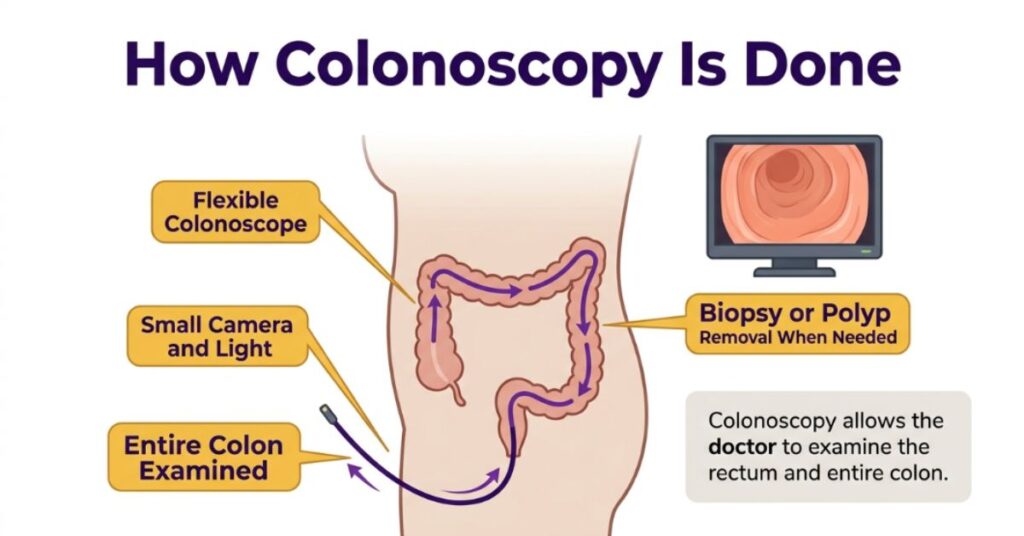
During colonoscopy in Bangladesh, a trained clinician passes a flexible colonoscope through the anus and carefully examines the large bowel. Biopsies can be taken and many polyps can be removed during the same procedure. Most patients return home that day, but anyone receiving sedation needs an escort and must follow the facility’s safety instructions.
Colonoscopy in Bangladesh: What Can It Detect?
A colonoscopy is an endoscopic test of the rectum and colon. The colonoscope contains a camera, light and channels for air, water and small instruments. Images appear on a monitor, allowing the clinician to examine the bowel lining.
Colonoscopy in Bangladesh may help detect:
- Colorectal polyps
- Colon or rectal cancer
- Inflammatory bowel disease
- Sources of intestinal bleeding
- Ulcers or inflamed tissue
- Narrowing inside the colon
- Diverticular disease
- Causes of unexplained bowel symptoms
A biopsy means removing a tissue sample for laboratory examination. It does not automatically mean cancer is suspected. Biopsy can distinguish inflammation, infection, benign changes and malignant disease. A polyp can often be removed before it causes future problems.
According to the National Cancer Institute, colonoscopy examines the entire colon and rectum and allows abnormal growths to be removed during the examination. However, no test finds every abnormality, and results must be interpreted with the patient’s history.
When Is Colonoscopy in Bangladesh Needed?
A doctor may recommend colonoscopy in Bangladesh to investigate symptoms, follow an abnormal test, monitor an existing disease or screen someone at increased risk.
Common reasons include:
- Blood in the stool or rectal bleeding
- Unexplained iron-deficiency anaemia
- Persistent change in bowel habits
- Long-lasting diarrhoea or selected constipation cases
- Unexplained abdominal pain or weight loss
- Positive stool screening result
- Previous polyps or colorectal cancer
- Family history of colorectal cancer
- Inflammatory bowel disease surveillance
- Abnormal imaging requiring direct examination
Colonoscopy for blood in stool
Blood in stool can result from piles, fissures, inflammation, polyps, diverticular disease or cancer. The colour and amount of blood do not reliably identify the cause. A clinician considers age, examination, bowel changes, anaemia, weight loss and family history before recommending colonoscopy.
If bleeding is heavy, accompanied by faintness, black stool, severe abdominal pain or weakness, seek urgent care. Read more about blood in stool treatment in Dhaka.
Colonoscopy and colorectal cancer screening
International recommendations commonly advise average-risk colorectal screening from age 45, but the appropriate test and schedule depend on local guidance, medical history and access. Screening may begin earlier for strong family history, inherited syndromes, inflammatory bowel disease or previous advanced polyps.
Colonoscopy is needed when symptoms or risk factors suggest that direct examination, biopsy or polyp removal could change care. It is not automatically required for every episode of constipation or minor bleeding.
Preparing for Colonoscopy in Bangladesh
Good bowel preparation is essential. Stool can hide small polyps, reduce accuracy and sometimes force the procedure to be repeated. Follow the exact instructions provided by the endoscopy unit because products and schedules differ.
Before the test
Tell the clinician about:
- Blood thinners and antiplatelet medicines
- Diabetes medicines or insulin
- Kidney, heart, liver or lung disease
- Pregnancy or possible pregnancy
- Allergies and previous sedation problems
- Constipation or difficulty finishing bowel preparation
- Implanted medical devices
Never stop an important medicine without instructions. The endoscopy team may adjust timing or request tests according to individual risk.
Diet and bowel-cleansing medicine
Patients are often asked to modify food intake and later switch to permitted clear liquids. A prescribed laxative causes frequent watery bowel movements until the colon is clean. Split dosing, where part is taken later in the schedule, may improve cleansing, but patients must use their facility’s instructions.
During colonoscopy preparation in Bangladesh:
- Read the instructions several days early.
- Purchase the prescribed preparation, not an alternative.
- Plan easy access to a toilet.
- Drink approved fluids to reduce dehydration risk.
- Stop drinking at the exact time instructed.
- Call the unit if vomiting prevents completion.
- Arrange an adult escort if sedation is planned.
How Colonoscopy in Bangladesh Is Done
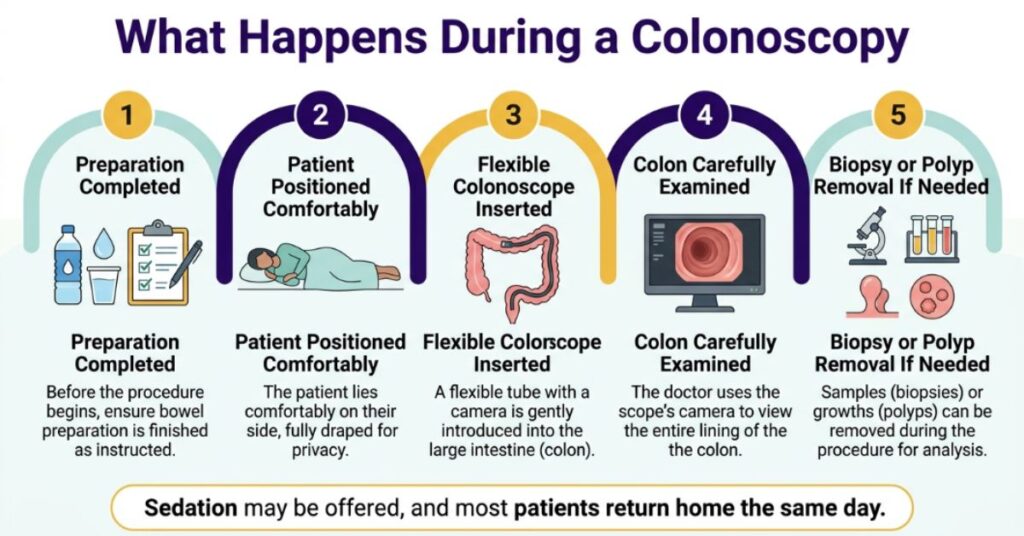
On arrival, staff confirm identity, medical history, medicines, allergies, preparation quality and consent. Vital signs are checked. The patient changes into appropriate clothing and lies on the side.
The clinician gently inserts the lubricated colonoscope and advances it through the colon. Carbon dioxide or air expands the bowel for visibility. Water may help clean the lining. The instrument is slowly withdrawn while the clinician carefully inspects each segment.
If a polyp or abnormal area is found, small instruments can pass through the scope to remove tissue, control bleeding or take biopsies. Removed material is sent to a pathology laboratory. Procedure duration varies with bowel anatomy, findings and treatment performed.
Colonoscopy with sedation in Dhaka
Sedation can reduce anxiety and discomfort, but depth and availability differ by facility. Some patients remain relaxed and responsive; deeper sedation requires closer monitoring. Pain medicine may also be used.
Colonoscopy without sedation Bangladesh
Some patients undergo colonoscopy without intravenous sedation or with minimal comfort medicine. Advantages may include faster alertness and avoiding sedative effects. Discomfort may be more noticeable, and this approach is not suitable for everyone.
Discuss preferences, medical conditions and previous experiences before colonoscopy in Bangladesh. The safest plan depends on the patient, expected procedure complexity and available monitoring.
Is Colonoscopy in Bangladesh Painful and What Are the Risks?
Many patients feel pressure, bloating or cramps rather than continuous pain. Discomfort may occur when the scope passes bends or when the colon is expanded. Sedation, careful technique, position changes and carbon dioxide can improve comfort.
Colonoscopy side effects and risks include temporary bloating, mild cramps and a small amount of bleeding after biopsy or polyp removal. Less common but important complications include significant bleeding, perforation, infection and reaction to sedation.
The NIDDK colonoscopy guide identifies bleeding, bowel perforation, sedative reactions and severe abdominal pain as recognised risks. Risk varies with age, health, medicines and whether treatment is performed during colonoscopy in Bangladesh.
| Option | Main benefit | Main limitation |
|---|---|---|
| Colonoscopy with sedation | Greater relaxation and comfort | Escort and activity restrictions required |
| Colonoscopy without sedation | Faster alertness and no sedative reaction | More discomfort for some patients |
| Diagnostic colonoscopy | Direct examination of the entire colon | Still carries procedural risks |
| Colonoscopy with biopsy or polypectomy | Diagnosis or treatment during one session | Slightly greater bleeding or perforation risk |
Seek immediate medical advice after the test for severe or worsening abdominal pain, fever, repeated vomiting, breathing problems, dizziness, heavy rectal bleeding, black stool or a hard swollen abdomen.
Colonoscopy in Bangladesh: Cost, Biopsy and Recovery
Colonoscopy cost in Bangladesh
There is no dependable single national price for colonoscopy in Bangladesh. Charges vary by hospital or diagnostic centre, clinician, sedation, anaesthesia support, bowel preparation, biopsy, polyp removal, pathology and recovery facilities.
A quoted colonoscopy test price in Dhaka may cover only the basic examination. Request a written estimate that clarifies:
- Consultation and procedure fees
- Sedation or anaesthesia charges
- Bowel-cleansing medicine
- Biopsy or polyp-removal charges
- Devices used to stop bleeding or remove tissue
- Pathology laboratory fees
- Recovery-room and hospital charges
- Follow-up consultation
Colonoscopy biopsy cost Bangladesh depends on the number and type of samples, laboratory processing and additional staining. Comparing only the lowest advertised price can overlook sedation safety, decontamination standards, emergency support and pathology quality.
Colonoscopy recovery time and aftercare
Patients are observed until stable. Bloating and gas are common because the colon was expanded. Light food may be resumed according to instructions. Drink fluids if permitted and follow any advice after biopsy or polyp removal.
Most people return to usual activities by the following day after uncomplicated colonoscopy in Bangladesh, but sedative restrictions take priority. The clinician should explain findings immediately when possible, while pathology results take longer.
Do not leave without understanding:
- What was seen during the test
- Whether biopsies or polyps were removed
- When pathology results will arrive
- Which medicines to restart and when
- Warning signs requiring urgent care
- The recommended follow-up interval
Choosing a Colonoscopy Specialist in Mohammadpur
Choose a facility with trained endoscopy staff, reliable equipment decontamination, appropriate sedation monitoring, pathology access and a clear emergency plan. The clinician should discuss the indication, alternatives, benefits, limitations and risks before obtaining consent.
Dr. Reshma Aziz provides colorectal, surgical and family-medicine consultations in Dhaka. Her professional profile documents colonoscopy experience and more than 20 years of clinical work. Her Bangladesh Medical and Dental Council registration number is A-24611, available through the BMDC verification record. Confirm procedure availability, facility and fees while booking.
Patients can learn about the female proctologist in Dhaka, available colorectal and family-medicine services, chronic constipation treatment and anal fistula treatment.
Colonoscopy in Bangladesh: Frequently Asked Questions
How long does colonoscopy take?
The examination commonly takes less than an hour, but preparation, admission, sedation recovery and unexpected findings increase total time at the facility.
Can I eat before colonoscopy?
Follow the supplied diet and fasting schedule exactly. Eating outside the plan may hide abnormalities or cause cancellation.
Can colonoscopy detect piles?
It may identify internal haemorrhoids, but examination of the anal canal and rectum may also be needed. Colonoscopy primarily evaluates the colon.
Does a biopsy hurt?
The bowel lining does not sense biopsy in the same way as skin. Patients may still experience pressure or cramping from the procedure.
Can I return home alone?
Not if the facility requires an escort after sedation. Arrange transport before attending colonoscopy in Bangladesh.
Are there alternatives to colonoscopy?
Stool tests, CT colonography and sigmoidoscopy may be appropriate in selected situations. Abnormal results can still require colonoscopy for biopsy or polyp removal.
Key Takeaways
- Colonoscopy examines the rectum and entire colon.
- Preparation quality directly affects accuracy.
- Sedation choices vary by patient and facility.
- Biopsy or polyp removal can occur during the procedure.
- Costs may exclude sedation, pathology and treatment.
- Heavy bleeding, fever or severe pain requires urgent care.
- Results determine whether future surveillance is needed.
If you have persistent rectal bleeding, unexplained anaemia, ongoing bowel changes or an abnormal stool test, arrange medical assessment rather than delaying investigation. To discuss whether colonoscopy in Bangladesh is appropriate and plan care in Dhaka, contact Dr. Reshma Aziz for a private consultation.