
Quick answer: The main foods to avoid with piles are spicy dishes, deep-fried food, red and processed meat, refined white bread and pastries, alcohol, excess caffeine, and heavy dairy. These foods either irritate the anal area directly or cause constipation, which increases straining and worsens piles (hemorrhoids). Replacing them with high-fiber foods, water, and gentle movement is the single most effective diet change a piles patient can make.
If you’re dealing with piles, you already know that what you eat can make a bad day worse or a recovery smoother. This guide breaks down exactly which foods to avoid during piles, which foods help, and how to build a practical piles diet plan you can actually follow in Dhaka where rich curries, fried snacks, and red meat are everyday staples. By the end, you’ll have a clear, doctor-informed list you can use starting with your next meal.
What Are Piles and Why Does Diet Matter?
Piles, also called hemorrhoids, are swollen blood vessels in the lower rectum and anus. They can be internal or external, and common triggers include chronic constipation, prolonged straining, pregnancy, obesity, and long periods of sitting. Diet matters because the single biggest driver of piles flare-ups is constipation and constipation is largely a diet problem.
When stool is hard and dry, you strain to pass it. That straining increases pressure on the veins around the anus, causing them to swell, bleed, or prolapse. So a piles diet chart built around avoiding trigger foods and increasing fiber isn’t just “healthy eating” advice it directly reduces the physical strain that causes and worsens piles.
Foods to Avoid With Piles (The Core List)
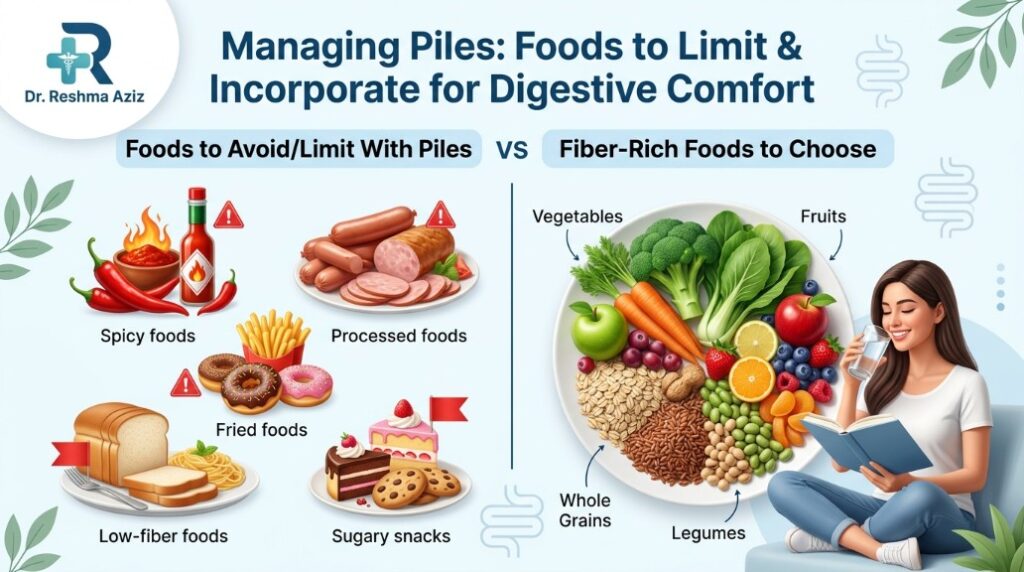
This is the list patients ask about most: the specific foods to avoid for hemorrhoids relief. Cutting these back is often more effective than any cream or medication alone.
| Food Category | Examples | Why to Avoid |
|---|---|---|
| Spicy foods | Chili, hot curries, spicy chutneys | Irritate the anal lining and can worsen burning and itching |
| Fried and fatty foods | Piyaju, singara, samosa, deep-fried fish | Slow digestion, low in fiber, contribute to constipation |
| Red and processed meat | Beef, mutton, sausages, processed meat | Low fiber, hard to digest, slows bowel transit |
| Refined carbohydrates | White bread, white rice, maida-based items | Stripped of fiber, contributes to hard stool |
| Dairy in excess | Full-cream milk, excess cheese, paneer | Can cause bloating and constipation in sensitive individuals |
| Alcohol | Beer, spirits, wine | Dehydrates the body, hardening stool |
| Caffeine | Strong tea, coffee, energy drinks | Diuretic effect can worsen dehydration and constipation |
| Salty, processed snacks | Chips, packaged namkeen, instant noodles | High sodium causes water retention and sluggish digestion |
| Unripe bananas | Green or raw banana in large amounts | Can be binding and worsen constipation for some people |
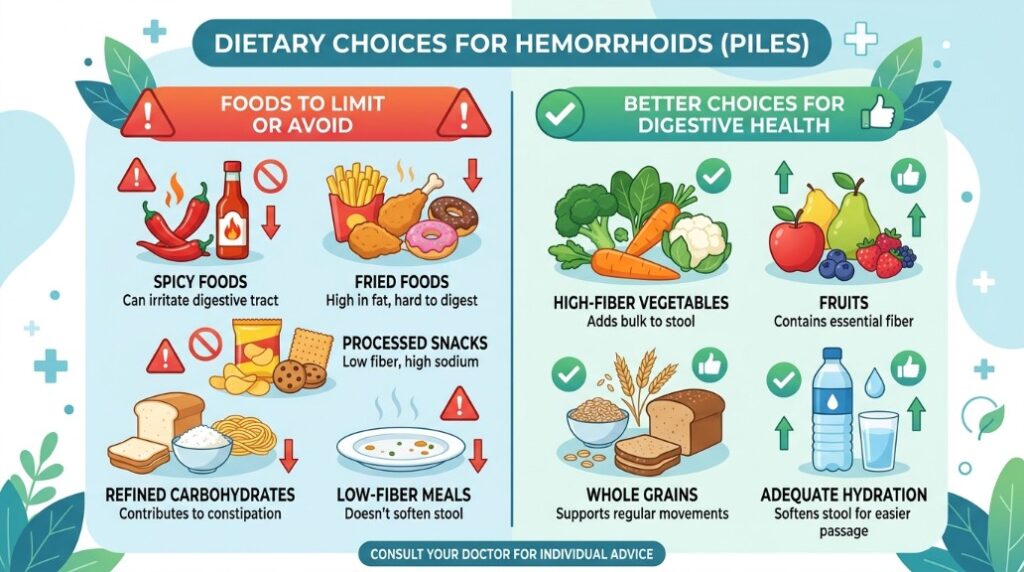
These foods are consistently flagged among the worst foods for hemorrhoid patients because they combine two problems at once they lack fiber, and several of them are directly irritating to inflamed tissue.
Why These Foods Worsen Piles Symptoms
Understanding the mechanism helps the advice stick. Here’s what’s actually happening when you eat trigger foods:
- Reduced fiber intake — Refined and processed foods are stripped of the fiber that gives stool bulk and softness.
- Slower gut transit — Fried and fatty foods take longer to digest, leaving waste sitting in the colon longer, where water is reabsorbed and stool hardens.
- Dehydration — Alcohol and caffeine both pull water from the body, directly contributing to constipation causing piles in many patients.
- Direct irritation — Spicy compounds like capsaicin pass through the digestive tract largely unmetabolized and can irritate already-swollen tissue on the way out.
- Increased abdominal pressure — Salty, processed foods cause bloating and water retention, adding pressure to the pelvic and rectal area.
Understanding this chain food choice, digestion speed, stool consistency, straining is the key to seeing why spicy foods’ effect on piles isn’t just folklore. It’s a direct digestive mechanism.
High-Fiber Diet for Piles Patients: What to Eat Instead
A high fiber diet for piles patients is the single most recommended change by colorectal specialists. Fiber softens stool, adds bulk, and reduces the need to strain. Aim for 25–30 grams of fiber daily, increased gradually with plenty of water to avoid bloating.
Foods that help with piles:
- Whole grains — brown rice, oats, whole wheat roti instead of white bread
- Fruits — papaya, guava, pears, ripe bananas, oranges
- Vegetables — leafy greens, pumpkin, okra (dherosh), carrots
- Legumes — lentils (daal), chickpeas, kidney beans
- Fluids — at least 8–10 glasses of water daily; coconut water is a good addition
- Healthy fats — a small amount of flaxseed or olive oil can help lubricate the digestive tract
- Probiotic foods — plain yogurt in moderation, which can support regular digestion
A simple rule for a piles patient diet chart for foods to avoid and eat:
| Meal | Avoid | Choose Instead |
|---|---|---|
| Breakfast | Paratha, fried egg, strong tea | Oats or roti with vegetables, fruit, warm water |
| Lunch | White rice with red meat curry, fried items | Brown rice, daal, fish or chicken (grilled/light), salad |
| Snacks | Chips, samosa, singara | Fruit, roasted chana, plain yogurt |
| Dinner | Heavy fried dinner, late-night spicy food | Light vegetable-based meal, early dinner |
Foods to Avoid After Piles Surgery
Recovery after a procedure including modern LASER piles surgery needs a stricter, gentler diet for the first one to two weeks. Foods to avoid after piles surgery include:
- Spicy and oily foods, which can irritate the healing tissue
- Red meat and heavy protein-only meals, which tend to be low in fiber
- Carbonated drinks, which cause bloating and pressure
- Alcohol, which slows healing and interacts with medication
- Very hot beverages immediately after the procedure
Instead, post-surgery patients are generally advised to focus on soft, high-fiber foods, warm (not hot) fluids, stool softeners if prescribed, and short, gentle walks to support digestion without straining. Every recovery plan should be personalized, so always follow your surgeon’s specific aftercare instructions.
Sample One-Day Piles Diet Plan (Dhaka-Friendly)
A realistic piles treatment diet plan for someone in Dhaka doesn’t need to abandon local food it needs smarter substitutions:
- Morning: Warm water with a squeeze of lemon, followed by oats or red rice porridge with fruit
- Mid-morning: A piece of papaya or guava
- Lunch: Brown rice or red rice, daal, a vegetable curry (light oil), and a small portion of fish
- Evening: Roasted chana or a fruit, herbal tea instead of strong cha
- Dinner: Light vegetable soup or roti with sabzi, eaten a few hours before bed
- Throughout the day: Continuous water intake, aiming for 8+ glasses
This kind of hemorrhoids foods to avoid and eat structure keeps meals familiar while consistently supporting softer, easier bowel movements.
When Diet Alone Isn’t Enough
Diet changes typically show improvement within a few weeks for mild piles, but they are not a substitute for medical evaluation especially if you notice persistent bleeding, a lump that doesn’t reduce, or ongoing pain. Understanding the different grades of piles can help you gauge how urgent your situation is, and if symptoms don’t improve, it’s worth exploring home remedies for piles alongside a proper diagnosis.
Persistent or worsening symptoms are best evaluated by a specialist rather than managed indefinitely at home. This is especially true if you’re experiencing bleeding piles, a painful thrombosed pile, or you’re unsure whether your symptoms are actually an anal fissure rather than piles, since the two conditions need different care.
Patients in Dhaka looking for piles treatment diet plan Dhaka advice combined with clinical care can get both a diet plan and a full diagnosis from a specialist rather than relying on general information alone. Dr. Reshma Aziz offers exactly this kind of hemorrhoid diet advice from doctor Dhaka, alongside modern, minimally invasive treatment when diet and lifestyle changes aren’t enough including for piles during pregnancy, a common but often under-discussed concern.
If you want to understand your treatment options, including cost, you can read about laser piles surgery cost in Bangladesh or learn more about the best piles treatment in Bangladesh.
Dr. Reshma Aziz is a Registered MBBS Doctor with the Bangladesh Medical & Dental Council (Registration Number: A-24611). You can verify her credentials here.
Key Takeaways
- The main foods to avoid during piles are spicy food, fried food, red/processed meat, refined carbs, alcohol, caffeine, and salty processed snacks.
- These foods worsen piles mainly by causing constipation, which leads to straining the direct mechanical cause of hemorrhoid flare-ups.
- A high fiber diet for piles patients, built around whole grains, fruits, vegetables, legumes, and plenty of water, is the most effective dietary countermeasure.
- Post-surgery patients need an even stricter, gentler diet in the first two weeks of recovery.
- Diet helps manage symptoms, but persistent bleeding, pain, or lumps should always be evaluated by a colorectal specialist.
Frequently Asked Questions
What foods should I completely avoid if I have piles? Spicy food, fried and fatty snacks, red and processed meat, refined white bread/rice, alcohol, and excess caffeine are the foods most consistently linked to worsening piles symptoms.
Can spicy food really make piles worse? Yes. Spicy compounds can irritate already-inflamed anal tissue as they pass through the digestive tract, often causing burning or discomfort after bowel movements.
What is the best diet for piles patients? A high-fiber diet with whole grains, fruits, vegetables, legumes, and 8–10 glasses of water daily is generally recommended, alongside avoiding fried, spicy, and processed foods.
Is rice good or bad for piles? White rice is low in fiber and can contribute to constipation if eaten in excess. Brown rice or red rice is a better choice because it retains more fiber.
What foods should be avoided after piles surgery? Spicy and oily foods, red meat, carbonated drinks, and alcohol should be avoided in the first one to two weeks after surgery, in favor of soft, high-fiber meals and warm fluids.
How long does it take for diet changes to improve piles symptoms? Many patients notice improvement within two to three weeks of consistently increasing fiber and water intake, though this varies by severity and individual response.
Does milk or dairy affect piles? Dairy itself doesn’t cause piles, but consuming it in excess can cause bloating or constipation in some people, which can indirectly worsen symptoms.
Final Thoughts and Next Steps
Managing piles doesn’t start in the operating room it starts on your plate. Cutting back on the foods to avoid with piles listed above, while steadily building up fiber and fluids, is often enough to noticeably ease mild to moderate symptoms within a few weeks. But diet has its limits, and if you’re dealing with persistent bleeding, pain, or a lump that won’t go away, it’s time for a proper evaluation rather than more guesswork.
If you’re in Dhaka and ready for a private, judgment-free consultation, you can book an appointment with Dr. Reshma Aziz to get a clear diagnosis and a diet and treatment plan tailored to your specific condition.