
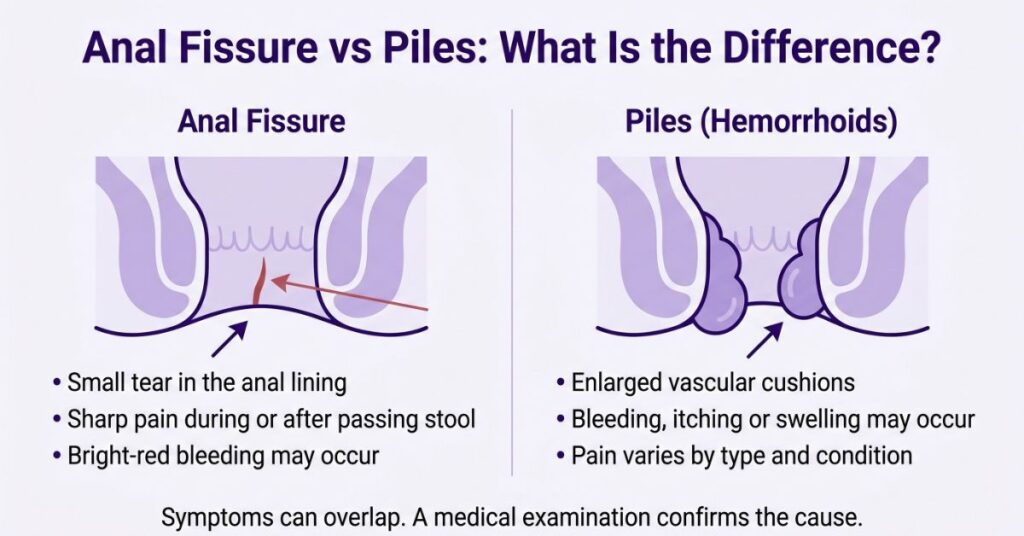
Anal fissure vs piles can both cause pain or bright-red bleeding after a bowel movement, but they are different conditions. A fissure is a small tear in the lining of the anal canal. Piles, also called haemorrhoids, are enlarged or displaced blood-vessel cushions in or around the anus. Sharp, cutting pain that continues after passing stool suggests a fissure; itching, swelling, a lump or painless bleeding is more typical of piles. Symptoms overlap, so an examination is the safest way to confirm the cause.
This guide explains the differences, safe first steps, treatment options and warning signs that need prompt medical attention.
The difference between piles and fissure—or the difference between fissure and hemorrhoids—is the affected tissue. A fissure is a tear; piles are swollen vascular cushions. Pain after stool suggests a fissure, while a lump, itching or prolapse leans toward piles. Neither can be diagnosed reliably from symptoms alone.
Anal Fissure vs Piles: What Is the Difference?
An anal fissure is a small split in the lining at the anal opening, often caused by hard stool. The tear may trigger internal sphincter spasm, adding pain and slowing healing.
Piles, or haemorrhoids, develop when vascular cushions become enlarged or displaced. Internal piles may bleed or protrude; external piles may hurt if a clot develops.
The clearest anal fissure vs piles comparison is below.
| Feature | Anal fissure | Piles or haemorrhoids |
|---|---|---|
| What it is | A tear in the anal lining | Enlarged or displaced vascular cushions |
| Typical pain | Sharp, tearing or burning pain during and after stool | Often painless internally; external piles may ache or become suddenly painful |
| Bleeding | Usually a small amount of bright-red blood on paper or stool | Bright-red blood on paper, in the bowl or coating stool |
| Lump | A small skin tag may occur with a chronic fissure | A soft, firm or tender lump; internal piles may prolapse |
| Other clues | Fear of passing stool, sphincter spasm | Itching, mucus, swelling or incomplete-emptying sensation |
| Common trigger | Hard stool, constipation or sometimes diarrhoea | Straining, constipation, prolonged toilet sitting, pregnancy or ageing support tissue |
These are patterns, not a home diagnostic test. Fistula, abscess, inflammatory bowel disease, polyps and colorectal cancer can also cause anorectal symptoms.
Piles vs Anal Fissure Symptoms: How Can You Tell?
If you wonder how to identify piles or fissure, an anal fissure vs piles symptom check should focus on pain timing, blood, itching, swelling, and prolapse.
Which condition causes pain after using the bathroom?
For anal fissure vs piles, pain timing is useful. Fissure pain starts as stool passes and feels cutting, tearing or burning. Spasm may continue for minutes or hours.
Internal piles often bleed without severe pain. External piles can ache, itch or swell; a clotted external pile may cause sudden pain and a tender lump. The anal fissure vs hemorrhoids pain difference is helpful, not definitive.
What does the bleeding look like?
The anal fissure vs piles bleeding pattern overlaps. In bleeding piles vs anal fissure, both can produce bright-red blood; piles may also drip into the bowl.
Do not assume all rectal bleeding is harmless. Black or tarry stool, dark blood mixed through stool, heavy bleeding, dizziness, fainting, abdominal pain or unexplained weight loss needs medical assessment. Severe anal pain with fever may indicate an abscess or another urgent problem.
Are visual signs enough?
A crack may suggest a fissure; swollen or protruding tissue may suggest piles. However, internal piles may be hidden and a chronic fissure can have a skin tag. When anal fissure vs piles symptoms persist, examination matters more than appearance.
Severe pain during and after stool favours a fissure. Itching, mucus, swelling or prolapse favours piles. Bright-red bleeding can occur with either.
Anal Fissure vs Piles Causes and Common Misconceptions
Constipation links the two conditions. A hard stool may tear the anal lining, while repeated straining increases pressure on haemorrhoidal tissue. Frequent diarrhoea, repeated wiping and long toilet sessions can also irritate the area.
Piles are also associated with pregnancy, obesity, heavy lifting and age-related support changes. Multiple, unusual or non-healing fissures deserve review for an underlying condition.
Can piles cause anal fissure?
Piles do not turn into a fissure. Constipation and straining can contribute to both, and both may exist together.
Can fissure turn into piles?
No. A tear cannot transform into swollen vascular tissue. A chronic fissure’s skin tag and an external pile may look similar without examination.
In short, anal fissure vs piles describes two separate problems that may share triggers, symptoms and even occur together.
Anal Fissure vs Piles Treatment: What Usually Helps?
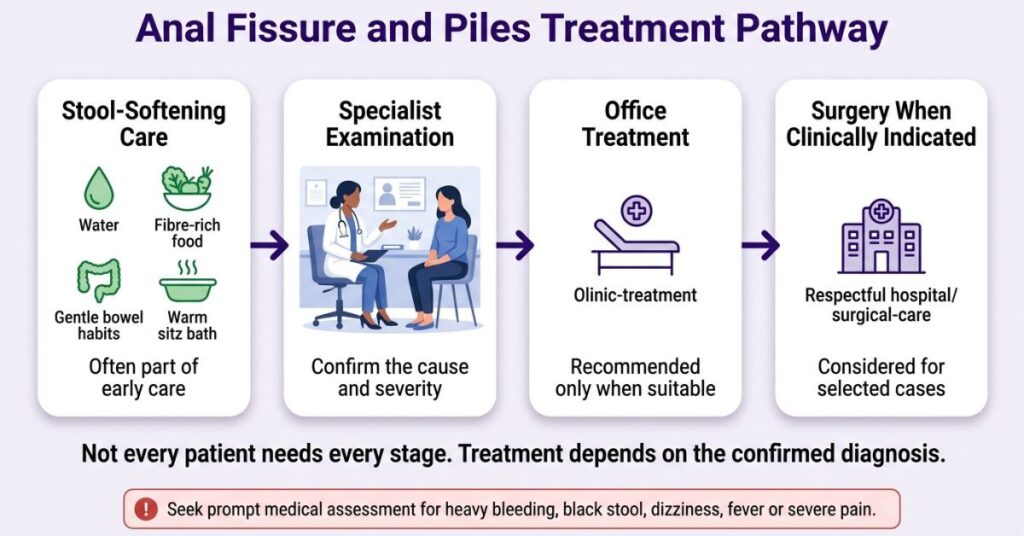
The best option depends on diagnosis, severity, duration, piles grade, pregnancy, medicines and general health. Unless urgent care is needed, first make stool easier to pass.
Safe first steps for both conditions
- Increase fibre gradually. Choose vegetables, fruit, pulses and whole grains; ask whether a supplement is appropriate.
- Drink an appropriate amount of fluid. Follow personalised advice if you have heart or kidney restrictions.
- Do not strain. Go when the urge comes and avoid sitting on the toilet scrolling for long periods.
- Try a plain warm sitz bath. Warm water may soothe pain; avoid harsh or perfumed products.
- Check medicines first. Pregnancy, blood thinners, kidney disease and allergies can change what is safe.
For more condition-specific guidance, read this overview of piles treatment in Bangladesh.
Fissure treatment options
An acute fissure may heal with soft stool. Prescribed topical medicine can relax the sphincter and support blood flow. Persistent fissures may need botulinum toxin or surgery after benefits and continence-related risks are discussed.
Piles treatment options
Mild piles may improve with bowel-habit changes. Internal bleeding or prolapse may be treated with rubber-band ligation; large external or significantly prolapsing piles may need surgery. Laser is not automatically best for every grade. This laser piles surgery cost guide explains suitability and quotation factors.
How much does treatment cost in Dhaka?
There is no reliable single price for anal fissure vs piles treatment before assessment. Consultation, tests, facility, anaesthesia, procedure and follow-up change the total. Request the diagnosis, procedure name, alternatives and an itemised estimate.
Fissure vs Piles During Pregnancy
During pregnancy, anal fissure vs piles symptoms may overlap as constipation and pelvic pressure increase. Sharp post-stool pain favours a fissure; itching, swelling or a lump favours piles.
Do not start laxatives, creams, suppositories or pain medicines in pregnancy without suitable advice. Fibre-rich food, adequate fluid, permitted gentle activity and avoiding straining are common first steps. See the guide to piles during pregnancy for precautions.
Heavy bleeding, dizziness, fever, severe pain or abdominal symptoms require prompt care. Anal bleeding is different from vaginal bleeding; if the source is unclear, seek urgent maternity or medical advice rather than guessing.
How Doctors Diagnose Anal Fissure vs Piles in Dhaka
A correct anal fissure vs piles diagnosis starts with a private history: pain timing, bleeding, lumps, constipation, diarrhoea and bowel changes. Bring reports and a medicine list.
With consent, the clinician may inspect the area. A digital rectal examination or anoscopy may be appropriate, although severe fissure pain can change the examination. Age, family history, anaemia or persistent bleeding may justify further bowel evaluation.
What is required for diagnosis? A symptom history and physical examination are usually the starting point. Anoscopy, proctoscopy, blood tests or colon evaluation are selective not automatic for everyone.
Patients seeking a woman specialist may prefer a private discussion. This guide to choosing a female proctologist in Dhaka covers preparation and questions to ask.
Dr. Reshma Aziz’s supplied CV records clinical and surgical care since 1996, a 2023 postgraduate diploma in Colorectal Surgery, LASER proctology training, rectal surgery, and colonoscopy. Dr. Reshma Aziz’s BMDC registration is A-24611
When to See Doctor for Piles or Fissure
Book a consultation for new, recurring, worsening or unexplained symptoms, especially bleeding.
Seek prompt or emergency care for:
- heavy or continuous bleeding;
- black, tarry or dark stool;
- dizziness, fainting, breathlessness or unusual weakness;
- severe anal pain with fever, pus or increasing swelling;
- abdominal pain, vomiting or persistent diarrhoea;
- unexplained weight loss, anaemia or a lasting change in bowel habit; or
- a prolapse that cannot be gently reduced.
These are routine medical concerns; do not let embarrassment delay care.
Frequently Asked Questions
1. Anal fissures vs hemorrhoids: how can I tell the difference?
A fissure usually causes sharp post-stool pain and light bright-red bleeding. Haemorrhoids more often cause itching, swelling, prolapse or painless bleeding. Examination confirms anal fissure vs piles.
2. Is it a fissure or a pile? What visual signs should I look for?
A fissure may look like a crack; piles may look swollen or protruding. Skin tags and hidden internal piles make appearance alone unreliable.
3. Why does it hurt so much after using the bathroom?
A fissure exposes sensitive tissue and may trigger sphincter spasm, so burning can continue after stool. Hard stool may reopen the tear.
4. Piles or Fissure Which Is More Painful?
A fissure is typically more painful after stool. Internal piles may be painless, but a clotted external pile can hurt severely.
5. Can piles and a fissure occur together?
Yes. Constipation and straining can contribute to both, so anal fissure vs piles is not always either-or. Treat each problem and the shared trigger.
6. Will either condition heal without surgery?
Many acute fissures and mild piles improve with softer stool and better toilet habits. Persistent disease may need medicine or a procedure.
7. What is the best treatment option?
The best option follows examination. Consider benefit, risks, recovery, cost and follow-up—not the word laser alone.
Key Takeaways
- A fissure is a tear; piles are enlarged or displaced vascular cushions.
- Anal fissure vs piles require different treatment despite overlapping symptoms.
- Sharp, lasting post-stool pain favours a fissure; itching, mucus, a lump or prolapse favours piles.
- Bright-red bleeding can occur with either and should not be self-diagnosed.
- Fibre, appropriate fluid and avoiding straining help many patients, but medicines and procedures differ.
- Heavy bleeding, black stool, dizziness, fever or severe pain needs prompt medical care.
Conclusion: Get the Diagnosis Before Choosing Treatment
Anal fissure vs piles may look straightforward online, but symptoms overlap with other conditions. Confirm the cause of pain, bleeding or a lump before choosing a cream, procedure or surgery.
If you are in Dhaka and symptoms are persistent, recurrent or worrying, arrange a confidential assessment with Dr. Reshma Aziz. Bring your medicine list and any previous reports, and ask about the diagnosis, alternatives, expected recovery, total cost and follow-up before agreeing to a procedure.