

Dr. Reshma Aziz Specialist treats and evaluates breast, colorectal, anorectal, selected general surgical and pediatric surgical conditions. Patients commonly consult her for breast lumps, breast pain, piles, anal fissures, anal fistulas, rectal bleeding, pilonidal sinus and related concerns. Her clinical background also includes family medicine, diabetes, thyroid care and women’s health. She has worked in medical and surgical care since 1996 and currently provides consultations in Dhaka, Bangladesh.
This guide explains the conditions within the clinical scope of Dr. Reshma Aziz, how patients are assessed and when further tests, procedures or referrals may be required.
What Does Dr. Reshma Aziz Treat?
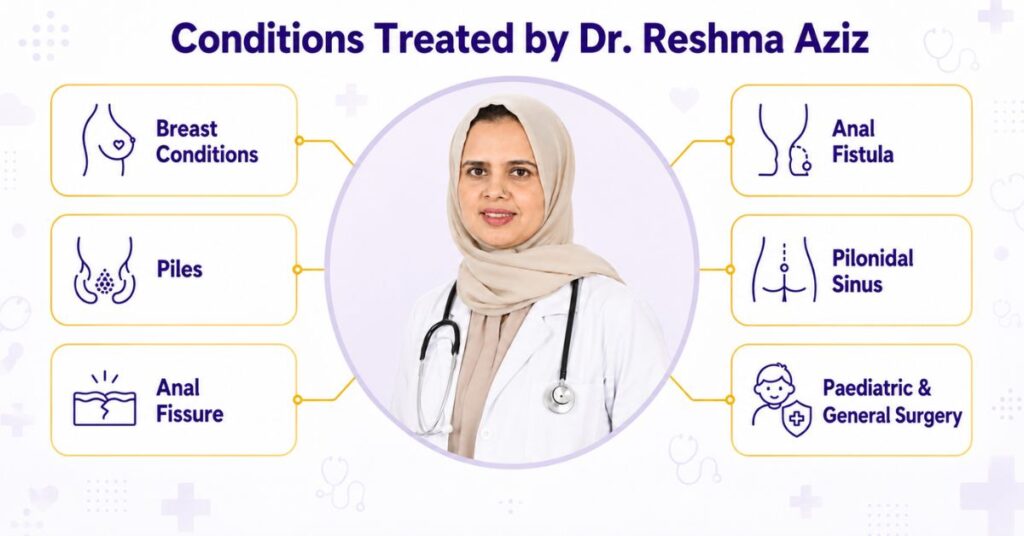
Dr. Reshma Aziz evaluates and manages breast conditions, piles, anal fissures, anal fistulas, rectal bleeding, pilonidal sinus, constipation-related concerns and selected general and pediatric surgical problems. Treatment depends on the diagnosis and may include lifestyle changes, medication, minor procedures, surgery or referral to another appropriate specialist.
The main areas of Dr. Reshma Aziz treatment include:
| Clinical area | Common reasons for consultation |
|---|---|
| Breast care | Breast lump, pain, fibroadenoma, cyst, infection, abscess or nipple discharge |
| Colorectal and proctology care | Piles, fissure, fistula, rectal bleeding, anal pain, swelling or discharge |
| Pilonidal disease | Painful, infected or recurrent pilonidal sinus |
| Bowel-related assessment | Chronic constipation, blood in the stool or a change in bowel habits |
| Pediatric surgery | Hernias and selected surgical conditions in children |
| General surgery | Gallbladder stones, lumps, swellings and selected minor surgical conditions |
| Family medicine | General medical concerns, diabetes, thyroid problems and coordinated care |
Being evaluated for one of these conditions does not mean that surgery will automatically be recommended. The first step is to identify the likely cause and decide whether clinical examination, diagnostic testing or specialist referral is needed.
Breast Conditions Assessed by Dr. Reshma Aziz
Patients searching for a breast specialist Dr. Reshma Aziz may be concerned about a newly discovered lump, ongoing pain or another change in the breast. These symptoms can have several possible causes, so assessment should be based on more than the symptom alone.
Breast lumps
A breast lump may result from a benign condition such as a fibroadenoma or cyst. Infection, inflammation and other breast conditions can also produce a lump or thickened area.
A breast lump does not automatically mean cancer. However, a new, persistent, growing or changing lump should not be ignored. An individual assessment may involve:
- A discussion of when the lump was first noticed
- Review of pain, nipple discharge and other symptoms
- Clinical breast examination
- Breast imaging when appropriate
- Aspiration, biopsy or referral when clinically indicated
For a more detailed explanation, read the guide to breast lump assessment.
Fibroadenoma
A fibroadenoma is a common benign breast lump, particularly among younger women. It often feels smooth and movable, but touch alone cannot confirm the diagnosis.
Management may involve monitoring or surgical removal, depending on factors such as:
- The size of the lump
- Whether it is growing
- Pain or discomfort
- Imaging findings
- Diagnostic uncertainty
- The patient’s age and medical history
- The effect on daily life or peace of mind
Learn more about the available approaches to fibroadenoma treatment.
Breast pain
Breast pain may occur before menstruation, during pregnancy, while breastfeeding or after menopause. It can affect one breast or both breasts and may be cyclical or unrelated to the menstrual cycle.
Common explanations include hormonal changes, infection, an injury, an ill-fitting bra or pain arising from the chest wall. Persistent one-sided pain, pain associated with a lump or pain accompanied by skin or nipple changes requires medical assessment.
The guide to breast pain causes explains common patterns and warning signs.
Breast infection and abscess
A breast infection may cause pain, redness, warmth, swelling and fever. In some patients, a pocket of pus called a breast abscess can develop.
Treatment may include antibiotics, pain relief, ultrasound assessment or drainage. The appropriate plan depends on the severity and whether an abscess is present. Anyone who is breastfeeding should receive advice that considers both infection management and safe feeding.
Read more about breast abscess treatment.
Nipple and skin changes
Patients should arrange an assessment if they notice:
- New nipple discharge, particularly if bloody
- Nipple inversion that was not present before
- Dimpling or puckering of the breast skin
- Persistent redness or thickening
- A change in breast shape
- A lump or swelling in the underarm
These changes do not establish a diagnosis by themselves. They indicate that further clinical evaluation may be appropriate.
Does Dr. Reshma Aziz treat breast lumps?
Yes. Dr. Reshma Aziz evaluates breast lumps and related symptoms such as breast pain, fibroadenoma, cysts, infection, abscess and nipple discharge. Tests or referrals may be recommended according to the clinical findings.
Piles Treatment by Dr. Reshma Aziz
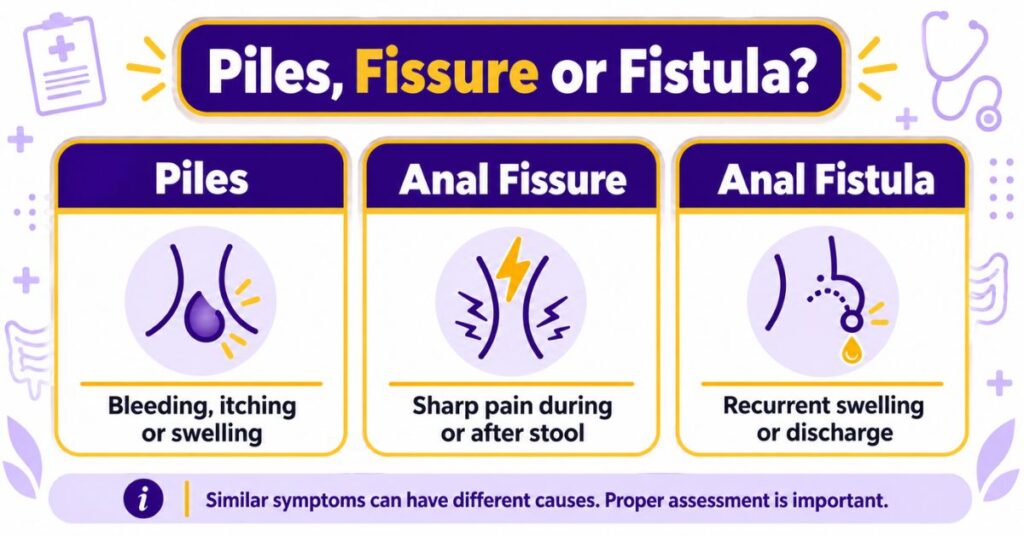
Piles, also known as haemorrhoids, are swollen blood vessels in or around the anal canal. They may cause bleeding, itching, swelling, discomfort or a lump near the anus.
A piles doctor Dr. Reshma Aziz consultation usually begins by reviewing the symptoms, bowel habits, constipation, previous treatment and any bleeding. An examination may be necessary because anal fissures, fistulas and other colorectal conditions can produce overlapping symptoms.
Does every piles patient need an operation?
No. Many patients with piles do not initially require surgery. Depending on the diagnosis and severity, management may include:
- Increasing dietary fibre
- Drinking adequate fluids
- Avoiding prolonged straining
- Treating constipation
- Improving toilet habits
- Short-term medication
- An office-based procedure
- Surgery for selected cases
No single treatment is best for everyone. A procedure should be chosen according to the type and grade of piles, the main symptoms, previous treatment and the patient’s general health.
Read the complete guide to piles treatment in Bangladesh.
What about laser piles treatment?
Dr. Reshma Aziz has completed LASER training in proctology. However, laser treatment is not automatically necessary or suitable for every case.
Potential benefits and limitations should be discussed after diagnosis. Patients should ask:
- What is the exact diagnosis?
- Is conservative treatment still appropriate?
- Why is this procedure being recommended?
- What are the likely benefits and possible risks?
- How long might recovery take?
- Is recurrence possible?
- What costs are included?
The cost of treatment can vary with the procedure, facility, investigations, anaesthesia and follow-up needs. See the guide to laser piles surgery cost in Bangladesh for the main cost factors.
Anal Fissure Treatment
An anal fissure is a small tear in the lining of the anal canal. It commonly causes sharp or burning pain during or after a bowel movement. Bright red blood may appear on toilet paper or on the surface of the stool.
Constipation and passing hard stool are common triggers. Some fissures are recent, while others become chronic and may be more difficult to heal.
Fissure treatment may include:
- Softening the stool
- Increasing fibre and fluid intake
- Correcting straining habits
- Warm sitz baths
- Prescribed local medicine
- Other medical treatment
- A procedure or surgery for selected chronic cases
Piles and fissures are different conditions even though both may cause pain or bleeding. The comparison guide on anal fissure vs piles explains the main differences.
Does Dr. Reshma Aziz provide fissure treatment?
Yes. Dr. Reshma Aziz assesses anal fissures and helps determine whether bowel-habit changes, medication or a procedure may be appropriate. Chronic or recurrent fissures require an individual treatment plan.
Anal Fistula and Perianal Abscess Care
An anal fistula is an abnormal tract between the anal canal and the skin near the anus. It may develop after an infected anal gland or perianal abscess.
Common symptoms include:
- Recurrent swelling near the anus
- Pain or tenderness
- Pus or fluid discharge
- Skin irritation
- A small opening near the anus
- Repeated abscess formation
- Fever during an active infection
Someone searching for a fistula doctor in Dhaka should understand that fistulas vary in location and complexity. Treatment planning may require an examination, imaging or evaluation of how the tract relates to the anal sphincter muscles.
Medication alone does not usually remove a persistent fistula tract. Procedures differ according to the fistula anatomy, recurrence history and continence risk.
Read more about anal fistula treatment and the factors influencing anal fistula surgery cost in Bangladesh.
Does Dr. Reshma Aziz treat fistula?
Yes. Anal fistula assessment and treatment fall within her colorectal and proctology practice. The suitable procedure depends on the path of the fistula, its complexity, previous treatment and its relationship with the anal sphincter.
Other Colorectal Conditions Assessed
The work of a colorectal specialist is not limited to piles, fissures and fistulas. Patients may also seek help for rectal bleeding, bowel changes, anal swelling or persistent discomfort.
Blood in the stool
Blood in the stool may be bright red, dark red or black. Possible causes range from anal fissures and piles to inflammation, polyps, bleeding higher in the digestive tract or other conditions.
Patients should seek prompt assessment if bleeding is:
- Heavy or persistent
- Associated with dizziness or fainting
- Accompanied by black, tar-like stool
- Linked with unexplained weight loss
- Associated with abdominal pain or fever
- Combined with a lasting change in bowel habits
- Occurring alongside weakness or suspected anaemia
Do not assume that rectal bleeding is “only piles” without an appropriate assessment. The article on blood in stool treatment in Dhaka explains common causes and red flags.
Chronic constipation
Constipation can involve hard stool, infrequent bowel movements, excessive straining or a sense of incomplete emptying. It can contribute to piles and anal fissures, although constipation may also have dietary, medical, medication-related or functional causes.
Initial management may involve diet, fluid intake, activity, bowel habits and appropriate medicine. Further assessment may be needed when constipation is new, severe, persistent or associated with bleeding, vomiting, weight loss or significant abdominal swelling.
Pilonidal sinus
A pilonidal sinus usually develops in the cleft between the buttocks near the tailbone. It can cause a painful lump, swelling, discharge or recurrent infection.
Treatment depends on whether the area is acutely infected, chronically draining or repeatedly recurring. An abscess may need drainage, while recurrent disease may require a planned procedure.
Pediatric and General Surgical Care
Dr. Reshma Aziz completed an MS in Paediatric Surgery and worked at Dhaka Shishu Hospital from 1996 to 2004. Her clinical background includes pediatric surgery as well as selected general surgical care.
Pediatric surgical conditions
Parents may seek an assessment for selected childhood surgical concerns, including hernias. A hernia may appear as a bulge in the groin, scrotum or around the belly button.
Urgent hospital care may be needed if a child has:
- A hard or very painful bulge
- A bulge that does not go back in
- Red, purple or dark skin over the swelling
- Repeated vomiting
- Abdominal swelling
- Marked distress, weakness or unusual sleepiness
Learn more from the guide to hernia symptoms in children.
Selected general surgical concerns
Her professional scope has also included selected general surgical conditions and minor or day-care procedures. These may include:
- Gallbladder stones
- Minor lumps and swellings
- Selected skin and soft-tissue conditions
- Abscesses requiring surgical assessment
- Hernias
- Pilonidal disease
- Conditions requiring referral for more specialised care
The suitability of a consultation depends on the individual condition. Some problems may require imaging, hospital admission or referral to another surgical discipline.
Does Dr. Reshma Aziz perform pediatric or general surgery?
Dr. Reshma Aziz has an MS in Paediatric Surgery and documented experience in pediatric and selected general surgery. Whether she can manage a particular condition depends on its diagnosis, complexity, required facility and need for another specialist.
How Does Dr. Reshma Aziz Assess a Patient?
A consultation is intended to establish what may be causing the symptoms and what should happen next. It does not automatically result in surgery.
The assessment process may include:
1. Understanding the main concern
The patient explains the symptoms, when they started and how they affect daily life. Previous diagnoses, medicines, procedures and test results should also be discussed.
2. Reviewing relevant medical history
Diabetes, thyroid disease, pregnancy, breastfeeding, bowel habits, previous surgery and current medicines may influence assessment and treatment planning.
3. Conducting an appropriate examination
The examination depends on the complaint. Sensitive breast or anorectal examinations should be conducted respectfully with privacy and an explanation of why the examination is needed.
4. Deciding whether tests are required
Not every patient needs the same tests. Depending on the condition, the doctor may consider imaging, laboratory tests, colonoscopy, aspiration, biopsy or referral.
5. Discussing the available options
The treatment plan may involve observation, lifestyle changes, medicine, a minor procedure, surgery or coordinated care with another specialist.
Why Might Patients Consult Dr. Reshma Aziz?
The value of consulting an appropriate doctor lies in matching the symptoms with relevant training and clinical experience.
Documented elements of Dr. Reshma Aziz’s background include:
- Medical and surgical work since 1996
- MBBS qualification
- MS in Paediatric Surgery
- Postgraduate Diploma in Colorectal Surgery
- Breast surgery training
- Colorectal surgery training
- LASER proctology training
- Clinical ultrasonography education
- Family medicine experience
- Experience in hospitals in Bangladesh and Pakistan
Dr. Reshma Aziz is registered with the Bangladesh Medical & Dental Council under registration number A-24611. Patients can review the official BMDC doctor credential record.
Qualifications do not guarantee a cure or a specific result. Outcomes depend on the diagnosis, severity, treatment choice, overall health and follow-up.
When Should You Seek Urgent Medical Care?
Contact an emergency service or attend an appropriate hospital rather than waiting for a routine appointment if there is:
- Severe or uncontrolled bleeding
- Fainting, confusion or extreme weakness
- Black, tar-like stool with illness or dizziness
- Severe and rapidly worsening abdominal or anal pain
- High fever with painful swelling or pus
- Persistent vomiting or abdominal distension
- A painful childhood hernia that becomes hard or discoloured
- Rapidly spreading breast redness with fever and systemic illness
A clinic website cannot determine whether an emergency is present. When symptoms are severe or rapidly worsening, in-person emergency assessment is the safer option.
Key Takeaways
- Dr. Reshma Aziz’s principal clinical areas include breast, colorectal, proctology, pediatric and selected general surgical care.
- Patients commonly consult her for breast lumps, breast pain, piles, anal fissures, anal fistulas and rectal bleeding.
- A consultation does not mean surgery will automatically be recommended.
- Piles, fissures and fistulas are different conditions and require different treatment plans.
- Not every patient is suitable for a laser procedure.
- Breast lumps are often benign, but new or changing lumps require proper assessment.
- Emergency symptoms should be taken to an appropriate hospital without waiting for a routine appointment.
- Dr. Aziz’s BMDC registration number is A-24611.
Frequently Asked Questions
What diseases does Dr. Reshma Aziz treat?
Dr. Reshma Aziz evaluates breast lumps, breast pain, fibroadenoma, breast infection, piles, anal fissure, anal fistula, rectal bleeding, pilonidal sinus and selected general and pediatric surgical conditions. She also has experience in family medicine, diabetes and thyroid-related care.
Does Dr. Reshma Aziz treat piles, fissure and fistula?
Yes. These conditions are included within her colorectal and proctology practice. Treatment may involve lifestyle measures, medication, a minor procedure or surgery depending on the diagnosis and severity.
Does she treat breast lumps and breast conditions?
Yes. Dr. Reshma Aziz assesses breast lumps, fibroadenoma, breast pain, infection, abscess, nipple discharge and other breast changes. Imaging, biopsy or referral may be recommended when clinically appropriate.
Is Dr. Reshma Aziz a colorectal specialist?
She holds a Postgraduate Diploma in Colorectal Surgery and has completed colorectal surgery training and LASER training in proctology. Her clinical work includes piles, fissures, fistulas and related anorectal conditions.
Is laser treatment the best option for piles or fistula?
Not for every patient. The best option depends on the exact diagnosis, disease complexity, previous treatment, potential risks and expected benefits. An examination is required before choosing a procedure.
Does Dr. Reshma Aziz perform pediatric or general surgery?
She holds an MS in Paediatric Surgery and has documented experience in pediatric and selected general surgical care. Complex cases may require a particular hospital facility or referral to another specialist.
Where does Dr. Reshma Aziz see patients?
She currently provides consultations at Dhaka Lab in Mohammadpur and Cure Medical Center & Hospital in Gulshan, Dhaka. Patients should verify the current schedule before travelling.
How can I book an appointment?
Visit the contact page for current chamber addresses, schedules, telephone details and appointment options.
Book a Consultation with Dr. Reshma Aziz
If you have a breast lump, persistent breast pain, rectal bleeding, painful bowel movements, piles, a suspected fissure or fistula, or another relevant surgical concern, a consultation can help clarify the cause and appropriate next step.
Review the complete profile of Dr. Reshma Aziz or use the appointment and contact page to confirm her current chambers in Dhaka.
This page provides general information about the clinical scope of Dr. Reshma Aziz. It does not provide an individual diagnosis, guarantee a treatment result or replace emergency medical care.