

Breast abscess treatment usually requires prompt medical assessment, breast ultrasound and drainage of the trapped pus. Antibiotics may also be prescribed when bacterial infection, spreading redness, fever or other clinical concerns are present. A breast abscess rarely improves reliably with home remedies alone, and delaying care can allow pain, swelling and infection to worsen.
This guide explains the symptoms, causes, tests, drainage methods, recovery, breastfeeding advice and treatment costs. It also shows when to consult a breast abscess doctor in Dhaka for safe, private care.
A breast abscess is a pocket of infected fluid or pus within breast tissue. Effective breast abscess treatment normally involves draining the collection, treating infection when necessary and investigating the cause, particularly when an abscess is recurrent or develops outside breastfeeding.
What Is a Breast Abscess and How Do You Recognise It?
A breast abscess is a localised collection of pus surrounded by inflamed breast tissue. It may develop when mastitis progresses, when bacteria enter through damaged skin or a cracked nipple, or when ducts beneath the nipple become repeatedly inflamed.
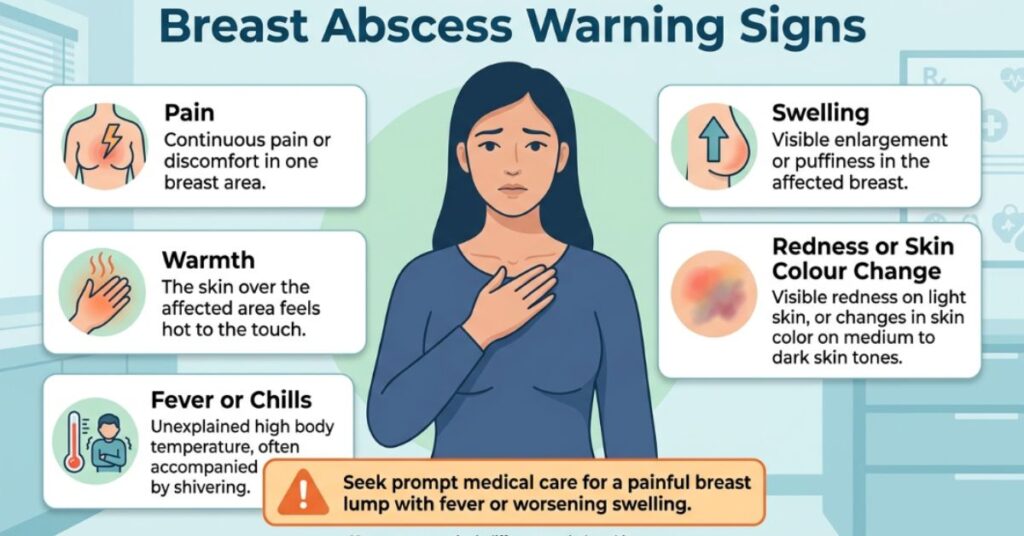
Breast abscess symptoms and treatment can differ between breastfeeding and non-breastfeeding patients. However, common warning signs include:
- A painful or tender breast lump
- Warmth, redness or darker skin over the area
- Local swelling that may feel soft in the centre
- Fever, chills or feeling generally unwell
- Pus or unusual nipple discharge
- Increasing pain despite initial treatment
- Symptoms that return after apparent improvement
A lump should not be diagnosed by touch alone. An infected cyst, galactocele and inflammatory breast cancer can produce similar signs.
The NHS breast abscess guidance recommends urgent assessment when the breast is painful, warm or red, a lump is present, or the patient has fever. Seek emergency care for confusion, faintness, breathing difficulty, severe weakness or rapidly spreading infection.
What Causes Breast Abscesses?
Lactational breast abscess
A lactational abscess occurs during breastfeeding, often after mastitis. Inflammation, milk stasis, and bacterial infection can contribute. Cracked nipples, feeding difficulties, sudden changes in feeding, pressure on the breast and oversupply may increase problems for some patients.
A persistent, increasingly painful mass or symptoms that fail to improve need reassessment and often ultrasound.
Non-lactational breast abscess
A non-lactational abscess develops in someone who is not breastfeeding. It may occur around ducts beneath the nipple or elsewhere in the breast. Smoking, diabetes, nipple piercing, skin disease, immune suppression and previous infection may increase risk, although an abscess can occur without an obvious risk factor.
Non-lactational breast abscess treatment requires follow-up because an underlying duct problem may need investigation. Diabetes review can also support healing.
Why do breast abscesses return?
Recurrence can follow incomplete drainage, resistant bacteria, an underlying duct disorder, smoking, poorly controlled diabetes or a fistula connecting an inflamed duct to the skin. Repeated abscesses in the same location should not be managed as isolated infections without investigating the pattern.
How Is a Breast Abscess Diagnosed?
Safe breast abscess treatment begins with clinical examination. The doctor asks about symptom duration, breastfeeding, previous infections, medicines, allergies, diabetes, smoking, and breast procedures. The breast and underarm are examined for a tender mass, skin changes, discharge and enlarged lymph nodes.
Breast ultrasound
Ultrasound can show whether a painful area contains drainable fluid, how deep it is and whether there are several connected pockets. It can also guide a needle accurately into the collection. Ultrasound is particularly useful when swelling is deep or the diagnosis is uncertain.
Fluid culture and additional tests
Fluid removed during drainage may be sent for laboratory culture. The result identifies the organism and helps the doctor adjust antibiotics, especially when infection is severe, recurrent or not improving.
Further imaging or tissue sampling may be recommended when a mass remains after infection settles. Read this guide to finding a doctor for a breast lump in Dhaka.
Ultrasound confirms whether there is a fluid collection. Examination, drainage findings and culture then help determine the most appropriate breast abscess treatment.
Breast Abscess Treatment Options
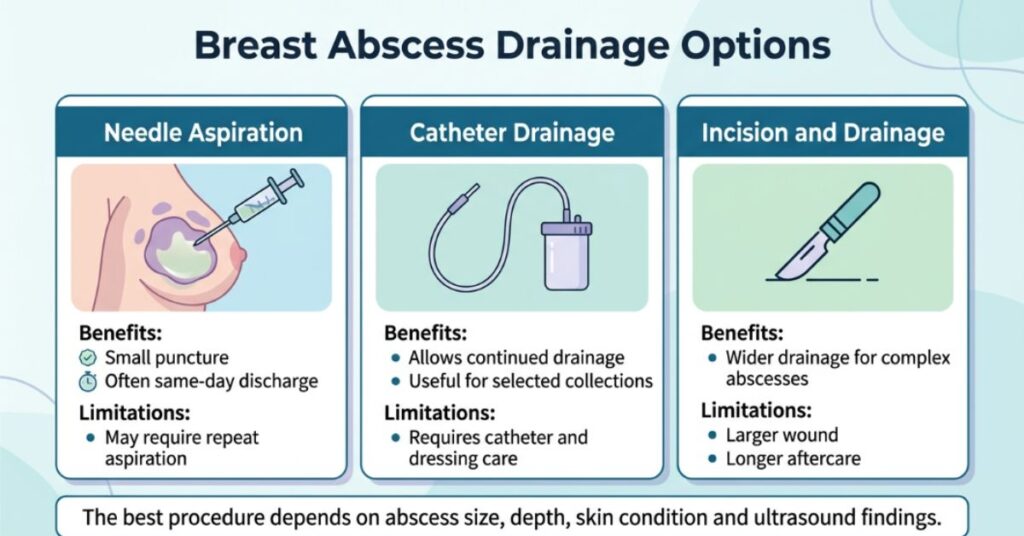
Breast abscess treatment depends on size, depth, skin condition, breastfeeding status and recurrence.
| Treatment option | When it may be used | Main benefit | Important limitation |
|---|---|---|---|
| Ultrasound-guided needle aspiration | Accessible fluid collection | Small puncture and often same-day discharge | May require repeat aspiration |
| Catheter drainage | Ongoing drainage is needed | Allows continued fluid removal | Requires catheter care |
| Incision and drainage | Large, complex, recurrent or skin-threatening abscess | Provides wider drainage | Larger wound and longer aftercare |
| Antibiotics | Bacterial infection or clinical risk is present | Treats infection around the collection | Often cannot empty established pus alone |
Breast abscess drainage procedure
Needle aspiration is commonly performed using local anaesthetic and ultrasound guidance. A needle enters the collection and removes pus. Some abscesses need aspiration more than once. A drainage catheter may be placed when continued emptying is helpful.
Incision and drainage involves making a small opening so pus can escape. It may be considered when needle drainage is unsuitable, the collection is complex, skin is damaged, or previous treatment has failed. The wound may be dressed and reviewed until healing is established.
The breast abscess treatment chosen should drain pus while protecting healthy breast tissue.
Antibiotics for breast abscess treatment
Antibiotics are selected according to clinical findings, allergy history, local resistance patterns, breastfeeding status and culture results. They should be prescribed by a qualified clinician. Patients should not reuse old antibiotics, share medicine or stop a prescribed course without advice.
Antibiotics can treat infection surrounding an abscess, but they may not penetrate and empty a mature pus collection effectively. This is why drainage is frequently central to breast abscess treatment. Seek reassessment if fever, redness, swelling or pain is not improving within the timeframe given by the treating doctor.
Breast abscess treatment without surgery
Treatment without an open surgical incision may be possible through ultrasound-guided needle aspiration or catheter drainage. These are still medical procedures, not home treatment. A very early inflammatory condition without a drainable collection may be managed differently after clinical evaluation.
Do not squeeze, puncture or massage a suspected abscess. This can injure tissue and delay breast abscess treatment.
Breastfeeding Breast Abscess Treatment
Many patients can continue breastfeeding or expressing milk. The NHS states that feeding from both breasts, when possible, does not harm the baby and may support recovery. Individual advice is necessary when a drain is close to the nipple or medicine requires review.
Helpful steps may include:
- Follow the clinician’s feeding and wound-care plan.
- Use a comfortable feeding position without pressing the painful area.
- Express only as needed if direct feeding is too painful.
- Avoid deep massage and repeated forceful pumping.
- Ask whether prescribed medicines are compatible with breastfeeding.
- Obtain lactation support for attachment or oversupply problems.
Stopping breastfeeding suddenly may increase milk stasis and discomfort. The Academy of Breastfeeding Medicine mastitis protocol emphasises individualised care across the mastitis spectrum, including abscess management.
Recovery, Cost and Prevention in Dhaka
Breast abscess drainage recovery time ranges from several days to several weeks. It depends on abscess size, drainage method, diabetes, smoking, infection severity and whether repeat procedures are required.
After drainage, keep the dressing clean and attend every review. A supportive bra may improve comfort, but it should not compress the affected area. Ask before returning to heavy lifting or strenuous exercise.
Contact the doctor promptly for:
- Increasing pain, redness or swelling
- Continued fever or chills
- Heavy bleeding or worsening discharge
- A blocked or displaced catheter
- A new lump after treatment
- Symptoms returning in the same location
Breast abscess drainage cost in Dhaka
There is no reliable single price for breast abscess treatment in Bangladesh. Cost varies by consultation, ultrasound, drainage technique, anaesthesia, culture, medicines, dressings, hospital facilities, and follow-up visits. Complex or recurrent disease may require additional imaging or surgery.
Before treatment, request a written estimate covering:
- Doctor and procedure fees
- Ultrasound guidance
- Anaesthesia and consumables
- Laboratory culture or pathology
- Medicines and dressings
- Follow-up appointments
Reducing the risk of recurrence
Complete follow-up even when pain improves. Manage diabetes, seek help for recurring nipple damage, avoid smoking and report any persistent lump. Recurrent breast abscess treatment options can include repeat drainage, culture-directed medicine and surgery for an underlying duct or fistula problem.
Choosing a Breast Abscess Specialist in Mohammadpur
A breast abscess specialist in Mohammadpur should explain the diagnosis, ultrasound findings, drainage options, possible scarring, medicine plan, and follow-up. Privacy and respectful communication are especially important when breast symptoms make a patient anxious.
Dr. Reshma Aziz provides breast and surgical consultations in Dhaka. Her professional background includes breast-surgery training and more than 20 years of clinical experience across surgery and family medicine. Her Bangladesh Medical and Dental Council registration number is A-24611, available through the BMDC verification record.
Learn more about the breast surgeon specialist in Dhaka, available breast and family medicine services, common breast pain causes, and fibroadenoma treatment.
Frequently Asked Questions
Can a breast abscess heal without surgery or drainage?
A confirmed pus collection usually needs drainage. Many cases can be drained with a needle rather than open surgery. The doctor selects the method after examination and ultrasound.
Will antibiotics alone cure a breast abscess?
Antibiotics may be necessary, but an established collection often also needs drainage. Treatment should address both the pus and surrounding infection.
Is a breast abscess cancer?
A breast abscess is an infection, not cancer. However, unusual, persistent or recurrent symptoms may require imaging or biopsy to exclude another condition. Review important breast cancer warning signs.
Is drainage painful?
Local anaesthetic is normally used to reduce procedural pain. Temporary soreness may continue afterward, but pressure often improves once the collection is emptied.
Can a breast abscess come back?
Yes. Recurrence may follow incomplete drainage, resistant infection, diabetes, smoking or an underlying duct problem. Culture and specialist follow-up help identify the cause.
When should I see a doctor?
Seek prompt care for a painful warm breast, enlarging lump, fever, pus, spreading redness or symptoms that fail to improve. Severe illness needs urgent hospital assessment.
Key Takeaways
- Ultrasound helps confirm and locate a breast abscess.
- Drainage is commonly the central part of breast abscess treatment.
- Antibiotics are prescribed according to clinical need and culture findings.
- Many breastfeeding patients can continue feeding with professional guidance.
- Recurrent or non-lactational abscesses deserve further investigation.
- Early care can reduce pain, tissue damage and treatment complexity.
If you have a painful breast lump, fever, swelling or discharge, do not attempt to drain it yourself. Arrange a private clinical assessment and ultrasound promptly. For breast abscess treatment in Dhaka, contact Dr. Reshma Aziz to discuss the safest next step and an individual treatment plan.