
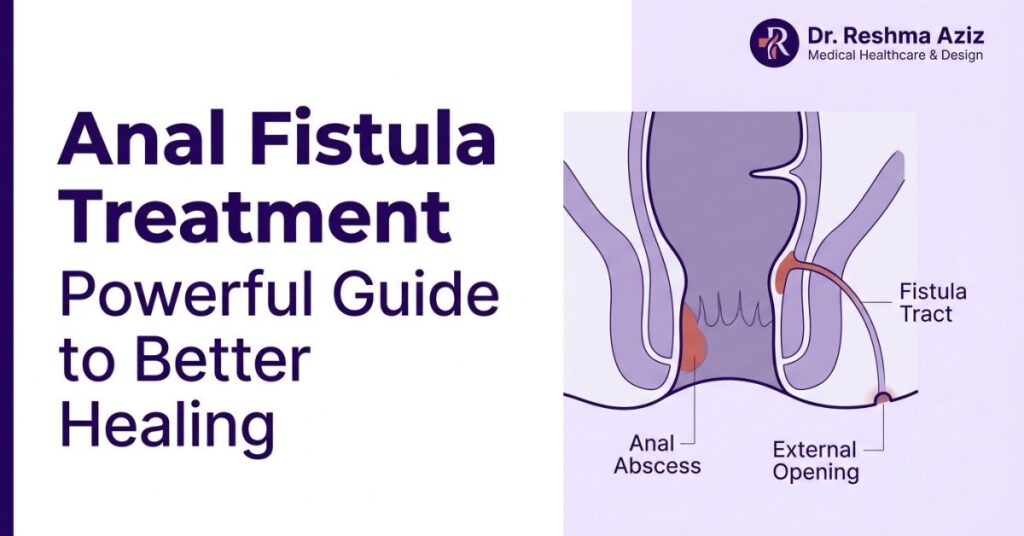
An anal fistula is an abnormal tunnel between the anal canal and nearby skin, often left after an abscess. Anal fistula treatment usually requires a procedure because a confirmed tract rarely closes permanently on its own. The safest option depends on the tract, sphincter involvement, infection, and previous treatment. This guide explains diagnosis, surgery, laser options, recovery, cost, and care in Dhaka.
Most confirmed cases need a procedure. Medicines may settle infection but usually do not remove the tract. The goal is healing while protecting bowel control.
What Is an Anal Fistula, and Why Does It Develop?
An anal fistula, or fistula-in-ano, is a tract linking the anal canal to nearby skin. The American Society of Colon and Rectal Surgeons explains that many develop after an infected anal gland forms an abscess. The tract may remain after drainage.
Common symptoms include:
- repeated discharge of pus, blood, or fluid near the anus;
- pain or pressure that may worsen when sitting or passing stool;
- a small opening, tender area, or recurring swelling near the anus;
- skin irritation, itching, or an unpleasant smell; and
- fever or increasing pain if another abscess develops.
Symptoms can overlap with piles, fissure, or skin infection. The anal fissure vs piles comparison explains common differences, but only an examination can confirm the cause. Do not squeeze a swelling.
Less common causes include Crohn’s disease, tuberculosis, previous surgery, trauma, and radiation. The cause can change treatment planning and recurrence risk.

How Is a Fistula Diagnosed Before Treatment?
Safe anal fistula treatment begins with mapping the tract. A clinician asks about pain, drainage, fever, bowel habits, previous abscesses or operations, medical conditions, medicines, and continence.
The assessment may include:
- External inspection: Looks for an opening, drainage, swelling, scars, or abscess.
- Gentle examination: May include a digital examination or anoscopy when appropriate.
- Selected imaging: MRI or endoanal ultrasound may map a complex, recurrent, branching, or hidden tract.
- Examination under anaesthesia: Helps when an office examination is insufficient.
- Cause-specific tests: May be needed when Crohn’s disease, tuberculosis, or another condition is suspected.
This helps a fistula specialist doctor in Dhaka classify the tract and its relationship to the sphincter. People seeking fistula in ano treatment in Dhaka need the same careful mapping. Dividing too much muscle can affect bowel control; missing part of the tract can allow recurrence.
The best procedure is the one that treats the confirmed tract while preserving sphincter function. No single technique is best for every patient.
Which Anal Fistula Treatment Options Are Available?
The NHS notes that fistulas commonly require surgery because they rarely heal untreated. The plan follows examination and, when needed, imaging.
Fistulotomy
A fistulotomy opens a simple, low tract so it heals from the base outward. This established procedure is unsuitable when opening the tract would put continence at unacceptable risk.
Seton placement
A seton is a thread passed through the tract to maintain drainage and control infection. It may remain before another procedure when more sphincter muscle is involved or inflammation must settle.
Sphincter-preserving procedures
For selected complex fistulas, LIFT or an advancement flap may close the internal opening while limiting sphincter injury. Results vary with anatomy, cause, and previous operations.
Laser fistula treatment
Laser uses energy inside the tract while avoiding significant sphincter cutting. Interest in laser fistula treatment in Dhaka is growing, but it is not automatically safer or better. For this anal fistula treatment, ask about suitability, alternatives, experience, and follow-up.
| Option | Often considered for | Potential benefit | Important limitation |
|---|---|---|---|
| Fistulotomy | Simple, low tract | Established approach with direct tract healing | Not suitable if too much sphincter is involved |
| Draining seton | Infection, complex or high tract | Controls drainage and protects tissue before the next step | May require staged treatment |
| LIFT or advancement flap | Selected sphincter-crossing fistulas | Designed to preserve sphincter muscle | Recurrence or further treatment may occur |
| Laser closure | Selected mapped fistulas | Limited cutting of sphincter muscle | Availability, cost, and results vary |
Anal fistula surgery in Dhaka should follow diagnosis, not marketing. Trade-offs include infection, delayed healing, recurrence, and continence changes.
Can Anal Fistula Heal Without Surgery?
Usually, no. If you are asking, can anal fistula heal without surgery, a confirmed cryptoglandular tract rarely closes permanently without a procedure. Antibiotics may be prescribed for spreading infection, fever, or a specific clinical reason, but they do not usually remove the tract. Warm-water cleansing and stool-softening care may ease discomfort; they are not a cure.
Anal fistula treatment without surgery may refer to fibrin glue or biologic treatment for selected Crohn’s-related disease. Glue is still a procedure and is generally less reliable than fistulotomy for a suitable simple tract. Avoid products promising to dissolve a fistula.
Does anal fistula need surgery?
Most confirmed fistulas require a procedure. Timing depends on abscess, anatomy, symptoms, sphincter involvement, and health. An abscess may need urgent drainage before definitive anal fistula treatment.
What Does Anal Fistula Treatment Cost in Dhaka?
There is no standard citywide fee. Fistula treatment cost in Dhaka varies because a simple fistulotomy and a branching fistula need different care. An estimate should follow examination and necessary imaging.
Ask for an itemised quotation covering:
- consultation and examination;
- imaging, blood tests, or other required investigations;
- surgeon, anaesthetist, operating theatre, and hospital fees;
- the exact procedure, equipment, seton, and consumables;
- medicines, dressings, and day-care or admission charges; and
- follow-up visits and the plan if another stage is needed.
Laser fistula surgery cost in Dhaka may be higher, but price does not prove suitability. Compare the total bill, evidence, continence risk, recovery, and recurrence plan. No ethical anal fistula treatment should promise a guaranteed cure.
Piles and fistula procedures differ. The laser piles surgery cost guide explains common quotation components but should not estimate fistula care.
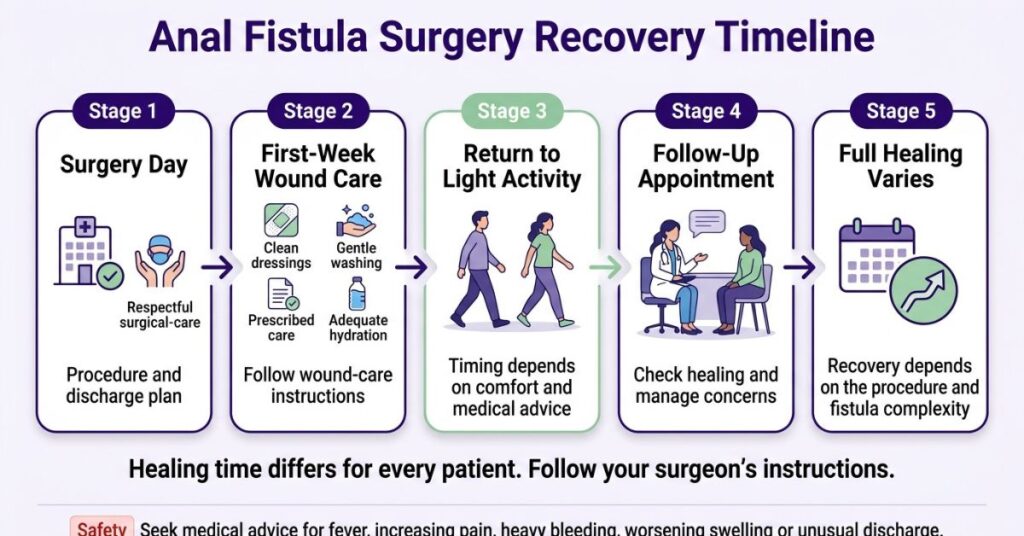
Anal Fistula Surgery Recovery Time and First-Week Care
Anal fistula surgery recovery time depends on the procedure, tract, wound, infection, health, and staged care. Some people return to desk work within days; healing may take weeks or longer.
First-week soreness, tiredness, light drainage, or slight bleeding may occur. Follow personalised instructions because wound and seton care differ.
Common recovery steps include:
- take prescribed pain relief and stool-softening medicine correctly;
- use suitable fluids and fibre to reduce straining;
- keep the area clean with plain warm water as instructed;
- use gauze or a pad for expected drainage if advised;
- avoid heavy lifting, running, and strenuous exercise during early recovery; and
- attend follow-up even if symptoms improve.
The Guy’s and St Thomas’ NHS recovery guide advises seeking help for ongoing bleeding, fever, or feeling unwell. After anal fistula treatment, report worsening pain, swelling, foul discharge, heavy bleeding, urinary difficulty, or loss of bowel control.
Expect some discomfort and drainage. Keep stools soft, clean the wound as instructed, and avoid heavy activity. Fever or worsening symptoms need review.
Choosing Anal Fistula Treatment in Dhaka
When comparing anal fistula treatment in Dhaka, look beyond equipment. A clinician should explain the tract, sphincter involvement, alternatives, and realistic outcomes.
Useful questions include:
- Where does the tract run, and is MRI needed?
- Is there an abscess to drain first?
- Why is this procedure suitable, and how will you protect bowel control?
- Could I need a seton or staged operation?
- What are the recurrence and delayed-healing risks?
- What do recovery, follow-up, and the written estimate include?
People searching for the best fistula doctor in Dhaka should verify registration, colorectal training, technique-specific experience, hospital access, privacy, and follow-up. A female fistula doctor in Dhaka may make sensitive discussions easier for some women. See this guide to choosing a female proctologist in Dhaka.
Who Is Dr. Reshma Aziz?
Dr. Reshma Aziz is a Dhaka-based consultant surgeon whose documented background includes colorectal, rectal, breast, general, and paediatric surgery. For patients considering anal fistula treatment, her most relevant credentials and experience include:
- MBBS (Dow Medical College, 1994): She completed her primary medical degree in Medicine and Surgery at Dow Medical College, Pakistan.
- Master’s in Paediatric Surgery (University of Dhaka, 2003): This postgraduate surgical degree strengthened her training in surgical assessment, patient care, and operative management.
- Postgraduate Diploma in Colorectal Surgery (Tech Technological University, Spain, 2023): This qualification is directly relevant to conditions affecting the colon, rectum, and anal region, including anal fistula and abscess.
- Colorectal Surgery and LASER Proctology Training: Her CV records Colorectal Surgery training at Dhaka Medical College in 2001 and LASER training in Proctology at Pristyn-affiliated hospitals in 2023.
- Clinical and Surgical Experience Since 1996: Her professional record includes surgical roles at Dhaka Shishu Hospital, Apollo Hospital Dhaka, Square Hospitals, Shifa International Hospitals, and Dhaka Lab. Her consultant work includes rectal surgery and LASER proctology.
- Expertise Relevant to Anal Fistula: Her colorectal and proctology background supports the assessment of anal fistula, abscess, piles, and fissure, followed by an individualised discussion of suitable treatment options.
- BMDC Registration No. A-24611: Her MBBS registration details can be checked through the official Bangladesh Medical and Dental Council verification record.
If bleeding or a lump is the main symptom, read about piles treatment in Bangladesh. During pregnancy, see piles during pregnancy before using medicine.
Recurrent Anal Fistula Treatment in Dhaka
A fistula can return when a branch or opening was missed, infection persists, healing is incomplete, or underlying disease remains active. Recurrent anal fistula treatment in Dhaka should begin with reassessment.
Bring previous operation notes, imaging, and test results. MRI may map recurrent or branching disease. The plan may involve drainage, seton, sphincter-preserving surgery, underlying-disease care, or stages. The anatomy and cause need fresh review.
Frequently Asked Questions
Can you heal from an anal fistula without surgery?
A confirmed fistula rarely heals permanently without a procedure. Medicines may reduce infection or discomfort but usually do not close the tract. Assessment identifies the safest option.
How long does anal fistula surgery recovery really take?
Many patients resume light activity within days, but healing can take several weeks or longer after complex or staged surgery. Timelines should be personalised.
What should I expect during the first week after fistula surgery?
Soreness, drainage, fatigue, and slight bleeding may occur. Keep stools soft, follow wound instructions, and avoid strenuous activity. Fever, heavy bleeding, swelling, or worsening pain needs advice.
Is laser the best anal fistula treatment?
Not for everyone. Laser may preserve sphincter muscle in selected cases, but results depend on anatomy. Compare it with fistulotomy, seton, LIFT, and advancement flap.
What happens if an anal fistula is left untreated?
Persistent drainage, pain, irritation, or another abscess may occur even if symptoms come and go. Fever, severe pain, or increasing swelling needs urgent assessment.
Can a fistula come back after treatment?
Yes, especially with complex, branching, Crohn’s-related, or previously treated fistulas. Accurate mapping, suitable anal fistula treatment, wound care, and follow-up reduce avoidable risk.
When should I seek urgent medical care?
Seek prompt care for fever, worsening pain, increasing swelling, heavy bleeding, dizziness, urinary difficulty, or feeling seriously unwell.
Key Takeaways and Next Step
- An anal fistula is usually a persistent tunnel left after an anal abscess.
- Most confirmed cases need a procedure; medicines alone rarely close the tract.
- The best anal fistula treatment balances fistula healing with protection of bowel control.
- Fistulotomy, seton, LIFT, advancement flap, and laser each suit different anatomy.
- Cost and recovery cannot be confirmed until the tract and treatment plan are known.
- Recurrent disease needs careful remapping and review of underlying causes.
For recurring pain, swelling, or discharge, arrange a confidential assessment with Dr. Reshma Aziz in Dhaka. Bring previous reports and medicines. After examination, discuss anal fistula treatment choices, recovery, and a written estimate.
Medical review note: Dr. Reshma Aziz should review and approve this article before publication.
Medical disclaimer: This article provides general education and does not replace medical consultation. Seek urgent care for severe pain, fever, increasing swelling, heavy bleeding, dizziness, or feeling seriously unwell.