
Piles during pregnancy are swollen blood vessels and supporting tissue in or around the anus. They can cause itching, soreness, a lump or bright-red bleeding after a bowel movement. They are uncomfortable, but they do not usually harm the unborn baby. The safest first steps are usually to keep stools soft, avoid straining, stay gently active and use simple comfort measures. Check any medicine with a doctor, obstetric clinician, midwife or pharmacist first.
Below, learn why pregnancy piles happen, what to do at home and when to seek care.
What helps pregnancy piles?
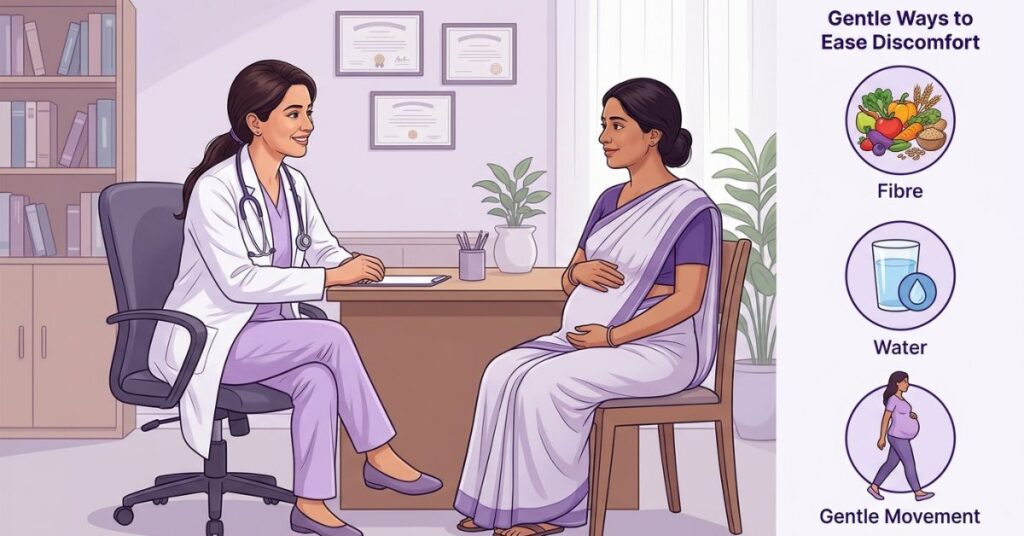
Eat fibre-rich food, drink enough water, go to the toilet when you feel the urge, avoid straining, move regularly and use a cool compress for short-term relief. If symptoms continue, ask a qualified clinician which treatment is suitable for your stage of pregnancy.
What Are Piles During Pregnancy?
Piles, also called haemorrhoids, develop when the normal vascular cushions in the anal canal become enlarged or displaced and start causing symptoms. They may be internal or external:
- Internal piles form inside the anal canal. They may bleed or come down during a bowel movement.
- External piles form under the skin around the anus and may cause swelling, tenderness or itching.
Common symptoms of piles during pregnancy include:
- itching, aching or soreness around the anus;
- pain while passing stool;
- a soft or firm lump near the anal opening;
- mucus after a bowel movement;
- bright-red blood on toilet paper, on the stool or in the toilet; and
- discomfort after prolonged sitting.
These symptoms can overlap with an anal fissure or another bowel condition. Do not assume every episode of rectal bleeding is caused by piles during pregnancy.
Why Do Hemorrhoids During Pregnancy Happen?
Hormonal changes can slow the bowel. The growing uterus adds pelvic pressure, while blood volume rises. Straining, long toilet sessions and a previous history of piles during pregnancy add to the risk.
Can piles occur in early pregnancy?
Yes. Piles in early pregnancy can occur when constipation starts, vomiting reduces fluid intake or iron makes stool harder. They are more common after the first trimester. Never stop iron alone; ask the antenatal team about alternatives or constipation care.
Why are piles common in the third trimester?
Piles in the third trimester are common because pelvic pressure is greater and constipation may continue. At 39 weeks, the condition can still be normal, but new bleeding, severe pain or a rapidly enlarging lump deserves medical advice. Symptoms may worsen during labour because pushing increases rectal pressure.
Piles during pregnancy often improve after childbirth as pelvic pressure falls. Severe symptoms should still be treated rather than tolerated until delivery.

How to Treat Piles During Pregnancy Safely
Safe piles treatment during pregnancy starts by reducing constipation and irritation. If that is not enough, a clinician can recommend short-term relief based on the trimester, symptoms and medical history.
Step 1: Keep stool soft with food and fluids
Add fibre gradually. Options available in Bangladesh include dal, oats, wholegrain roti, brown rice, papaya, guava, pears, leafy vegetables and beans. Increasing fibre too quickly can cause bloating.
Drink regularly unless a clinician restricts fluids. UK guidance commonly advises 1.5 to 2 litres daily, although needs vary. In hot Dhaka, carry safe drinking water.
Step 2: Change toilet habits
Go when the urge comes; delaying allows stool to harden. Sit comfortably, breathe normally and avoid forceful straining. Leave the toilet when the bowel movement is finished.
If constipation continues, ask a doctor or pharmacist about a pregnancy-appropriate stool softener, fibre supplement or laxative. Products are not interchangeable.
Step 3: Ease pain, swelling and irritation
For painful piles during pregnancy, hold a clean, cool cloth gently against the area. A warm, shallow bath may also soothe. Clean with water or moist, unscented tissue, then pat dry. Avoid rubbing and perfumed wipes.
Change position regularly if work involves prolonged sitting or standing. Gentle walking can support bowel regularity when the antenatal team considers exercise safe.
Step 4: Check before using any medicine
Treatment for piles during pregnancy may include a soothing topical product or short-term pain relief. The best option depends on its ingredients and the patient. NHS guidance says to check any cream or medicine with a doctor, midwife or pharmacist first.
Paracetamol may be an option, but confirm its suitability and dose. Ibuprofen is generally avoided in pregnancy, while codeine can worsen constipation. A natural label does not make a herbal product pregnancy-safe.
Safe-treatment rule
Do not start, stop or switch a medicine during pregnancy based only on an online article. Show the exact product or ingredient list to a qualified healthcare professional.
Bleeding Piles During Pregnancy: When Is It Urgent?
A small streak of bright-red blood after stool can occur with haemorrhoids. Even so, bleeding piles during pregnancy should be discussed with a healthcare professional, especially the first time. A fissure can also cause fresh blood; dark blood or blood mixed through stool may have another source.
Arrange a prompt assessment if:
- bleeding repeats, increases or does not stop;
- pain is severe, constant or suddenly worse;
- there is a hard, very tender or discoloured external lump;
- symptoms continue after about a week of careful home measures;
- there is fever, pus, spreading redness or feeling seriously unwell;
- bowel habits or stool colour change without a clear reason; or
- weakness, tiredness or pallor suggests anaemia.
Seek urgent care for heavy bleeding, fainting, dizziness, shortness of breath, severe abdominal pain or another pregnancy warning sign. If bleeding could be vaginal rather than rectal, contact the maternity team promptly.
Can piles affect the unborn baby?
Haemorrhoids themselves do not usually affect the baby. The important issues are confirming where bleeding comes from, preventing significant blood loss and choosing medicines that are appropriate in pregnancy.
What Will a Doctor Check?
A clinician will ask about symptoms, bleeding, bowel habits, medicines and pregnancy complications. External piles may be identified by inspection. Further examination should be necessary, consensual and private.
An assessment for piles during pregnancy may lead to:
- confirmation of internal or external haemorrhoids;
- checks for fissure, infection, thrombosis, anaemia or another cause;
- a personalised constipation plan;
- suitable topical treatment or pain relief, if needed; and
- obstetric coordination for severe or uncertain cases.
Procedures and surgery are not routine first options for piles during pregnancy. Most cases are managed conservatively and often settle after birth. Intervention is reserved for selected severe or complicated cases after specialist and obstetric risk-benefit assessment.
What does pregnancy piles treatment cost in Bangladesh?
Pregnancy piles treatment in Bangladesh has no responsible fixed price. Cost may include consultation, examination, medicine, tests and follow-up. Most patients need no procedure. Ask for an itemised estimate after assessment.
For a wider explanation of available options, read the guide to piles treatment in Bangladesh. Information about laser piles surgery cost in Bangladesh is intended for general planning and should not be read as a recommendation for surgery while pregnant.
Quick Comparison: What Helps and What Needs Caution?
| Option | Possible role | Important caution |
|---|---|---|
| Fibre-rich meals | Helps soften stool | Increase gradually to reduce bloating |
| Adequate water | Supports soft stool | Follow advice if fluids are restricted |
| Gentle movement | May support regularity | Choose pregnancy-approved activity |
| Cool compress | Can temporarily reduce soreness | Wrap or use a cloth; do not place ice directly on skin |
| Warm shallow bath | May soothe itching or discomfort | Use clean, comfortably warm water, not very hot water |
| Cream, suppository or laxative | May provide short-term relief | Confirm the exact product first |
| Procedure or surgery | For selected severe cases | Requires specialist and obstetric assessment |
Key takeaways
- Piles during pregnancy are common and usually do not threaten the baby.
- Constipation control is the foundation of treatment.
- Bright-red rectal bleeding can come from piles, but it still deserves proper assessment.
- External piles during pregnancy may be particularly sore if a clot develops.
- Medicines and herbal remedies should be checked before use.
- Severe pain, heavy bleeding, dizziness or uncertainty about the bleeding source requires prompt care.
Frequently Asked Questions
Can hemorrhoids affect my unborn baby during pregnancy?
Usually, no. Hemorrhoids during pregnancy affect tissue around the anus and do not directly harm the fetus. Discuss bleeding, severe symptoms and medicine with the maternity or medical team.
Is it normal to have hemorrhoids at 39 weeks pregnant?
Yes, they are common late in pregnancy because pelvic pressure is high and constipation may be present. However, first-time bleeding, severe pain or a hard tender lump should be assessed rather than assumed to be normal.
What is the fastest way to get rid of hemorrhoids while pregnant?
There is no instant cure. The quickest safe approach to piles during pregnancy is usually to soften stool, stop straining, use a cool compress and ask about suitable short-term topical relief. Many cases improve after delivery.
How can I sleep with painful pregnancy piles?
Try side-lying if comfortable, avoid prolonged pressure and use a cool compress before bed. Pain that prevents sleep or becomes intense needs medical advice.
Should I push an external pile back inside?
No. A true external pile is under the skin and should not be forced inward. A prolapsed internal pile is different; seek individual guidance before trying to reduce it.
When should I see a piles specialist during pregnancy in Dhaka?
Book an assessment for repeated bleeding, persistent symptoms, a painful lump, uncertainty about the diagnosis or symptoms that do not improve with basic care. Seek urgent help for heavy bleeding, dizziness, fainting or severe pain.
Do pregnancy piles disappear after birth?
They often improve within days or weeks after delivery as pressure falls and constipation resolves. If symptoms or bleeding persist, arrange a follow-up rather than continuing self-treatment indefinitely.
Get Private, Individual Advice in Dhaka
Piles during pregnancy can feel embarrassing, but early advice may improve comfort and rule out other causes of bleeding. Dr. Reshma Aziz provides colorectal and family-medicine assessment with a focus on privacy and individual care. Her background includes colorectal training and antenatal and postnatal rectal care.
Patients looking for a female piles doctor during pregnancy in Dhaka can learn about Dr. Reshma Aziz and her approach, review her breast, colorectal and family medicine services, or explore more patient education articles. Consultations are available in Mohammadpur and Gulshan; confirm the current schedule and fee when booking.
This article is educational and cannot diagnose a condition or replace advice from an obstetric or colorectal clinician. Before publication, it should be medically reviewed and dated by Dr. Reshma Aziz.
Medical review status: Medical review by Dr. Reshma Aziz is recommended before publication.