
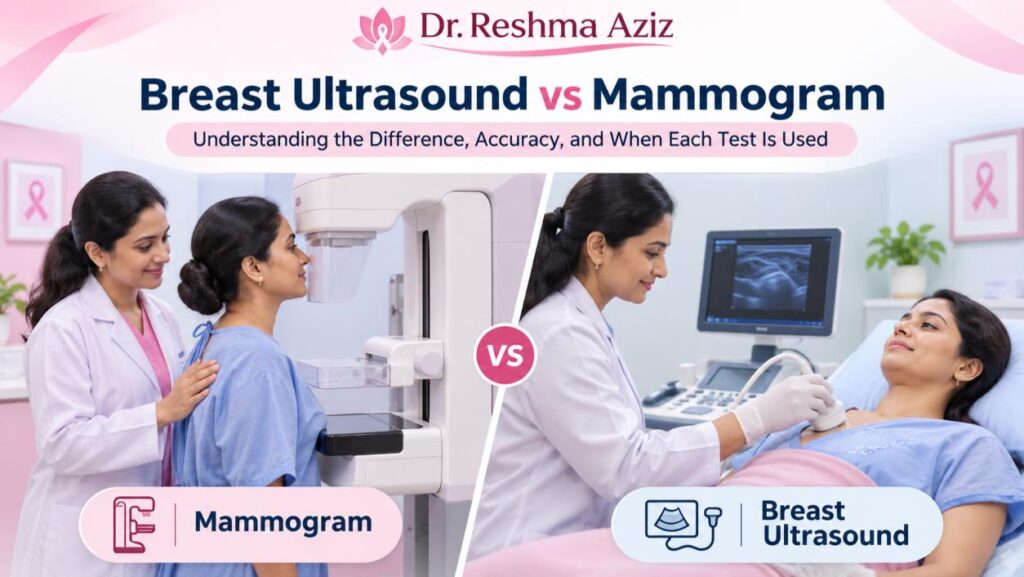
Finding a lump, feeling a new pain, or being told you need “breast imaging” can make anyone anxious. One of the first questions women in Dhaka ask is simple: breast ultrasound vs mammogram, which one do I actually need?
A mammogram is a low-dose X-ray and the main screening test for breast cancer in women aged 40 and over. A breast ultrasound uses sound waves, has no radiation, and is usually the first test for a breast lump in women under 30, during pregnancy, or while breastfeeding. Between 30 and 39, either test may come first. Many women need both, because each one sees things the other can miss.
In the breast ultrasound vs mammogram decision, age, symptoms, pregnancy and breast density matter most. Under 30 with a lump: ultrasound first. Age 40 or over: mammogram first, often followed by a targeted ultrasound. Neither test can confirm cancer on its own; only a biopsy can.
In this guide you will learn how the two tests differ, how accurate each one is, which comes first at different ages, what they cost in Dhaka, and when to see a breast specialist.
What Is the Difference Between a Mammogram and Ultrasound of the Breast?
The main difference between a mammogram and ultrasound of the breast is the technology. A mammogram uses X-rays to create a picture of the whole breast. An ultrasound uses sound waves to look closely at one area.
What is a mammogram?
A mammogram is a low-dose X-ray of the breast. Each breast is pressed briefly between two flat plates so the image is clear. It can show tiny calcium deposits (microcalcifications) that may be an early sign of cancer, sometimes before a lump can be felt. There are two types:
- Screening mammogram: for women with no symptoms.
- Diagnostic mammogram: for a lump, nipple change or abnormal screening result, with extra views of the area of concern.
What is a breast ultrasound?
A breast ultrasound (also called a breast sonogram or USG breast) uses high-frequency sound waves and a handheld probe moved over gel on the skin. It shows in real time whether a lump is a fluid-filled breast cyst or a solid mass, and it is often used to guide a needle biopsy.
Breast ultrasound vs mammogram at a glance
| Feature | Mammogram | Breast ultrasound |
|---|---|---|
| How it works | Low-dose X-ray | Sound waves |
| Radiation | Small dose | None |
| Main role | Screening and diagnosis (40+) | Checking a specific lump or area |
| Best at | Calcifications, whole-breast view | Cyst vs solid lump, dense tissue |
| Safe in pregnancy | Used only if clearly needed | Yes, usually first choice |
| Comfort | Brief pressure, may ache | Gel and light pressure, usually painless |
| Limitation | Less clear in dense breasts | Misses many calcifications, depends on operator skill |
This is why the breast ultrasound vs mammogram question rarely has a single winner. The two tests answer different questions.
Breast Ultrasound vs Mammogram Accuracy: Which Test Finds More?
Neither test is “more accurate” in every situation. Accuracy depends on your age, your breast tissue and what the doctor is looking for.
Mammogram strengths: Screening mammography is the only breast imaging test shown in large studies to lower the risk of dying from breast cancer. It is good at spotting calcifications linked to early cancers such as ductal carcinoma in situ (DCIS).
Ultrasound strengths: Ultrasound is very good at telling a harmless cyst from a solid lump. It can also show a lump that a mammogram hides in dense tissue.
The trade-off: When breast ultrasound vs mammogram accuracy is compared for screening, ultrasound finds some extra cancers but also flags many changes that turn out to be harmless. That means more recalls and more biopsies that were not needed.
Breast ultrasound vs mammogram for dense breast tissue
Dense breasts have more glandular and fibrous tissue than fat. On a mammogram, both dense tissue and tumours look white, so a cancer can be harder to see. Younger women naturally have denser breasts, and density usually falls after menopause.
In the breast ultrasound vs mammogram for dense breast tissue debate, the evidence is still mixed. A systematic review for the US Preventive Services Task Force found that adding ultrasound after a normal mammogram detects additional cancers but raises false positives. In 2024 the Task Force said evidence is not yet enough to recommend routine extra ultrasound for every woman with dense breasts. The decision should be personal, based on your overall risk.
If you have dense breasts, you still need a mammogram. An added ultrasound may help, especially if you have other risk factors, so discuss it with your doctor.
Breast Ultrasound or Mammogram First? When to Do Each Test
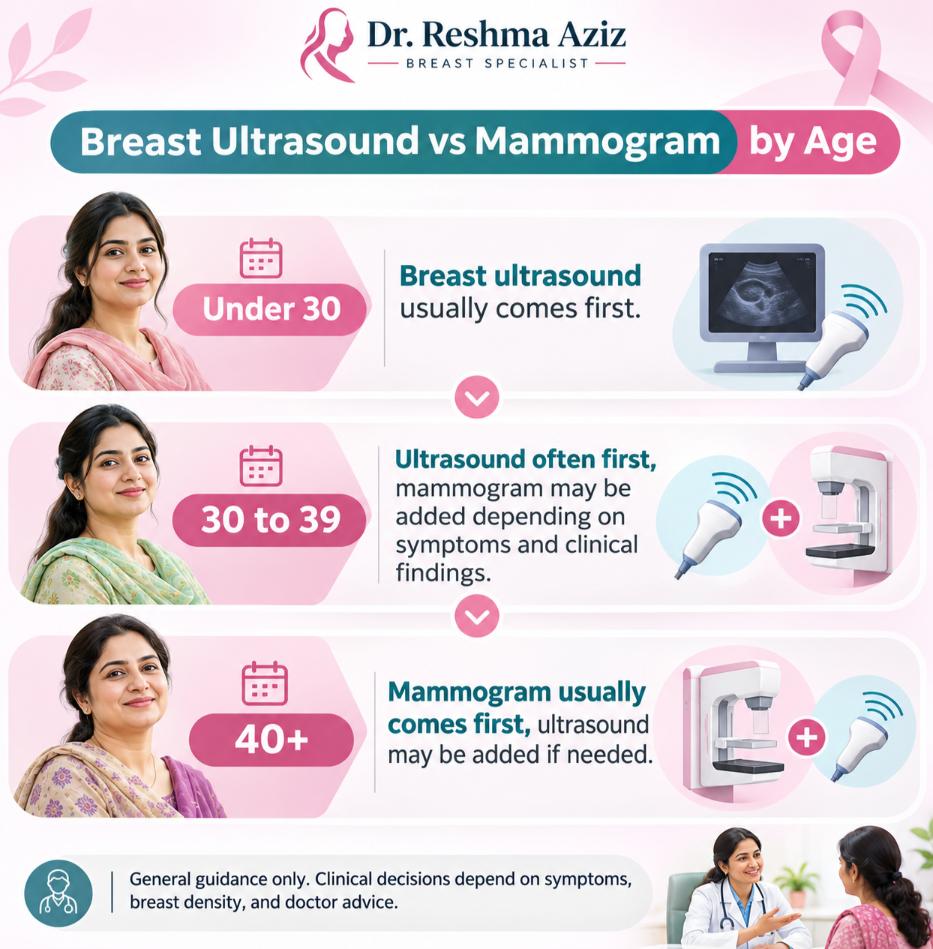
When doctors decide between a breast ultrasound or mammogram first, age is the starting point. The table below follows the American College of Radiology guidance for a lump that can be felt.
| Your situation | Usual first test | What may follow |
|---|---|---|
| Under 30 with a lump | Breast ultrasound | Mammogram only if the ultrasound looks suspicious |
| Age 30 to 39 with a lump | Ultrasound or diagnostic mammogram | Often both |
| Age 40 or over with a lump | Diagnostic mammogram | Targeted ultrasound of the area |
| Pregnant or breastfeeding | Breast ultrasound | Mammogram if the doctor needs more detail |
| No symptoms, age 40 or over | Screening mammogram | Ultrasound only if something is found |
Mammogram vs ultrasound for a breast lump
Most breast lumps are not cancer. Common causes include a fibroadenoma, a cyst, or an infection such as a breast abscess. Still, every new lump deserves a check. In younger women, ultrasound usually gives the answer without radiation. In women over 40, a mammogram first checks the whole of both breasts, then ultrasound looks closely at the lump. You can read more about the types of breast lumps and how they differ.
Breast ultrasound vs diagnostic mammogram
A diagnostic mammogram is not the same as a routine screening one. It takes extra, focused views of a problem area. In the breast ultrasound vs diagnostic mammogram comparison, the two often work as a team. One example: a 45-year-old woman with a firm lump may have a diagnostic mammogram to look for calcifications and an ultrasound the same day to measure the lump and guide a biopsy.
Breast ultrasound vs mammogram age: why it matters
The breast ultrasound vs mammogram age rule exists because young breast tissue is dense, which makes a mammogram less clear, and because breast cancer is less common in younger women. As women get older, breast tissue usually contains more fat, so mammograms become clearer and more useful.
Can You Have a Breast Ultrasound Instead of a Mammogram for Screening?
For most women aged 40 and over, the answer is no. According to the American Cancer Society’s guide to breast ultrasound, ultrasound is not used routinely for breast cancer screening, though it is very useful for diagnosing breast problems. A breast ultrasound instead of a mammogram may miss early cancers that show up only as calcifications.
In breast cancer screening, ultrasound vs mammogram is not an either-or choice. The US Preventive Services Task Force (2024) recommends a screening mammogram every two years for women aged 40 to 74 at average risk. Ultrasound is then added when there is a reason, such as a symptom, dense tissue with other risk factors, or an unclear mammogram.
Pros and cons in short
| Pros | Cons | |
|---|---|---|
| Mammogram | Proven screening benefit, detects calcifications, whole-breast view | Small radiation dose, brief discomfort, less clear in dense tissue |
| Breast ultrasound | No radiation, painless, good for young or pregnant women, guides biopsy | Not a proven stand-alone screening test, more false alarms, operator-dependent |
Breast Ultrasound vs Mammogram Cost in Dhaka
In Dhaka, the breast ultrasound vs mammogram cost difference is smaller than many people expect. Both tests usually fall in a similar range at private diagnostic centres. The figures below are approximate list prices from public price listings checked in November 2026. Prices change often, so confirm with the centre before you go.
| Test (both breasts) | Typical private centre price in Dhaka | Notes |
|---|---|---|
| Mammogram test price in Dhaka | About BDT 2,000 to 3,500 | Single-side mammograms are listed lower, around BDT 1,000 |
| Breast ultrasound price in Dhaka | About BDT 3,000 to 4,000 | 3D, 4D or automated breast scans cost more |
Government and medical college hospitals generally charge less, but waiting times can be longer. For the breast ultrasound price in Bangladesh outside Dhaka, costs are often a little lower than in the capital.
What changes the final cost?
- One breast or both breasts
- Screening or diagnostic views
- Digital mammography or tomosynthesis (3D)
- Whether a specialist report or package is included
- Any follow-up test, such as a biopsy
Tip: the cheapest test is the one you only need to do once. Choosing the right first test with your doctor can save both money and repeat visits.
How to Prepare and What to Expect on the Day
Both tests are quick outpatient procedures. A few simple steps help you get a clear result.
Before a mammogram
- Avoid deodorant, powder or lotion on the chest and underarms. They can show up as white spots on the X-ray.
- If you still have periods, book it for the week after your period, when breasts are usually less tender.
- Tell the staff if you are pregnant, breastfeeding or have breast implants.
- Bring previous breast images and reports so the radiologist can compare.
Before a breast ultrasound
- No fasting or special preparation is needed.
- Wear a two-piece outfit so you only need to undress from the waist up.
- Point to the exact spot of any lump or pain you have noticed.
A mammogram takes about 15 to 20 minutes, and the pressure lasts only a few seconds per image. An ultrasound usually takes 15 to 30 minutes and should not be painful. A specialist reads the images and gives a written report, often using the BI-RADS scoring system from 0 to 6.
When Should You See a Doctor About Breast Changes?
You do not need to choose a scan on your own. A doctor’s examination comes first, and it decides which test makes sense. Book a prompt check if you notice:
- A new lump or thickening in the breast or armpit
- A change in breast size or shape
- Skin dimpling, puckering or redness
- A nipple that turns inward, or nipple discharge, especially if it is bloody
- Pain in one spot that does not go away after your period
See a doctor urgently if you have a hot, swollen, painful breast with fever, which may be an infection.
The NHS guide to tests for breast cancer explains that a breast clinic usually combines a clinical examination, a mammogram, an ultrasound and, if needed, a needle biopsy, often in one visit. This combined approach is safer than relying on any single scan. For more on warning signs, see our guides to breast cancer symptoms and when breast pain is a worry.

Frequently Asked Questions
Which is better, breast ultrasound or mammogram?
Neither is better for everyone. In the breast ultrasound vs mammogram choice, a mammogram is better for screening women aged 40 and over, while ultrasound is better for checking a lump in younger, pregnant or breastfeeding women. Many women need both.
Can I have a breast ultrasound instead of a mammogram if I am under 40?
Yes, in most cases. If you are under 30 and have a lump, ultrasound is usually the first and often the only test needed. Women under 40 without symptoms or strong family history generally do not need routine screening.
Is a mammogram safe and painful?
A mammogram uses a very low radiation dose, and the benefit of finding cancer early is considered far greater than the risk. The pressure can feel uncomfortable, but it lasts only a few seconds.
If my ultrasound is normal, do I still need a mammogram?
It depends on your age and symptoms. A woman aged 40 or over with a lump usually needs a mammogram even if the ultrasound looks normal, because ultrasound can miss calcifications.
Can a breast ultrasound vs mammogram tell me for sure if I have cancer?
No. Both tests show how likely a change is to be harmless or suspicious. Only a biopsy, where a small tissue sample is tested in a lab, can confirm cancer.
Do I need a doctor’s advice before booking a breast scan in Dhaka?
It is strongly recommended. A doctor examines you first, picks the right test, and explains the report, which avoids unnecessary or repeated scans.
Key Takeaways: Breast Ultrasound vs Mammogram
- A mammogram is an X-ray and the main screening test from age 40.
- A breast ultrasound uses sound waves, has no radiation, and is the usual first test for a lump under 30 or in pregnancy.
- Women aged 30 to 39 may start with either test.
- Dense breasts make mammograms harder to read; extra ultrasound can help but adds false alarms.
- In Dhaka, both tests cost roughly BDT 2,000 to 4,000 at private centres.
- Only a biopsy can confirm cancer.
Get Expert Advice From Dr. Reshma Aziz
Choosing between a breast ultrasound vs mammogram is much easier after a proper breast examination. Dr. Reshma Aziz is a female breast and colorectal surgeon in Dhaka with more than 20 years of clinical and surgical experience. She is also a certified diagnostic sonologist, which helps her explain imaging findings in plain language. You can review her qualifications and surgical training and verify her registration with the Bangladesh Medical and Dental Council (BMDC Registration No. A-24611).
During a private breast surgery consultation in Dhaka, she will listen to your concerns, examine you gently, advise whether you need an ultrasound, a mammogram or both, and explain your report and next steps.
Chambers
- Dhaka Lab, Mohammadpur: Saturday, Tuesday, Thursday, 11:30 AM to 1:30 PM
- Cure Medical Center & Hospital, Gulshan: Saturday, Tuesday, 4:00 PM to 6:00 PM
Phone: +88-019-48-444-999 | WhatsApp: +88-017-75-73-19-35
Consult Dr. Reshma Aziz for an individual assessment. Book an appointment to discuss your symptoms and the right breast test for you.
This article is for general education and does not replace a personal medical consultation.
Dr. Reshma Aziz | Breast, Colorectal & Family Medicine Specialist