

A pilonidal sinus is a small tunnel or pit in the skin near the top of the buttock crease. It may remain quiet or become infected, causing pain, swelling, pus, blood or an unpleasant smell. Effective pilonidal sinus treatment depends on whether the condition is symptom-free, acutely infected or repeatedly returning.
A painless pilonidal sinus may only need observation and preventive care. A painful abscess usually requires professional incision and drainage. Recurrent or persistently draining disease may need a planned procedure to remove or clean the sinus tract.
This guide explains the symptoms, safe treatment options, possible costs, recovery and when to consult a surgeon in Dhaka.
What Is a Pilonidal Sinus?
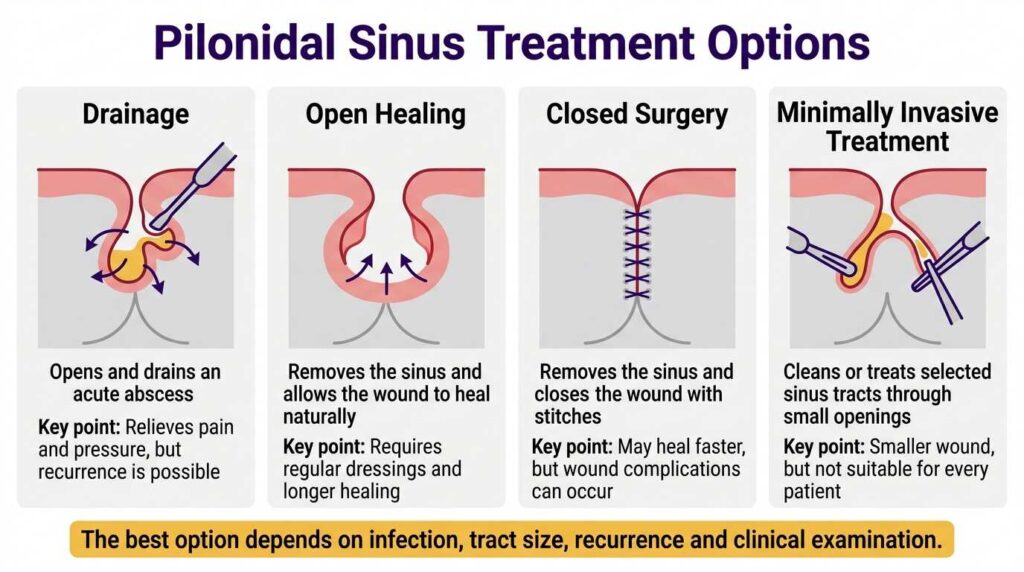
A pilonidal sinus is a narrow channel beneath the skin, usually located in the cleft between the buttocks near the coccyx or tailbone. It may contain loose hair, skin debris and inflamed tissue.
The condition is also called pilonidal disease. People sometimes use the terms pilonidal cyst, sinus and abscess interchangeably, but they describe slightly different stages:
| Term | Simple meaning |
|---|---|
| Pilonidal pit | A small opening or depression in the skin |
| Pilonidal sinus | A tunnel leading beneath the skin |
| Pilonidal cyst | A cavity that may contain hair or debris |
| Pilonidal abscess | An infected, painful collection of pus |
Loose hair can penetrate or become trapped in the skin. Friction, moisture, pressure and prolonged sitting may then contribute to inflammation. Pilonidal disease is especially common among young adults, although it can affect other age groups.
Who Is More Likely to Develop It?
Factors associated with pilonidal disease include:
- Thick or coarse body hair
- A deep buttock cleft
- Prolonged sitting
- Repeated friction or pressure
- Excess sweating
- Being overweight
- Previous pilonidal infection
- A family history of pilonidal disease
- Difficulty keeping the area clean and dry
Having one or more risk factors does not mean that a person will definitely develop the condition.
What Are the Symptoms of a Pilonidal Sinus?
Some people notice only one or more tiny pits near the tailbone. Others first become aware of the condition when an abscess develops.
Common symptoms include:
- Pain near the top of the buttock crease
- Red or swollen skin
- A tender lump
- Difficulty sitting comfortably
- Pus or blood draining from an opening
- An unpleasant smell from the discharge
- Recurrent wetness or staining of clothing
- Several small skin openings
- Fever or feeling unwell when infection is more extensive
Understanding pilonidal sinus symptoms and treatment together is important because the appropriate care changes according to the stage of the disease.
A painful lump, redness, swelling or pus near the tailbone may indicate an infected pilonidal sinus. Arrange a medical assessment rather than squeezing or puncturing it at home.
When Does It Need Urgent Medical Attention?
Seek prompt medical care if you have:
- Rapidly increasing pain or swelling
- Fever, chills or unusual weakness
- Spreading redness around the lump
- Significant pus or bloody discharge
- Pain that makes sitting or walking difficult
- Diabetes, reduced immunity or another condition that can impair healing
Severe pain with a hot, swollen lump may indicate an abscess. The NHS guidance on pilonidal sinus explains that a painful, swollen abscess usually requires an incision so the pus can drain.
Can a Pilonidal Sinus Heal Without Surgery?
Pilonidal sinus treatment without surgery may be appropriate when there is no active infection, pain or persistent discharge. Conservative care can reduce irritation and help prevent loose hair from entering the skin, but it may not remove an established sinus tract.
A clinician may advise:
- Keeping the buttock cleft clean and dry
- Avoiding long periods of uninterrupted sitting
- Wearing breathable, non-restrictive clothing
- Managing body weight where appropriate
- Using a clinician-recommended method of hair control
- Watching for pain, swelling, redness or discharge
Antibiotics may be prescribed when there is surrounding skin infection or another clinical reason. However, antibiotics alone generally cannot empty a closed collection of pus or remove a persistent sinus tract.
Observation and local care may be sufficient for an asymptomatic sinus. An abscess usually needs drainage, while persistent or recurring disease may need a definitive procedure.
Does Infrared Lamp Therapy Work for Pilonidal Cysts?
There is not enough reliable clinical evidence to consider an infrared lamp a proven cure for pilonidal disease. Heat may temporarily soothe discomfort, but it cannot reliably remove trapped hair, drain a deep abscess or eliminate an established sinus tract.
Applying excessive heat may burn sensitive or inflamed skin. A patient should not allow infrared therapy or other home remedies to delay assessment of a painful, swollen or draining lesion.
Can You Drain a Pilonidal Cyst at Home?
Do not squeeze, cut, puncture or insert a needle into a suspected pilonidal abscess. Attempting home drainage can cause bleeding, push infection deeper, damage nearby tissue or create an incomplete drainage pathway.
A warm compress may provide temporary comfort while arranging care, but it is not a substitute for professional drainage. When an abscess needs drainage, a clinician can use appropriate anaesthesia, sterile instruments and wound care.
What Are the Main Pilonidal Sinus Treatment Options?
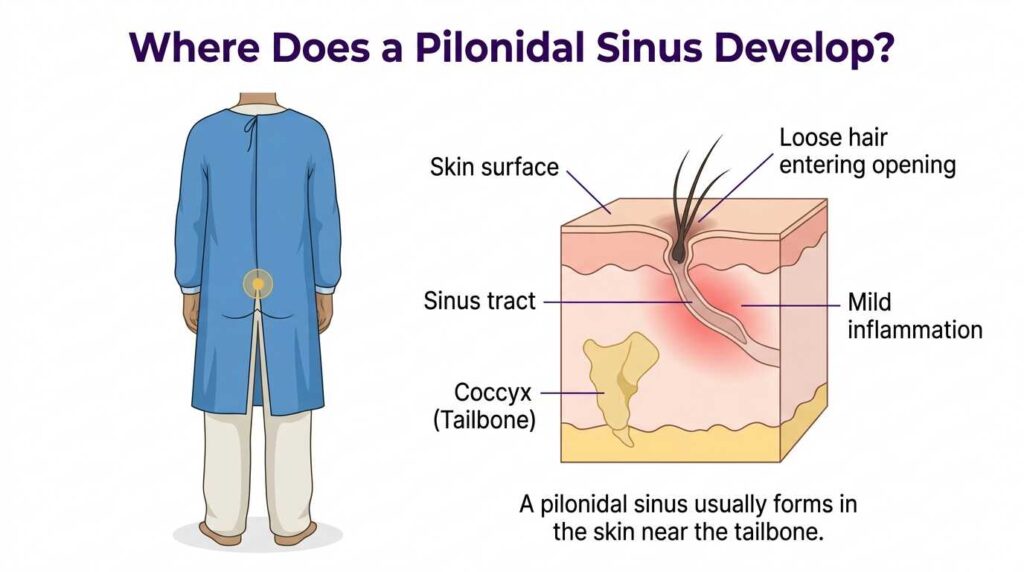
The available pilonidal sinus treatment options depend on the symptoms, number of openings, extent of the tracts, previous procedures and whether an abscess is currently present.
| Treatment approach | When it may be considered | Important limitation |
|---|---|---|
| Observation and local care | Pits without pain, infection or drainage | Does not remove an established tract |
| Incision and drainage | Acute, painful abscess | Relieves infection but disease may return |
| Minimally invasive cleaning | Selected limited disease | Not suitable for every tract pattern |
| Excision with open healing | Extensive or recurrent disease | Longer wound care and healing |
| Excision with closure | Selected cases needing faster closure | Wound complications or recurrence remain possible |
| Off-midline flap procedure | Complex, deep or recurrent disease | More extensive operation |
| Endoscopic or energy-assisted procedure | Selected cases where available | Suitability, evidence and availability vary |
Infected Pilonidal Sinus Treatment
The immediate goal of infected pilonidal sinus treatment is to control the abscess and relieve pressure. A surgeon may numb the area, make a small incision and drain the pus. The wound may be left open and dressed so that it can heal from inside outward.
Antibiotics may be needed when infection is spreading, the patient has fever, or clinical risk factors make them appropriate. Drainage remains central when a significant pus-filled abscess has formed.
Once the infection settles, the surgeon can determine whether observation or a later definitive operation is appropriate.
Excision and Open Healing
During excision, the surgeon removes the diseased tract and affected tissue. With open healing, the wound is not stitched closed. Dressings are used while new tissue gradually fills the area.
Possible advantages include:
- Allows drainage during healing
- May be suitable for infected or extensive disease
- May reduce recurrence in selected circumstances
Possible disadvantages include:
- Longer healing time
- Regular dressing changes
- More time and effort devoted to wound care
Excision with Wound Closure
After removing the sinus, the surgeon may close the wound with stitches. Closure can shorten healing in appropriate cases, but wound infection, separation and recurrence can still occur.
When closure is used, many specialists prefer to avoid placing the final scar directly in the deepest midline cleft when clinically possible. The exact technique should be selected from the patient’s anatomy and disease pattern.
What Is Laser Treatment for Pilonidal Sinus?
The phrase laser treatment for pilonidal sinus can describe different techniques. It may refer to laser hair reduction as part of recurrence prevention or to a procedure that uses a laser probe to treat a sinus tract. These are not the same treatment.
Possible benefits of a minimally invasive tract procedure may include:
- A smaller wound
- Less disruption of surrounding tissue
- A potentially quicker return to routine activities
- Reduced dressing requirements in selected cases
Important limitations include:
- It is not appropriate for every abscess or complex tract
- Availability differs between clinics
- The disease can still recur
- The result depends on careful patient selection and aftercare
- “Laser” does not automatically mean painless or permanently curative
Patients considering laser pilonidal sinus treatment in Dhaka should ask what exact procedure is proposed, who will perform it, whether it suits the tract pattern, and what happens if the disease returns.
What Is the Best Treatment for Pilonidal Sinus?
There is no single best treatment for pilonidal sinus for every patient. The most appropriate option is the least invasive method likely to control the patient’s specific stage and extent of disease.
A practical decision process looks like this:
- No symptoms: monitoring, hygiene and appropriate hair management may be enough.
- First painful abscess: incision and drainage are commonly required.
- Small persistent sinus: a limited or minimally invasive procedure may be considered.
- Complex or branching tracts: excision or another definitive operation may be more suitable.
- Repeated recurrence: reassessment of the tract, scar position, wound care and preventive factors is necessary.
A surgeon should discuss expected healing, wound care, recurrence, anaesthesia, time away from work and the possibility of another procedure.
Recurring Pilonidal Sinus Treatment Options
Recurrence can happen when hair or debris re-enters the cleft, a tract remains, a midline wound heals poorly or the disease is more extensive than initially recognised.
Possible recurring pilonidal sinus treatment options include:
- Repeat drainage for a new acute abscess
- Minimally invasive tract cleaning in selected disease
- Excision of persistent sinus openings
- An off-midline closure or flap procedure
- An endoscopic or energy-assisted technique where appropriate
- A structured hair-control and cleft-care plan
The surgeon should examine previous scars and identify all visible openings before recommending another procedure.
Pilonidal Sinus Surgery Recovery Time and Aftercare
Pilonidal sinus surgery recovery time differs substantially between a small drainage procedure, a closed incision, an open wound and a flap operation.
| Procedure | General recovery consideration |
|---|---|
| Abscess drainage | Pain may improve quickly, but dressings may be required |
| Small minimally invasive procedure | Routine activity may resume relatively early if healing is uncomplicated |
| Excision with stitches | Initial healing is usually faster than open healing |
| Open wound healing | Dressings may continue for several weeks |
| Flap reconstruction | Activity and sitting restrictions may be more specific |
An open wound can sometimes require approximately six to eight weeks to heal, while individual recovery may be shorter or longer. Return to work depends on the procedure, wound condition and whether the job involves long sitting, lifting or physical labour. Follow the operating surgeon’s instructions rather than relying on a fixed online timeline. Guy’s and St Thomas’ NHS Foundation Trust provides additional guidance on dressings and activity after surgery.
How Can You Support Healing?
Aftercare may include:
- Keeping dressings clean and dry as instructed
- Attending scheduled dressing changes
- Taking prescribed medicines correctly
- Avoiding heavy activity until cleared
- Limiting pressure on the wound when advised
- Watching for worsening pain, redness or discharge
- Maintaining hygiene without scrubbing the wound
- Following an appropriate hair-management plan after healing
- Attending follow-up appointments
Contact the treating clinician if pain suddenly worsens, fever develops, the wound separates, bleeding does not stop or discharge becomes heavier or foul-smelling.
Pilonidal Sinus Treatment Cost in Dhaka
The pilonidal sinus treatment cost in Dhaka cannot be stated accurately before assessment because the term covers several very different forms of care.
The final cost may depend on:
- Consultation and examination
- Whether an abscess needs urgent drainage
- Laboratory or imaging requirements
- Local or general anaesthesia
- The surgical technique
- Hospital or day-care charges
- Medicines and dressings
- Histopathology where advised
- Follow-up and wound-care visits
- Treatment for recurrence or complications
Similarly, the pilonidal sinus surgery cost in Bangladesh differs between hospitals and procedures. Ask for a written estimate that identifies the surgeon’s fee, anaesthesia, facility charges, medicines, dressings and follow-up separately.
A suspiciously low package may exclude essential aftercare. The best-value treatment is safe, clearly explained and appropriate for the disease—not simply the least expensive option.
Choosing a Pilonidal Sinus Specialist in Mohammadpur
A consultation for pilonidal disease should include a respectful, private examination. A qualified doctor will assess the number and position of skin openings, current infection, drainage, previous scars and recurrence history.
Patients looking for a female pilonidal sinus doctor in Dhaka may prefer a female physician when discussing or examining a sensitive area. A pilonidal sinus surgeon in Dhaka should explain:
- The exact diagnosis
- Whether an abscess is present
- Why the proposed procedure is suitable
- Anaesthesia and wound-closure plans
- Expected dressing requirements
- Recovery and activity restrictions
- Possible complications and recurrence
- The estimated total cost
Who Is Dr. Reshma Aziz?
- MBBS: Dr. Reshma Aziz completed her Bachelor of Medicine and Bachelor of Surgery from Dow Medical College in 1994.
- MS in Paediatric Surgery: She completed a Master’s degree in Paediatric Surgery from the University of Dhaka.
- Postgraduate Diploma in Colorectal Surgery: She obtained postgraduate training and a diploma in colorectal surgery, supported by clinical experience in rectal and general surgical care.
- Professional Training: Her background includes training in colorectal surgery, breast surgery, colonoscopy and LASER proctology.
- Clinical Experience: She has over 20 years of documented experience across general surgery, paediatric surgery, breast and rectal care, family medicine and clinical leadership roles.
- BMDC Reg. No: A-24611: This is her official registration number with the Bangladesh Medical & Dental Council. Patients can use the linked BMDC credential record to check her professional registration.
Patients seeking a pilonidal sinus specialist in Mohammadpur can learn more from Dr. Reshma Aziz’s professional profile and contact the clinic to ask whether their condition falls within the available surgical services.
For related anorectal information, visit the guides on anal fistula treatment, anal fissure vs piles and piles treatment in Bangladesh.
Frequently Asked Questions
1. Can you cure a pilonidal sinus without surgery?
A symptom-free sinus may be monitored with hygiene, moisture control and appropriate hair management. An established, repeatedly infected or draining sinus may require a procedure. An abscess usually needs professional drainage.
2. What is the fastest way to drain a pilonidal cyst at home?
There is no recommended safe method for draining it at home. Do not squeeze, cut or puncture the lump. A painful abscess should be assessed and, when necessary, drained by a healthcare professional under appropriate anaesthesia.
3. Does infrared lamp therapy cure a pilonidal cyst?
Infrared lamp therapy is not an established cure. It cannot reliably clear an abscess or remove a sinus tract. Excessive heat can also injure the skin.
4. Is pilonidal sinus surgery painful?
Anaesthesia is used during the operation, so patients should not feel the surgical cutting itself. Soreness afterward varies according to the procedure and can usually be managed with an appropriate pain-control plan.
5. Can pilonidal disease return after treatment?
Yes. Recurrence is possible after any approach. Proper wound care, follow-up, cleft hygiene and clinician-directed hair management may help reduce the risk.
6. Are antibiotics enough for an infected pilonidal sinus?
Antibiotics may be appropriate for surrounding infection or particular risk factors, but they do not reliably drain a closed abscess. A painful pus-filled abscess often needs incision and drainage.
7. Is laser treatment always better than traditional surgery?
No. A laser-based procedure may offer a smaller wound for selected patients, but complex or extensive disease may require another technique. Suitability matters more than the label “laser.”
8. How do I prepare for a surgical consultation?
Note when symptoms began, previous infections, drainage, medicines, allergies and earlier procedures. Wear comfortable clothing and bring relevant reports. Ask about the procedure, anaesthesia, wound care, recovery, recurrence and complete cost.
Key Takeaways
- A pilonidal sinus is a skin tunnel near the tailbone that may become infected.
- A painless pit does not always require an operation.
- A painful abscess should never be drained at home.
- Drainage treats acute pus and pressure but may not eliminate recurring disease.
- Definitive options include minimally invasive procedures, excision, open healing, closure and flap techniques.
- Recovery and cost depend on the procedure and wound.
- The most effective pilonidal sinus treatment is selected after an examination, not from symptoms or marketing terms alone.
Get a Confidential Pilonidal Sinus Consultation in Dhaka
Do not wait for a painful swelling to burst or repeatedly rely on antibiotics and home remedies. Early assessment can distinguish a quiet sinus from an abscess or recurring tract and help you choose suitable care.
For an evaluation of pilonidal sinus treatment in Dhaka, contact Dr. Reshma Aziz’s clinic to request a confidential consultation. Seek urgent medical care if you have severe pain, rapidly spreading redness, fever or significant swelling.