
Imagine finishing a rich wedding meal and, an hour later, feeling a deep, steady ache under your right ribs that will not let you sit still. Many people in Dhaka put this down to “gastric” trouble. Sometimes it is. But sometimes it is the first sign of gallstones.
Quick answer: The most common gallbladder stone symptoms are sudden, steady pain in the upper right or middle abdomen that lasts from 30 minutes to several hours, often after a fatty meal, with nausea or vomiting. The pain may spread to the back or right shoulder. Fever, yellow eyes or skin, or pain that does not settle are warning signs of complications that need urgent care. Many people with gallstones have no symptoms at all.
This guide explains the early signs, what a gallbladder attack feels like, the symptoms of blockage, how gallstones are confirmed, and when to see a doctor.
Key takeaways
- Most gallstones are silent and are found by chance on an ultrasound.
- Classic pain is constant, not crampy, and usually lasts more than 30 minutes.
- Pain after eating, especially oily food, is a common pattern.
- Jaundice, fever or repeated vomiting suggest a blockage or infection.
- An abdominal ultrasound is the simplest way to confirm gallstones.
What Are the Early Gallbladder Stone Symptoms?
Gallstones are hard deposits that form in the gallbladder, the small organ under the liver that stores bile. They cause no trouble until a stone blocks the gallbladder outlet or a bile duct. That blockage produces pain called biliary colic, and it is the main early sign. Gallbladder stone symptoms usually start this way, not with slow, everyday discomfort.
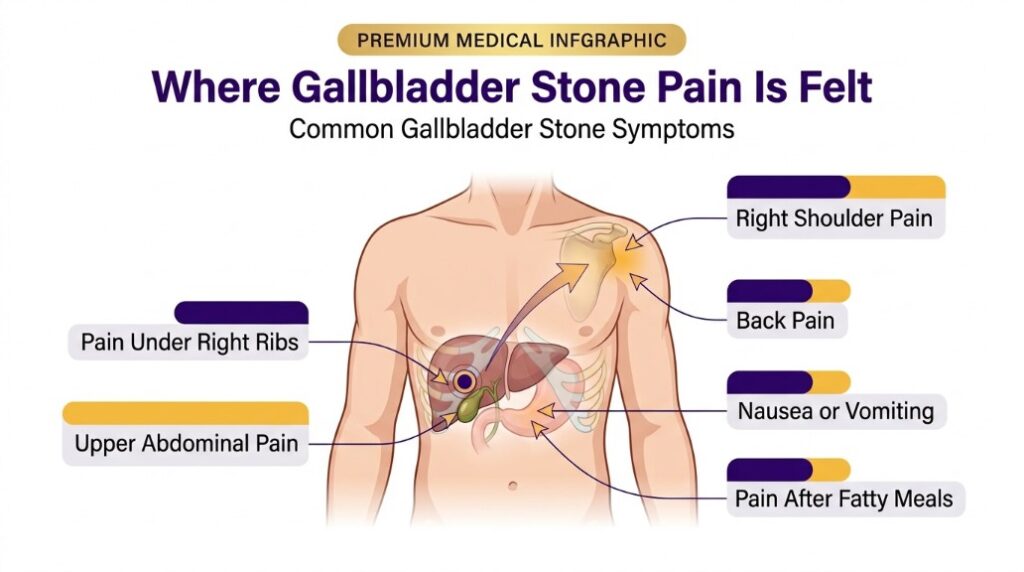
Right side pain under the ribs
The most typical location is the upper right abdomen, just below the ribs, or the upper middle area below the breastbone. According to the NHS, the pain:
- feels severe and constant rather than coming and going
- lasts longer than 30 minutes and can continue for several hours
- often comes with nausea or vomiting
Pain after eating
Gallbladder stone symptoms after eating are common because the gallbladder squeezes bile out when food, especially fat, reaches the gut. If a stone sits at the outlet, that squeeze triggers pain. Fried snacks, rich biryani or a heavy late dinner are frequent triggers, although attacks can also start at night or with no clear trigger.
Back and shoulder pain
Gallbladder stone symptoms back pain usually means an ache between or below the shoulder blades, or under the right shoulder blade. Pain can also travel to the right shoulder tip. This happens because nerves from the gallbladder share pathways with nerves from these areas.
Milder signs some people notice
Some people report bloating, belching or indigestion after fatty meals. These are less specific. They are common with many digestive problems and do not by themselves mean you have gallstones.
What Does a Gallbladder Attack Feel Like?
A gallbladder attack is an episode of biliary colic. Gallbladder stone attack symptoms often follow a recognisable pattern:
- Sudden start, often within an hour or two of a meal or in the evening.
- Steady, intense pain in the upper right or middle abdomen that builds over minutes.
- Restlessness. People often walk around or change position, but nothing gets comfortable.
- Nausea or vomiting, which may not relieve the pain.
- Gradual easing after 30 minutes to a few hours as the stone falls back.
Short answer: How long does a gallbladder attack last? A simple gallstone attack usually lasts from about 30 minutes to a few hours. Pain that lasts longer than a few hours, or comes with fever, may mean the gallbladder is inflamed and needs urgent assessment.
After the first attack, more attacks are common. Repeated episodes are the main reason doctors recommend treatment.
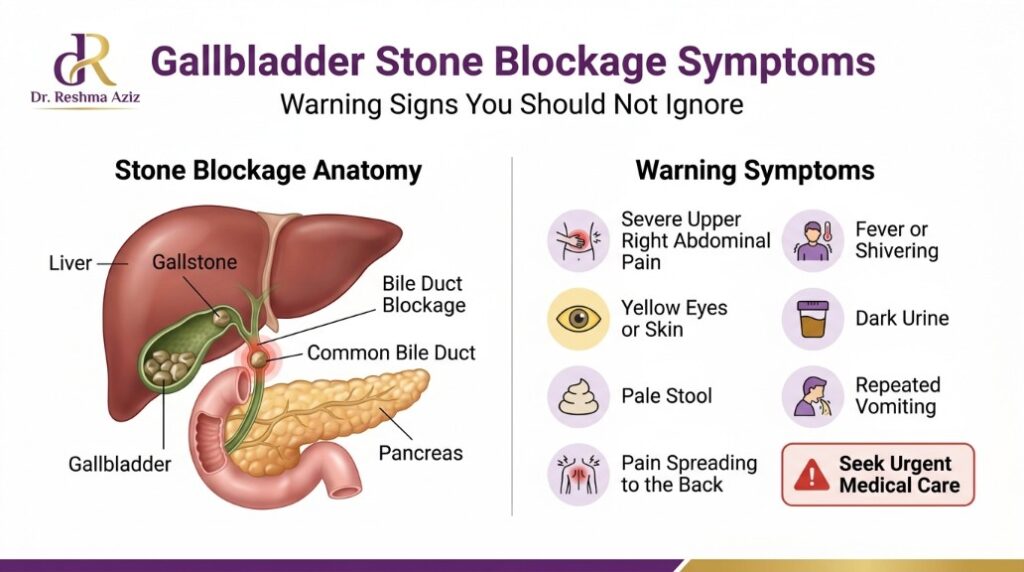
Gallbladder Stone Blockage Symptoms: Signs of Complications
Sometimes a stone stays stuck. Then gallbladder stone symptoms change from a passing attack into a complication. These need prompt hospital care.
| Complication | What happens | Key symptoms |
|---|---|---|
| Acute cholecystitis | The gallbladder becomes inflamed or infected | Pain lasting hours, fever, sweating, tenderness that worsens with deep breaths |
| Bile duct blockage | A stone blocks the main bile duct | Yellow skin or eyes, dark urine, pale stools, itching |
| Cholangitis | Infection behind a blocked bile duct | Fever with shivering, jaundice and abdominal pain |
| Gallstone pancreatitis | A stone irritates the pancreas | Severe upper abdominal pain spreading to the back, repeated vomiting |
The NHS acute cholecystitis page lists sudden sharp upper right pain spreading toward the right shoulder, high temperature, nausea, vomiting, sweating and jaundice among its symptoms.
Gallbladder stone symptoms with jaundice
Jaundice means a yellow tint to the skin or the whites of the eyes. With gallstones, it usually signals that bile cannot drain because a stone is blocking the duct. It may come with dark, tea-coloured urine and pale stools. Jaundice with fever is an emergency.
Gallbladder stone symptoms with vomiting
Nausea is common in a simple attack. Persistent vomiting, especially with pain spreading to the back, can point to pancreatitis and needs same-day assessment.
When to go to emergency immediately: sudden severe abdominal pain, pain spreading to the back with vomiting, high fever or shivering, or yellow skin or eyes. Do not wait for a chamber appointment.
Can You Have Gallbladder Stones Without Pain?
Yes. Gallbladder stone symptoms without pain are, in a sense, no symptoms at all. The NHS notes that most people with gallstones do not get symptoms. These “silent” stones are often found during an ultrasound done for another reason, such as a pregnancy scan or a general health check.
Definition: Silent (asymptomatic) gallstones are stones seen on imaging in a person who has never had gallstone pain or complications. They usually need monitoring rather than surgery.
If your report shows silent stones, learn the gallbladder stone symptoms that would change the plan: a first attack of right-sided pain, fever, yellow eyes or repeated vomiting. Ask your doctor whether any follow-up scan is needed.
Gallbladder stone symptoms in pregnancy
Pregnancy hormones slow gallbladder emptying, which can encourage stones to form. The symptoms are the same as in other adults, but they are easy to confuse with heartburn or normal pregnancy discomfort. Pain under the right ribs after meals, repeated vomiting, fever or yellow eyes during pregnancy should be checked promptly. Ultrasound is safe in pregnancy and is the usual first test. Any treatment is planned jointly with the obstetric team.
How to Know If You Have Gallbladder Stones
You cannot confirm gallstones from symptoms alone. Several other conditions cause similar upper abdominal pain:
| Condition | How it often differs |
|---|---|
| Gastritis or peptic ulcer | Burning pain, often related to hunger or relieved by antacids |
| Acid reflux | Burning behind the breastbone, sour taste, worse lying down |
| Heart problems | Chest pressure, breathlessness or sweating; needs emergency care |
| Kidney stone | Pain in the flank or side that moves toward the groin |
| Liver conditions | Jaundice, tiredness, often without the classic colicky pattern |
Tests that confirm gallstones
NICE recommends liver function tests and an abdominal ultrasound for anyone with suspected gallstone disease. If the ultrasound does not show a duct stone but the bile duct is widened or blood tests are abnormal, an MRCP scan may be advised.
Ultrasound is widely available at hospitals and diagnostic centres across Dhaka. You are usually asked to fast for a few hours beforehand. Bring the report, not just the images, to your consultation.
Before your appointment, note down:
- When the pain started and how long each episode lasted
- Where it was felt and whether it spread
- What you had eaten beforehand
- Any fever, vomiting, yellow eyes or dark urine
- Your current medicines and other conditions, such as diabetes
This short record helps the doctor link your gallbladder stone symptoms to the right diagnosis.
When to See a Doctor for Gallbladder Stone Symptoms in Dhaka
Gallbladder stone symptoms and treatment decisions go together: the pattern of your symptoms, more than the number of stones, decides what happens next. Book a routine consultation if you have had one or more episodes of typical pain that settled, or if an ultrasound has shown gallstones. Seek emergency care for the red flags listed above.
For a gallbladder stone symptoms doctor in Dhaka, choose a registered doctor who examines you, reviews your reports and explains your options clearly, including when watchful waiting is reasonable.
Consulting Dr. Reshma Aziz
Dr. Reshma Aziz is a BMDC-registered doctor (registration number A-24611) who has provided medical and surgical care since 1996. You can check her BMDC registration record directly. Her qualifications and surgical training include an MS in Paediatric Surgery, General Surgery and Allied training and a Diploma in Clinical Ultrasonography.
Gallbladder stones are among the conditions she evaluates as part of selected general surgical care. A consultation covers your history, examination and reports, then a clear plan: monitoring, treatment, or referral for specialised procedures such as ERCP when needed. Women who prefer a female gastrointestinal surgeon in Dhaka can discuss symptoms privately.
Once gallstones are confirmed, our guide to gallbladder stone treatment in Dhaka explains surgery, cost factors and recovery in detail.
Frequently Asked Questions About Gallbladder Stone Symptoms
What are the first signs of gallbladder stones?
The first sign is usually a sudden, steady pain under the right ribs or in the upper middle abdomen, often after a meal, lasting more than 30 minutes, sometimes with nausea.
Can gallbladder stones cause back pain?
Yes. Gallstone pain often spreads to the back, between or below the shoulder blades, or to the right shoulder. Severe pain spreading to the back with vomiting needs urgent care.
Do gallstone symptoms come and go?
Yes. Attacks usually settle within a few hours, and you may feel completely well between episodes. Attacks often return, so settling does not mean the problem has gone.
Can gallbladder stones cause gas and bloating?
Some people notice bloating or belching after fatty meals, but these symptoms are common in many conditions. On their own, they are not reliable signs of gallstones.
What should I do during a gallbladder attack?
Rest, avoid eating, and take a simple painkiller if it is safe for you. Seek emergency care if pain lasts more than a few hours or comes with fever, yellow eyes or repeated vomiting.
Are gallbladder stone symptoms different in women?
The symptoms are the same, but women are more likely to develop gallstones, particularly after pregnancy or with obesity or diabetes.
Get Your Gallbladder Stone Symptoms Checked
Gallbladder stone symptoms range from no symptoms at all to severe attacks and serious blockages. The pattern matters: steady pain under the right ribs after meals suggests gallstones, while fever, jaundice or persistent vomiting signal complications that need urgent care.
If you recognise these signs, an ultrasound and a proper examination can give you a clear answer. Book an appointment with Dr. Reshma Aziz at her Mohammadpur or Gulshan chamber; see the visiting hours and chamber addresses before you travel. If you already have reports, a telemedicine consultation can be a convenient first step.
Medical disclaimer: This article is general health information and does not replace diagnosis or treatment by a qualified doctor. For severe pain, fever or yellow eyes, seek emergency care immediately.