
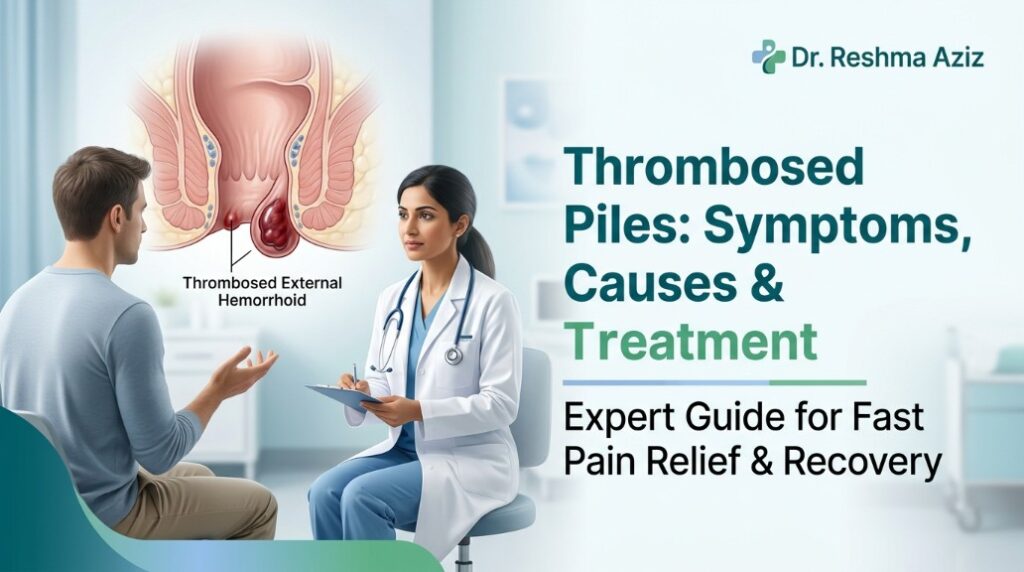
If you’ve woken up with a hard, painful lump near your anus that makes sitting, walking, or even coughing feel unbearable, you may be dealing with thrombosed piles. This happens when a blood clot forms inside an external hemorrhoid, causing sudden swelling and intense pain often within hours. The good news: thrombosed piles are highly treatable, and most people find significant relief within days of starting the right care. This guide covers what causes thrombosed piles, how to recognize the symptoms, and which treatments actually work, including when to seek help from a specialist in Dhaka.
What Are Thrombosed Piles?
Thrombosed piles (also called thrombosed hemorrhoids) occur when a blood clot develops inside a hemorrhoidal vein, usually one located just outside the anal opening. Unlike ordinary piles, which may only cause mild discomfort or occasional bleeding, a thrombosed external hemorrhoid is a firm, purplish-blue lump that appears suddenly and is often extremely tender to the touch.
Quick Answer: A thrombosed pile is a hemorrhoid with a trapped blood clot inside it. It typically develops within 24–72 hours and causes intense, localized pain that is different from the dull ache of ordinary hemorrhoids.
This condition is different from internal piles, which sit higher inside the rectum and rarely cause this kind of acute pain because that area has fewer pain-sensing nerves. External piles, by contrast, sit under skin that is rich in nerve endings which is exactly why a clot forming there hurts so much.
Thrombosed Piles Symptoms You Shouldn’t Ignore
Recognizing thrombosed piles symptoms early can help you get treatment before the pain peaks. Common signs include:
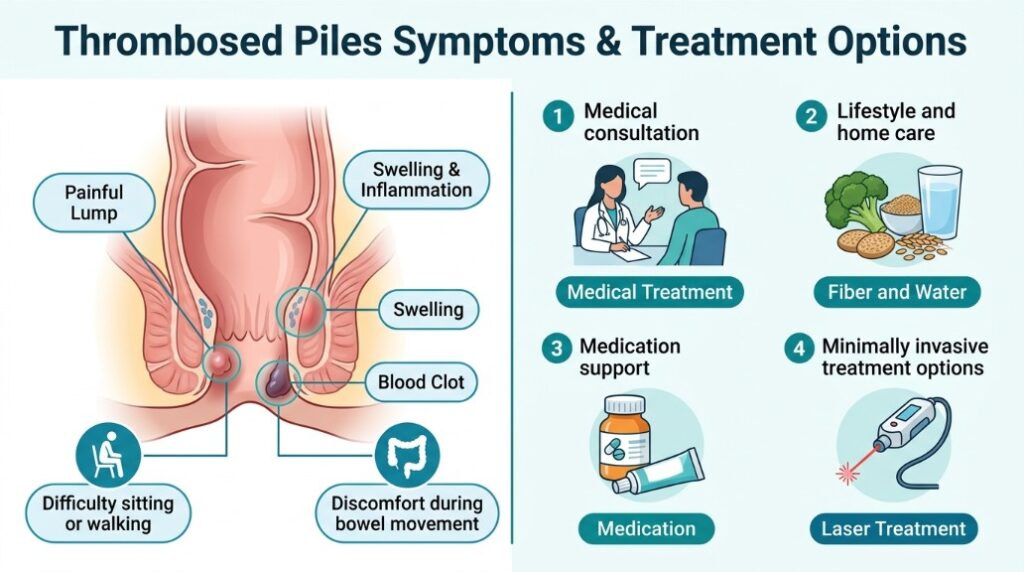
- A hard, tender lump at the edge of the anus, often bluish or purple in color
- Sudden, severe pain that worsens with sitting, walking, or bowel movements
- Swelling and inflammation around the anal area
- Itching or irritation as the swelling settles
- Occasional bleeding if the clot ruptures through the skin
For many patients, the pain from a thrombosed hemorrhoid peaks within the first 48 hours and then gradually eases over 7–10 days, even without treatment though treatment can shorten this significantly and reduce the risk of complications.
What Causes Thrombosed Piles?
Thrombosed piles develop when increased pressure in the anal veins causes blood to pool and clot. Common contributing factors include:
- Straining during bowel movements, often linked to chronic constipation
- Prolonged sitting, especially on hard surfaces or during long commutes
- Pregnancy and childbirth, due to increased pelvic pressure
- Heavy lifting or intense physical strain
- Low-fiber diets that lead to hard stools and straining
- Obesity, which increases pressure on pelvic veins
- Prolonged diarrhea, which irritates and inflames hemorrhoidal tissue
Understanding these triggers matters because they also shape how you prevent thrombosed piles from recurring after treatment.
Thrombosed Piles Treatment: What Actually Works
There isn’t a single best thrombosed piles treatment for everyone the right approach depends on how severe the clot is and how soon you seek care.
| Approach | Best For | What It Involves |
|---|---|---|
| Home care & medication | Mild cases, clot already shrinking | Sitz baths, stool softeners, topical creams, pain relief |
| Clot removal (incision) | Severe pain within 72 hours of onset | A quick in-clinic procedure to drain the clot |
| Laser or surgical removal | Recurrent, large, or complicated piles | Minimally invasive procedure for lasting resolution |
Non-Surgical Thrombosed Hemorrhoid Treatment
For milder cases, a thrombosed hemorrhoid treatment without surgery is often effective, especially when started early:
- Warm sitz baths for 10–15 minutes, 2–3 times daily, to ease pain and swelling
- Increased fiber and water intake to soften stools and reduce straining
- Topical anesthetic or anti-inflammatory creams, used as directed
- Over-the-counter pain relief for symptom management
- Avoiding prolonged sitting on hard surfaces
When Surgery or Clot Removal Is Needed
If pain is severe or the clot is large, a doctor may recommend draining the clot under local anesthesia, a fast procedure that offers almost immediate relief. For recurring or complicated cases, thrombosed piles surgery, including laser hemorrhoidectomy, may be advised. Laser treatment for thrombosed piles is increasingly preferred because it typically involves less bleeding, a shorter recovery period, and minimal scarring compared to traditional open surgery.
When Is a Thrombosed Pile a Medical Emergency?
Most thrombosed piles are painful but not dangerous. However, you should seek emergency treatment for thrombosed piles if you notice:
- Heavy or continuous bleeding
- Signs of infection fever, spreading redness, or pus
- Pain that keeps worsening after several days instead of improving
- Difficulty passing stool or urine due to swelling
These signs warrant prompt evaluation by a thrombosed piles specialist rather than continued home treatment.
Severe Pain From Thrombosed Piles Treatment in Dhaka
Patients experiencing severe pain from thrombosed piles often delay seeking care due to discomfort or hesitation about discussing the condition but early evaluation makes treatment simpler and faster. If you’re looking for a thrombosed piles treatment in Dhaka, choosing a qualified colorectal specialist matters, since accurate grading of the hemorrhoid guides whether home care, clot drainage, or surgery is appropriate.
Dr. Reshma Aziz is a Dhaka-based specialist experienced in diagnosing and treating piles, including thrombosed external hemorrhoids, using both conservative and minimally invasive approaches. Her registration with the Bangladesh Medical and Dental Council can be verified via her BMDC credential record (Reg. No. A-24611).
Patients considering a thrombosed piles specialist in Dhaka can also review the practice’s approach to laser treatment for piles and general piles symptoms before booking a consultation. Some patients specifically search for a female doctor for thrombosed piles in Dhaka, given the sensitive nature of the condition.
Thrombosed Piles vs. Regular Piles vs. Anal Fissure
It’s easy to confuse thrombosed piles with other anal conditions, but the distinctions matter for treatment:
- Regular (non-thrombosed) piles: Often painless or mildly uncomfortable, may bleed, and can be internal or external.
- Thrombosed piles: Sudden onset, a hard visible lump, and intense localized pain due to the clot.
- Anal fissure: A small tear in the anal lining causing sharp pain during and after bowel movements, without a lump.
Because the symptoms can overlap, a clinical exam is the most reliable way to tell them apart see this comparison of anal fissure vs. piles for more detail, or review the grades of piles from stage 1 to 4 to understand severity levels.
Key Takeaways
- Thrombosed piles are caused by a blood clot in an external hemorrhoid and cause sudden, sharp pain.
- Symptoms typically peak within 48 hours and improve over 7–10 days, even untreated.
- Mild cases often respond to sitz baths, fiber, and topical treatment.
- Severe or recurring cases may need clot drainage or laser surgery.
- Persistent bleeding, fever, or worsening pain needs prompt medical evaluation.
Frequently Asked Questions
1. How long do thrombosed piles last?
Most thrombosed piles peak in pain within 24–72 hours and gradually improve over 7–10 days. Treatment can shorten this timeline and lower the risk of recurrence.
2. Can thrombosed piles go away without surgery?
Yes, many mild cases resolve with home care sitz baths, fiber, hydration, and topical treatment. Surgery is generally reserved for severe, large, or recurring clots.
3. Is thrombosed piles surgery painful?
Clot drainage is typically done under local anesthesia and offers rapid relief. Laser hemorrhoidectomy for more complex cases is minimally invasive, with most patients returning to normal activity within days.
4. What does a thrombosed pile look like?
It usually appears as a firm, bluish-purple lump at the edge of the anus, distinct from the softer, skin-colored swelling of ordinary external piles.
5. When should I see a doctor for thrombosed piles?
See a specialist promptly if pain is severe, the lump is growing, there’s significant bleeding, or symptoms don’t improve after a week of home care.
6. Can thrombosed piles come back after treatment?
Yes, especially if underlying causes like constipation, prolonged sitting, or straining aren’t addressed. Long-term prevention focuses on diet, hydration, and bowel habits.
Final Thoughts
Thrombosed piles are uncomfortable but very manageable once properly diagnosed. Whether your case responds to simple home care or needs a quick in-clinic procedure, getting an accurate diagnosis early is what makes the biggest difference in how fast you recover. If you’re dealing with a painful lump that isn’t improving, don’t wait out the discomfort book a consultation with Dr. Reshma Aziz for an evaluation and a treatment plan suited to your condition.