

A diabetic foot ulcer is an open wound that needs prompt medical assessment, pressure relief, careful dressing, infection control and a circulation check. Effective diabetic foot ulcer treatment also includes blood glucose management and regular review. Do not wait because the wound is painless: diabetes-related nerve damage can hide serious injury. Seek emergency care for fever, rapidly spreading redness, black tissue, pus, a foul smell, severe swelling, confusion, or a cold, pale or blue foot. This guide explains what treatment involves, what can safely be done at home and when patients in Dhaka should seek urgent help.
The best diabetic foot ulcer treatment combines offloading, wound cleaning or debridement, an appropriate dressing, infection treatment when present, circulation assessment and diabetes control. No single cream, antibiotic or dressing can replace this complete plan.
What Is a Diabetic Foot Ulcer, and Why Does It Develop?
A diabetic foot ulcer is a break in the skin, usually below the ankle, that fails to heal normally. It may begin as a blister, cracked heel, puncture, shoe rub or callus. Three problems often work together:
- Neuropathy: Nerve damage reduces pain, pressure and temperature sensation, so an injury can go unnoticed.
- Repeated pressure: Walking on a numb area repeatedly damages tissue, especially beneath the toes or forefoot.
- Poor circulation: Peripheral artery disease limits oxygen and nutrients reaching the wound, slowing repair.
High glucose, smoking, kidney disease, foot deformity, unsuitable footwear and previous ulcers add risk. The CDC advises daily foot checks so injuries receive early diabetic foot ulcer treatment.
Diabetic Foot Ulcer Symptoms and Treatment Clues
Look for broken skin, drainage, a blood-stained callus, swelling, warmth, redness, odour or colour change. Pain may be absent. Check soles and between toes daily, using a mirror if needed.
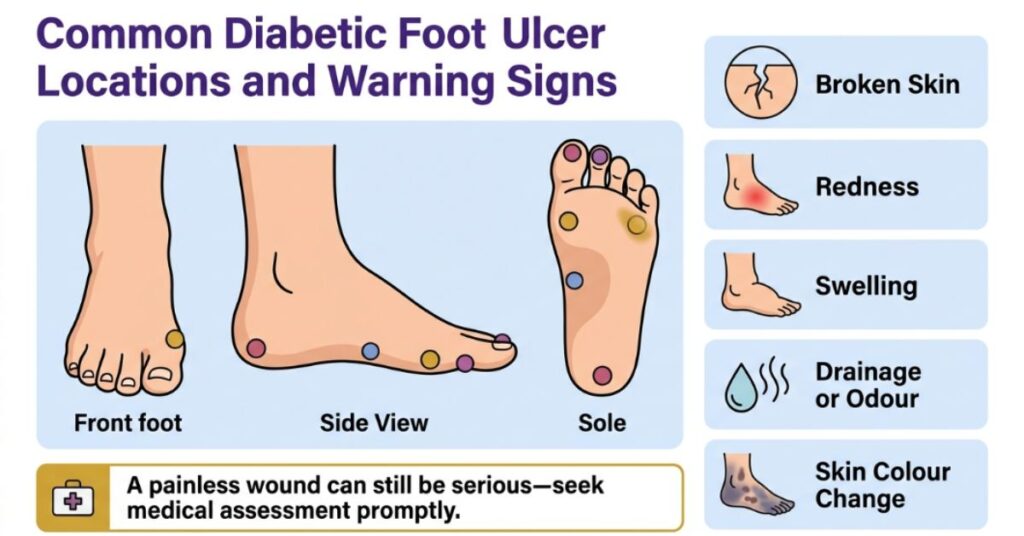
When Is a Diabetic Foot Ulcer an Emergency?
Arrange same-day medical assessment for any new ulcer without delay. Go to an emergency department immediately if there is:
- Fever, chills, vomiting, confusion, weakness or rapid breathing
- Redness or swelling spreading beyond the wound
- Pus, foul odour, increasing drainage or rapidly worsening tissue
- Black, grey or blue skin, or visible deep tissue or bone
- A suddenly cold, pale or blue foot, or severe pain at rest
- A hot, swollen, deformed foot even with little pain
- Very high glucose with illness, dehydration or drowsiness
These signs may indicate deep infection, sepsis, gangrene, severe ischaemia or Charcot foot. Urgent diabetic foot ulcer treatment may require drainage, intravenous antibiotics, debridement or restored blood flow. Delay can threaten limb and life.
A diabetic foot ulcer is an emergency when infection spreads, the patient becomes unwell, tissue turns black, circulation appears reduced, or the foot rapidly changes shape, colour or temperature.
How Diabetic Foot Ulcer Treatment Is Planned
A clinician reviews the wound’s onset, cause, previous ulcers, glucose control, medicines, smoking and walking demands. Examination records its location, dimensions, depth, tissue, drainage and infection signs.
The team checks sensation, foot shape and pulses. Tests may include glucose, HbA1c, blood count, kidney function, tissue culture, X-ray, MRI or vascular studies. A superficial swab alone may miss the responsible organism. Suspected bone infection needs targeted assessment.
| Treatment requirement | Purpose | Important limitation |
|---|---|---|
| Offloading | Reduces damaging pressure | Works only when used as directed |
| Debridement | Removes dead tissue and callus | Needs trained clinical judgement |
| Dressing | Protects and manages moisture | No universal best product exists |
| Antibiotics | Treat clinically diagnosed infection | Do not heal an uninfected ulcer |
| Vascular care | Improves blood supply when required | May need imaging or intervention |
| Glucose management | Supports immunity and healing | Targets must be individualized |
Offloading: Taking Pressure Away
Offloading redirects weight from the ulcer while keeping movement safe. For a suitable, uncomplicated neuropathic ulcer beneath the forefoot or midfoot, guidance favours a professionally fitted, non-removable knee-high device. Removable devices may be alternatives. The IWGDF offloading guideline says position, infection, circulation, balance and daily needs affect selection.
Do not improvise with tight bandages, cut shoes or prolonged barefoot walking. Crutches, a wheelchair, work modification or limited standing may be advised. Continuing to walk normally on the wound can undo otherwise excellent diabetic foot ulcer treatment.
Diabetic Foot Ulcer Debridement Procedure
Debridement removes dead tissue, callus, debris or infected material. A clinician may use instruments, dressings, irrigation or other methods according to tissue, circulation and progress. Reduced sensation never makes self-cutting safe; avoid blades, corn plasters and chemicals.
Diabetic Foot Ulcer Dressing Methods
The clinician chooses a dressing according to depth, drainage, skin, infection and cost. It may absorb fluid, balance moisture, protect tissue or fill a cavity. Expensive is not automatically better. Replace soaked or dirty dressings as directed.
Antibiotics, Infection and Surgery
Antibiotics for diabetic foot infection depend on severity, likely organisms, allergies, kidney function and cultures. The IWGDF/IDSA infection guideline advises against antibiotics for an uninfected ulcer to prevent infection or accelerate healing. Unnecessary use causes harm and resistance.
An abscess, dead tissue, severe infection or infected bone may require surgery: drainage, debridement, deformity correction, vascular intervention or removal of nonviable tissue. Amputation is considered when tissue cannot be saved or uncontrolled infection threatens life.
Diabetic foot ulcer surgery recovery time varies with the procedure, circulation, infection, glucose control and ability to offload. Ask the surgeon when dressing changes, weight-bearing, work, bathing and follow-up are safe. A calendar estimate is less useful than documented wound progress.
Diabetic Foot Wound Care at Home
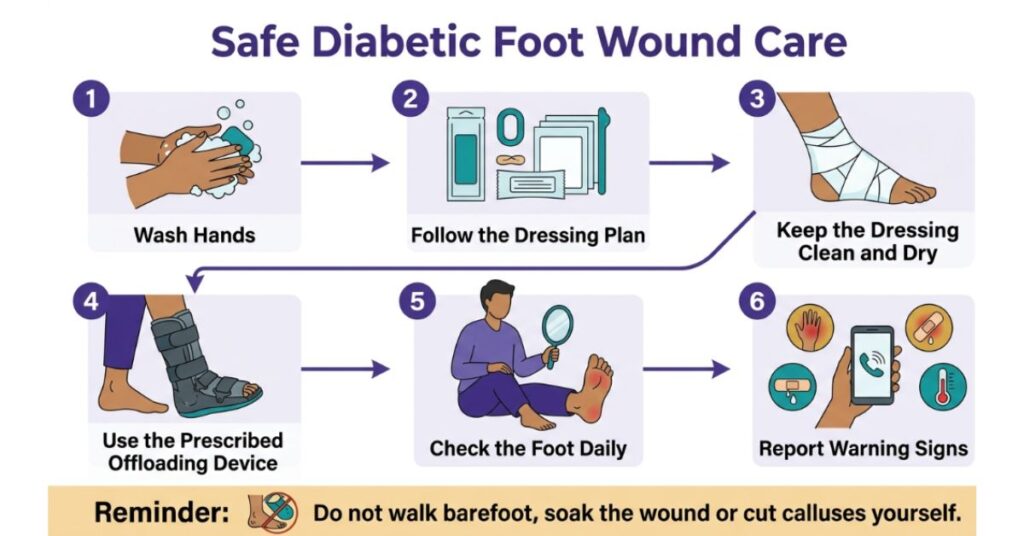
Home care supports professional treatment; it does not replace it. Follow these steps:
- Wash hands before and after touching the dressing.
- Change the dressing exactly as instructed, using prescribed supplies.
- Keep the wound protected and dry during bathing unless told otherwise.
- Wear the offloading device whenever instructed, including short indoor trips.
- Check the wound edge, drainage, smell and surrounding skin each day.
- Record glucose as advised and take diabetes medicines correctly.
- Eat adequate protein and balanced meals; discuss kidney-related restrictions.
- Call the clinic promptly if the wound worsens or the dressing repeatedly leaks.
Avoid soaking the foot, hydrogen peroxide, strong antiseptics, herbal paste, heat pads and home debridement unless a clinician specifically directs their use. Never walk barefoot. Check inside footwear for stones, rough seams and moisture.
Can treatment work without surgery? Yes. Diabetic foot ulcer treatment without surgery may heal many uncomplicated wounds through offloading, debridement, dressing, glucose management and close follow-up. Infection, dead tissue, poor blood flow or deformity may make a procedure necessary.
Healing Stages, Follow-up and Cost in Bangladesh
Diabetic foot ulcer healing stages are not a simple fixed schedule. Healthy progress can include less drainage, reduced swelling, cleaner tissue, new red granulation tissue and gradual contraction of wound edges. Photographs and repeated measurements taken consistently help the team judge response. A wound that is unchanged, larger or deeper needs reassessment for pressure, infection, poor circulation, bone involvement, glucose problems or unsuitable care.
Healing may take weeks or months; deep, infected or ischaemic wounds take longer. Work involving prolonged standing, walking, heat, dirt or unsafe footwear may need temporary modification during diabetic foot ulcer treatment.
There is no single fixed cost for diabetic foot ulcer treatment in Bangladesh. The total depends on consultation, laboratory tests, imaging, vascular studies, dressing frequency, offloading equipment, debridement, antibiotics, admission and surgery. For diabetic foot ulcer treatment in Dhaka, ask for a written estimate that separates professional fees, facility charges, medicines, supplies and follow-up. Incomplete diabetic foot ulcer treatment can increase total cost.
Patients seeking a diabetic foot ulcer specialist in Mohammadpur should ask whether the service can coordinate diabetes care, wound assessment, surgery, vascular evaluation, imaging and emergency referral. Complex ulcers benefit from a multidisciplinary team rather than one isolated treatment.
How to Prevent Diabetic Foot Ulcers
Prevention continues after healing because recurrence is common. Build these habits:
- Inspect both feet daily and report blisters, cracks, redness or swelling early.
- Wash with warm, not hot, water; dry carefully, especially between toes.
- Moisturize dry skin, but not between the toes.
- Wear properly fitting shoes and clean socks; never walk barefoot.
- Have calluses and nails managed safely if vision or sensation is reduced.
- Keep glucose, blood pressure and cholesterol within individualized targets.
- Stop smoking because it reduces circulation.
- Attend regular foot examinations and use prescribed protective footwear.
The CDC foot-care recommendations support daily checks, suitable footwear and professional treatment rather than self-removing corns or calluses.
Choosing Care in Dhaka, Bangladesh
Good diabetic foot ulcer treatment in Bangladesh should begin with a complete assessment, not a dressing sale. Ask who will review circulation, infection, neuropathy, glucose and pressure relief; how progress will be measured; and whom to contact after hours.
Dr. Reshma Aziz’s practice combines surgery and family medicine with documented training in Clinical Diabetology and experience managing people with diabetes. Her Bangladesh Medical and Dental Council registration is BMDC A-24611. Read about her clinical background and surgical and family medicine services. Because advanced wounds may need several specialists, confirm available wound services and referral arrangements when booking.
Related reading includes chronic constipation treatment in Dhaka, colonoscopy in Bangladesh and articles in the health blog.
Frequently Asked Questions
How long does a diabetic foot ulcer take to heal?
Healing can take weeks to months. Depth, infection, blood supply, pressure, glucose control and adherence all matter. Regular measurements are more reliable than a promised date.
Can you work with a diabetic foot ulcer?
Sometimes, if the job and offloading plan are compatible. Prolonged walking or standing can delay healing. Ask for temporary seated duties, reduced steps or medical leave when needed.
What is the best treatment for diabetic foot ulcers?
The best plan treats the cause and the wound together: offloading, debridement when appropriate, moisture-balanced dressing, infection care, circulation assessment and diabetes management.
Should every ulcer receive antibiotics?
No. Antibiotics treat clinical infection, not an uninfected wound. A clinician should diagnose infection and select the medicine, dose and duration.
Can an ulcer heal with dressing alone?
Rarely if pressure, infection or poor circulation remains unaddressed. Dressing is one component of diabetic foot ulcer treatment, not the entire solution.
What should I bring to an appointment?
Bring medicine lists, glucose records, previous reports, wound photographs, current dressings and the shoes or offloading device normally worn.
Key Takeaway
Early, coordinated diabetic foot ulcer treatment can protect mobility and reduce infection and amputation risk. The practical priorities are urgent assessment, pressure relief, appropriate wound care, infection treatment only when indicated, circulation review and controlled diabetes. If you notice a new wound, do not wait for pain or attempt home surgery. Contact Dr. Reshma Aziz’s clinic for an assessment in Dhaka, and use emergency services immediately for spreading infection, systemic illness, black tissue or reduced blood flow.