
Most breast pain causes are hormonal, inflammatory, medication-related or connected to the muscles and ribs beneath the breast. Breast pain by itself is unlikely to mean cancer, but persistent pain in one specific area or pain accompanied by a lump, nipple discharge, skin changes or fever needs medical assessment.
Period-related hormone changes are the most common explanation. Other possibilities include pregnancy, breastfeeding, mastitis, an unsuitable bra, chest-wall strain, medicines, breast cysts and menopausal hormonal changes.
This guide explains common pain patterns, self-care, warning signs, examination, imaging and when to consult a breast doctor in Dhaka.

What Does Breast Pain Feel Like?
Breast pain is medically called mastalgia or mastodynia. It can occur in one or both breasts and may feel like:
- Tenderness or sensitivity
- Heaviness or fullness
- A dull, aching sensation
- Burning or throbbing
- Sharp, stabbing pain
- Pain when touched
- Discomfort spreading toward the armpit
- Pain that worsens with movement
The location, duration and connection with the menstrual cycle can provide useful clues, but symptoms alone cannot confirm the cause.
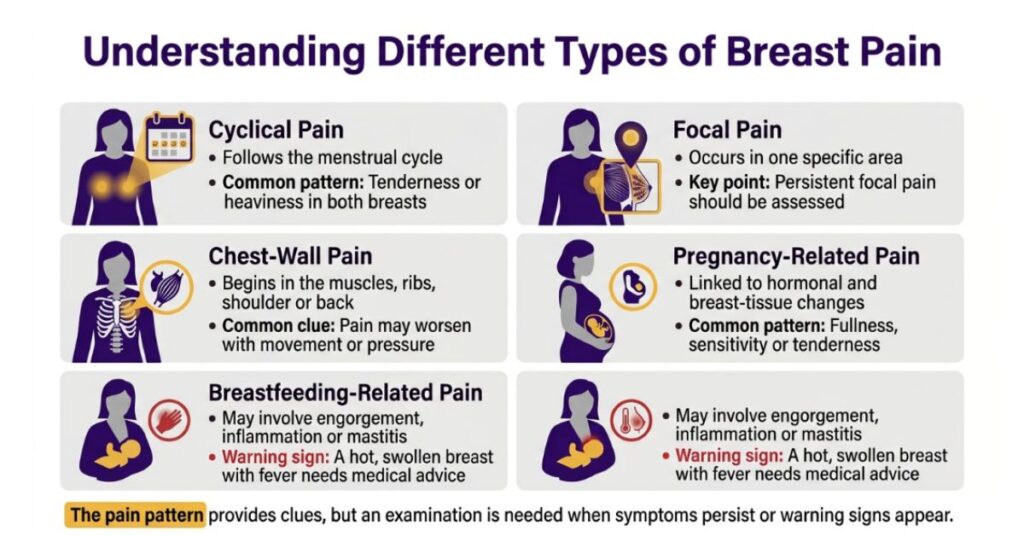
Breast pain is generally divided into two patterns:
| Pain pattern | Typical features |
|---|---|
| Cyclical breast pain | Changes with the menstrual cycle and often affects both breasts |
| Non-cyclical breast pain | Does not follow the menstrual cycle and may affect one specific area |
| Extramammary pain | Begins in the chest wall, ribs, shoulder or back but feels like breast pain |
Key definition: Cyclical pain follows a hormonal pattern. Non-cyclical pain does not. Extramammary pain comes from tissue outside the breast.
What Are the Most Common Breast Pain Causes in Women?
The most frequent breast pain causes in women include hormonal changes, pregnancy, breastfeeding, infection, medicines and pain originating from the chest wall.
Hormonal Changes
Breast tissue can respond to changing oestrogen and progesterone levels. This may create swelling, tenderness or heaviness in both breasts.
Hormonal pain commonly occurs:
- Before menstruation
- During early pregnancy
- During perimenopause
- After starting or changing hormonal contraception
- During certain fertility treatments
- With some forms of menopausal hormone therapy
Chest-Wall and Muscle Pain
Sometimes the breast tissue is healthy, but pain comes from:
- Strained chest muscles
- Costochondritis, or inflammation near the ribs
- Neck, shoulder or back strain
- Heavy lifting
- Repetitive upper-body exercise
- Poor posture
- Pressure from an unsuitable bra
- A previous injury
Pain that worsens when pressing a rib, moving the shoulder or twisting the upper body may originate from the chest wall. An examination is still useful when the source is uncertain.
Medicines
Some medicines can contribute to breast tenderness, including certain:
- Hormonal contraceptives
- Fertility medicines
- Menopausal hormone treatments
- Antidepressants
- Cardiovascular medicines
- Antipsychotic medicines
Do not stop prescribed medicine without speaking to the prescriber.
Benign Breast Conditions
Non-cancerous conditions that may cause pain include:
- Breast cysts
- Fibrocystic breast changes
- Mastitis
- Breast abscess
- Duct-related inflammation
- Recent breast injury
- Pain after breast surgery
- Breast implant complications
If pain occurs with a new lump, read the guide to breast lump assessment in Dhaka.
Breast Pain Before and After a Period
Breast Pain Causes Before a Period
Hormonal fluctuation is the most common of the breast pain causes before period. This pattern usually:
- Begins up to two weeks before menstruation
- Feels dull, heavy or aching
- Affects both breasts
- May spread toward the armpits
- Becomes stronger as the period approaches
- Improves during or shortly after menstruation
The NHS breast pain guidance describes this as a typical pattern of period-related pain.
Keeping a symptom diary for two or three cycles can show whether the pain follows a predictable pattern. Record the date, affected area, pain severity, period dates, medicines and any accompanying change.
Breast Pain Causes After a Period
Possible breast pain causes after period include delayed hormonal settling, a cyst, chest-wall pain, medication effects, pregnancy or non-cyclical mastalgia.
Arrange an examination if the pain:
- Continues throughout the month
- Occurs in one fixed location
- Is getting stronger
- Interferes with sleep or daily activity
- Is accompanied by a lump or nipple change
Do not assume pain is hormonal simply because you menstruate.
What Causes Pain in Only One Breast?
Both left breast pain causes and right breast pain causes can include a cyst, focal inflammation, mastitis, previous injury, chest-wall strain or pressure from clothing.
The side alone rarely identifies the cause. More useful questions include:
- Is the pain in one precise area?
- Can you reproduce it by pressing a rib?
- Is there a lump?
- Is the skin hot, red or swollen?
- Is there nipple discharge?
- Does movement make it worse?
- Does it follow the menstrual cycle?
- Has there been an injury or procedure?
Pain in only one breast is not automatically dangerous. However, focal and persistent pain deserves an examination, especially when it does not follow the menstrual cycle.
Breast and Underarm Pain Causes
Common breast and underarm pain causes include period-related tenderness, muscle strain, pressure from an unsuitable bra, reactive lymph nodes, infection and pain referred from the shoulder or chest wall.
A new armpit lump, persistent swelling or breast change should be evaluated rather than repeatedly massaged.
Sharp Stabbing Breast Pain Causes
Potential sharp stabbing breast pain causes include nerve irritation, chest-wall inflammation, muscle strain, cyst-related discomfort and non-cyclical breast pain.
Brief shooting sensations are often benign, but sudden severe pain with shortness of breath, sweating, dizziness or chest pressure may not come from the breast. Seek emergency care for possible heart or lung symptoms.
Breast Pain Without a Lump
Common breast pain causes without lump include:
- Menstrual hormonal changes
- Pregnancy-related tenderness
- Menopausal hormone fluctuation
- Chest-wall strain
- Costochondritis
- Medication effects
- An unsuitable bra
- Stress-related muscle tension
- Previous injury or surgery
Pain without a lump is often less concerning than pain accompanied by a suspicious change, but it should not be ignored when it is focal, persistent or worsening.
The American College of Radiology reports that when breast pain occurs without a suspicious finding such as a lump or nipple discharge, its association with malignancy is very low. Cancer-related pain, when it occurs, is more likely to be focal and persistent. Review the ACR breast pain criteria.
Breast Pain During Pregnancy and Breastfeeding
Breast Pain Causes During Pregnancy
Common breast pain causes during pregnancy include hormonal changes, increased blood flow, enlargement of milk-producing tissue and stretching of the breast skin.
Pregnancy-related pain often affects both breasts and may occur with:
- Fullness or heaviness
- Increased nipple sensitivity
- Darkening of the areola
- More visible veins
- Gradual breast enlargement
Pregnancy does not prevent other breast conditions. A persistent focal lump, bloody nipple discharge, marked skin change or one-sided swelling still requires assessment.
Breast Pain Causes While Breastfeeding
Possible breast pain causes while breastfeeding include:
- Breast engorgement
- Poor positioning or attachment
- Localised milk inflammation
- Nipple trauma
- Mastitis
- Breast abscess
- Infection affecting the nipple or breast
- Pressure from tight clothing
Mastitis usually develops quickly and may cause a hot, swollen and painful area, a hard region, fever or flu-like symptoms. The NHS mastitis guidance advises seeking medical help when symptoms fail to improve within 12–24 hours of supportive care or when the patient feels worse.
Do not stop breastfeeding suddenly without professional guidance, as abrupt milk retention may worsen inflammation. Get breastfeeding-support advice about attachment, feeding patterns and safe pain relief.
Seek urgent care for:
- A painful, hot and swollen breast
- High fever or chills
- Rapidly worsening illness
- A tender lump with swelling
- Pus-like discharge
- Symptoms suggesting an abscess
A breast abscess may require imaging, antibiotics and drainage.
Breast Pain After Menopause
Possible breast pain causes after menopause include chest-wall pain, cysts, medication effects, trauma, infection, menopausal hormone therapy and non-cyclical breast pain.
New pain after menopause should not automatically be labelled cancer, but a new, focal or persistent symptom deserves assessment. This is especially important if accompanied by:
- A breast or underarm lump
- Nipple discharge
- Nipple inversion
- Skin dimpling
- A change in breast shape
- Localised thickening
- Redness or swelling
Patients concerned about these signs can read the detailed guide to breast cancer symptoms.
Breast Pain When Touched: What Could It Mean?
Common causes of breast pain when touched include hormonal tenderness, bruising, cysts, mastitis, chest-wall inflammation and friction or pressure from clothing.
Notice whether tenderness is:
- Diffuse or limited to one point
- In the breast or over a rib
- Connected with movement
- Associated with warmth or swelling
- Present with a lump
- Changing with the menstrual cycle
Repeatedly pressing the sore area can increase tenderness and anxiety. Record the location and arrange an examination when symptoms continue.
Is Breast Pain a Sign of Cancer?
Breast pain alone is unlikely to be caused by breast cancer. Most breast pain causes are benign, particularly when discomfort affects both breasts and follows the menstrual cycle.
However, pain cannot rule cancer in or out. A breast assessment is needed when pain occurs with:
- A new hard lump
- Bloody or spontaneous nipple discharge
- Nipple inversion that is new
- Skin dimpling or an orange-peel appearance
- A change in breast size or shape
- A persistent nipple rash
- An underarm lump
- Persistent focal pain
- Unexplained swelling
The safest message is balanced: do not panic because of pain alone, but do not ignore an accompanying breast change.
How Do Doctors Assess Breast Pain?
A consultation usually starts with questions about:
- When the pain began
- Whether it affects one or both breasts
- The exact location
- Relationship with menstruation
- Pregnancy or breastfeeding
- Medicines and contraception
- Previous breast problems
- Injury, exercise or surgery
- Family history of breast or ovarian cancer
- Lumps, discharge or skin changes
The doctor may examine the breasts, nipples, underarms, chest wall, shoulders and neck.
Is Ultrasound or Mammography Always Necessary?
No. Imaging depends on age, pregnancy status, examination findings and whether the pain is cyclical, diffuse or focal.
| Clinical pattern | Possible next step |
|---|---|
| Cyclical pain in both breasts with normal examination | Reassurance, symptom care and routine screening as appropriate |
| Diffuse non-focal pain with normal examination | Clinical review; extra imaging may not be needed |
| Persistent focal non-cyclical pain | Age-appropriate diagnostic imaging may be considered |
| Pain with a lump or nipple/skin change | Targeted breast assessment and imaging |
| Hot swollen breast with fever | Prompt assessment for mastitis or abscess |
According to ACR guidance, additional diagnostic imaging is generally unnecessary for cyclical or non-focal pain without suspicious findings. Ultrasound, diagnostic mammography or tomosynthesis may be appropriate for focal, non-cyclical pain depending on age and circumstances.
What Can Help Relieve Breast Pain?
The best option depends on the cause. Practical steps may include:
- Wear a correctly fitted, supportive bra.
- Use a softer supportive bra during exercise if needed.
- Track pain against the menstrual cycle.
- Avoid repeatedly pressing the painful area.
- Adjust activities if chest-wall strain is suspected.
- Review medicines with the prescriber.
- Use a warm or cool compress according to comfort.
- Ask a clinician or pharmacist about suitable pain relief.
Paracetamol, an anti-inflammatory medicine or a topical pain-relief gel may be suitable for some adults, but medical conditions, pregnancy, allergies and other medicines can affect safety.
There is limited evidence that vitamin E or evening primrose oil reliably improves breast pain. Avoid unverified supplements, hormonal products or vigorous massage.
When to See a Doctor for Breast Pain
Knowing when to see doctor for breast pain prevents both unnecessary fear and unsafe delay.
Arrange a consultation if:
- Pain is not improving
- Pain remains in one fixed area
- It repeatedly interrupts sleep or work
- A new lump appears
- You notice nipple discharge
- There is a new nipple or skin change
- Pain begins after menopause
- You have a strong family history
- You are uncertain whether the pain comes from the breast or chest
Seek prompt medical care if the breast is hot, swollen and painful with fever, or if you feel seriously unwell.
Seek emergency help for chest pressure, severe shortness of breath, fainting, sweating or pain spreading to the arm, jaw or back.
Breast Pain Assessment Cost in Dhaka
There is no fixed citywide price for evaluating breast pain causes in Bangladesh. Cost depends on what is clinically required.
Possible expenses include:
- Consultation and examination
- Breast ultrasound
- Diagnostic mammography
- Laboratory tests
- Medicine
- Aspiration or biopsy when indicated
- Follow-up consultation
A patient with cyclical pain and a normal examination may not require the same tests as someone with a focal lump or nipple discharge. Ask for an itemised estimate and avoid clinics that promote the same test package for every patient.
Choosing a Female Breast Doctor in Dhaka
Many women prefer a female doctor for a private breast examination. Patients should also consider registration, relevant training, clinical experience, communication and access to imaging or referral.
Dr. Reshma Aziz’s Relevant Credentials
Dr. Reshma Aziz’s documented background includes breast surgery, general and paediatric surgery, family medicine, diagnostic sonology and antenatal and postnatal breast care.
- MBBS: Dow Medical College, 1994
- Master’s in Paediatric Surgery: University of Dhaka, 2003
- Breast Surgery Training: Institute of Postgraduate Medical Research, 1998
- Clinical Background: More than 20 years across surgical and family-medicine roles
- BMDC Registration: A-24611
Patients can use the linked Bangladesh Medical & Dental Council record to check her professional registration. Learn more about Dr. Reshma Aziz’s professional background and breast, colorectal and family medicine services.
Frequently Asked Questions
1. Why do my breasts hurt?
Hormonal changes are a common cause, particularly before menstruation. Pregnancy, breastfeeding, medicines, cysts, mastitis, an unsuitable bra and chest-wall strain are other possibilities.
2. Why does only one breast hurt?
One-sided pain may come from a cyst, local inflammation, injury, mastitis or chest-wall strain. Persistent focal pain or pain with another breast change should be examined.
3. Is breast pain a sign of cancer?
Pain alone is unlikely to mean cancer. A new lump, bloody discharge, nipple inversion, skin dimpling or persistent focal pain requires assessment.
4. Can breast pain occur without a lump?
Yes. Hormonal tenderness, chest-wall pain, pregnancy, menopause and medicine effects can cause pain without a lump.
5. Why do my breasts hurt before my period?
Changing hormone levels can make breast tissue feel swollen, heavy and tender. This usually affects both breasts and improves during or after menstruation.
6. Which doctor should I consult for breast pain?
A general physician, gynaecologist or breast surgeon can begin the assessment. A breast surgeon is particularly relevant when pain is focal, persistent or accompanied by a lump, discharge or structural change.
7. Does every breast pain patient need an ultrasound?
No. Imaging depends on age, examination findings and the pain pattern. Persistent focal pain or an accompanying lump is more likely to require imaging than predictable cyclical pain.
8. Can stress cause breast pain?
Stress can increase muscle tension and awareness of discomfort, but persistent symptoms should not automatically be attributed to stress without assessment.
Key Takeaways
- Most breast pain causes are not cancer.
- Hormonal breast pain often affects both breasts before menstruation.
- One-sided pain is not automatically dangerous, but persistent focal pain needs assessment.
- Pregnancy and breastfeeding can cause pain, while fever and swelling may indicate mastitis.
- Breast pain can originate from the ribs, muscles, neck or shoulder.
- Imaging is selected from the pain pattern, age and examination.
- A lump, nipple discharge, skin change or fever should not be ignored.
- Treatment should address the cause rather than pain alone.
Get a Confidential Breast Consultation in Dhaka
Breast pain is common, but guessing the cause can create either unnecessary fear or unsafe delay. A private clinical examination can distinguish a hormonal pattern from infection, chest-wall pain or a breast condition requiring imaging.
To discuss persistent breast pain causes or another breast change, contact Dr. Reshma Aziz’s clinic and request a confidential consultation in Dhaka. Seek urgent medical attention for a hot swollen breast with fever or any severe chest-related symptoms.