

Thyroid symptoms in women can include persistent fatigue, unexplained weight change, feeling unusually cold or hot, hair thinning, mood or concentration changes, irregular periods, fertility problems, palpitations and swelling at the front of the neck. These signs do not prove that the thyroid is responsible. A clinician usually combines your symptom history and examination with blood tests, commonly thyroid-stimulating hormone (TSH) and free T4, to work out the cause.
This guide explains which changes deserve attention, how underactive and overactive thyroid patterns differ, what pregnancy and menopause can change, and when to arrange an evaluation in Dhaka.
Thyroid symptoms in women may develop slowly or appear as a cluster of changes. Tracking thyroid symptoms in women over time can support a clearer consultation.
What are the first signs of thyroid problems in women?
Often-reported early changes include unusual tiredness, weight change, heat or cold intolerance, altered heart rate, dry or thinning hair, bowel changes and menstrual disturbance. No single symptom confirms thyroid disease; the pattern and test results matter.
What the Thyroid Does and Why Symptoms Can Be Confusing
The thyroid is a small, butterfly-shaped gland at the front of the neck. It makes the hormones T4 and T3, which influence how the body uses energy. That is why a thyroid disorder may affect the heart, digestion, temperature control, muscles, skin, hair, mood, and menstrual cycle.
Too little hormone is called hypothyroidism, or underactive thyroid; too much is hyperthyroidism, or overactive thyroid. Hashimoto’s disease and Graves’ disease are common autoimmune causes of these conditions. The difficulty is that thyroid symptoms in women overlap with anemia, poor sleep, stress, depression, menopause, nutritional deficiencies, and medication effects. Even a cluster such as fatigue and hair loss needs evaluation rather than self-diagnosis.
Early Thyroid Symptoms in Women: Underactive vs Overactive
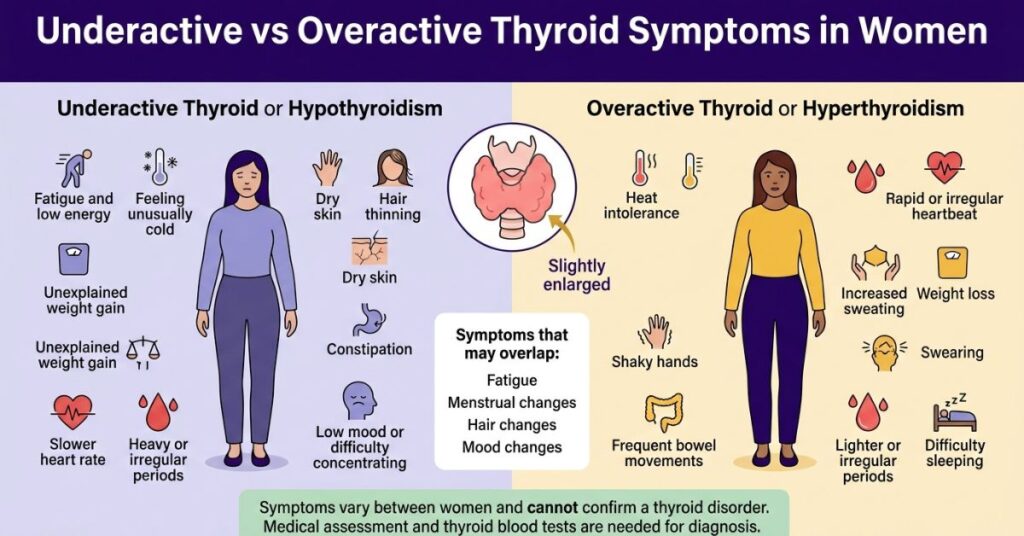
The table compares common patterns. A person may have only a few signs, and mild thyroid dysfunction may cause no obvious symptoms.
| Body change | Hypothyroidism symptoms in women | Hyperthyroidism symptoms in women |
|---|---|---|
| Energy | Fatigue, sluggishness, slower thinking | Fatigue with restlessness, anxiety or poor sleep |
| Weight and appetite | Weight gain, sometimes despite no major diet change | Weight loss despite normal or increased appetite |
| Temperature | Feeling colder than others | Heat intolerance and increased sweating |
| Heart | Slower pulse | Fast or irregular heartbeat, palpitations |
| Digestion | Constipation | More frequent bowel movements |
| Skin and hair | Dry skin; dry or thinning hair | Fine or thinning hair; warm, moist skin |
| Periods and fertility | Heavy or irregular periods; possible fertility problems | Menstrual changes and possible fertility problems |
| Neck | Possible goitre or thyroid swelling | Possible goitre or thyroid swelling |
Tiredness, Weight Change and Hair Loss
Many people notice a cluster rather than one dramatic sign. Thyroid symptoms with weight gain may include tiredness, cold intolerance, constipation and dry skin, but weight gain alone is not a thyroid test. Thyroid symptoms with hair loss can involve diffuse thinning or dry hair. Low iron, stress, recent illness, postpartum change and menopause can look similar. Tell the clinician about hair supplements because biotin may interfere with some thyroid tests.
Periods and Fertility
Thyroid symptoms with irregular periods may occur with too little or too much hormone. Thyroid symptoms and fertility problems need a broader fertility assessment because thyroid disease is only one possible factor.
Neck Swelling or a Lump
Thyroid neck swelling symptoms in women may include a low front-neck swelling, throat pressure, hoarseness, cough or trouble swallowing. A goitre or nodule can occur with normal, low or high thyroid function, so blood tests and ultrasound answer different questions.
How Thyroid Symptoms Change Across a Woman’s Life
Age and reproductive stage change how symptoms are interpreted.
Thyroid Symptoms in Young Women
Thyroid symptoms in young women may be mistaken for study pressure, poor sleep, or anxiety. Persistent fatigue, weight change, tremor, palpitations, cycle disturbance or neck swelling deserve discussion, especially with a family history of thyroid disease.
Thyroid Symptoms in Women Over 40 and After Menopause
Thyroid symptoms in women over 40 can overlap with perimenopause, including sleep, mood, period, temperature and weight changes. Thyroid symptoms in women after menopause may also resemble age-related changes. A focused history and blood testing can help separate them.
Thyroid Symptoms During Pregnancy
Fatigue, nausea, a faster pulse and heat sensitivity may occur in normal pregnancy, making thyroid symptoms during pregnancy harder to recognise. Pregnancy also changes test interpretation. Discuss relevant symptoms or known thyroid disease promptly with the obstetric and medical team; do not change medicine independently.
Postpartum Thyroid Symptoms in Women
Postpartum thyroiditis can occur during the first year after childbirth. An overactive phase may cause irritability, heat intolerance, poor sleep or a fast heartbeat; an underactive phase may bring fatigue, cold intolerance, dry skin or poor concentration. Postpartum thyroid symptoms in women can resemble sleep deprivation or the baby blues, so persistent symptoms deserve prompt attention.
For another pregnancy-related women’s health topic, see piles during pregnancy.
How Are Thyroid Symptoms in Women Evaluated?
Symptoms guide the investigation, but blood tests usually establish whether thyroid function is low, high or currently normal. Imaging is not required for every patient.
A sensible evaluation usually follows these steps:
- Describe the pattern. Note onset and changes in weight, periods, pregnancy status, bowels, sleep, temperature tolerance and heart rate.
- Review history. Mention previous thyroid disease or neck treatment, autoimmune illness and family history.
- List medicines and supplements. Include thyroid medicine, iodine or kelp products and biotin. Ask how to prepare; never stop prescribed medicine independently.
- Have a focused examination. The clinician may check the neck, pulse, skin, reflexes and tremor.
- Choose targeted tests. TSH commonly comes first. Free T4, T3 or thyroid antibodies may be added for a specific reason.
- Use imaging selectively. Ultrasound is useful for a goitre or nodule, not routine fatigue without a neck finding.
The NIDDK thyroid testing guide notes that clinicians commonly start with blood tests and use imaging selectively. TSH results must still be interpreted in clinical context.
Can Tests Be Normal While You Still Feel Unwell?
Yes. Normal results do not make symptoms less real. Properly interpreted TSH and free T4 make common primary thyroid dysfunction less likely, so the next step is often a review for other causes rather than repeated testing or medicine without a diagnosis. Pregnancy, illness, medicines and laboratory interference can affect results; if the pattern does not fit, the clinician can review timing and context.
When to See a Doctor for Thyroid Symptoms in Women
Arrange an appointment if symptoms persist, cluster, or disrupt daily life. Seek earlier assessment for new neck swelling, ongoing palpitations, unexplained weight loss, marked weakness, fertility concerns, or symptoms during pregnancy or after childbirth. Difficulty breathing, wheezing with neck swelling, severe chest pain, fainting, or confusion requires urgent care.
Thyroid Symptoms in Women Bangladesh: Planning a Dhaka Evaluation
For women searching for thyroid symptoms in Bangladesh, the practical first step is a qualified assessment rather than a pre-selected package. In Dhaka, bring previous reports, medicines, supplements, pregnancy or postpartum details, and a symptom timeline to support focused testing.
There is no single fixed cost in Dhaka. The total depends on consultation, selected blood tests, and ultrasound only when indicated. Laboratory and follow-up fees vary, so ask for current itemised prices; a larger panel is not automatically better.
What Is the Best Next Step and What Treatment May Involve?
The best option for thyroid symptoms in women is diagnosis-led care. Do not start thyroid hormone, antithyroid medicine, high-dose iodine or “thyroid support” supplements from symptoms or online advice.
Treatment depends on cause and severity. Confirmed hypothyroidism commonly requires prescribed hormone replacement and follow-up tests. Hyperthyroidism may need medicine, radioactive iodine, or surgery under specialist guidance. A goitre or nodule with normal function needs a different plan, and pregnancy requires tailored monitoring. Proper evaluation finds the likely cause while avoiding unnecessary treatment.
Why Consult Dr. Reshma Aziz in Dhaka?
Dr. Reshma Aziz is an MBBS physician and consultant in surgery and family practice. Her CV documents medical practice since 1996, diagnostic-test interpretation, and thyroid-related family care. She can review the clinical picture, select appropriate investigations, and coordinate endocrinology referral when needed. She is not presented as an endocrinologist.
For professional transparency, view Dr. Reshma Aziz’s BMDC registration A-24611.
Her website also provides patient education on breast cancer symptoms, breast lump evaluation and choosing a female proctologist in Dhaka.
Frequently Asked Questions
Why am I so tired all the time? Could it be my thyroid?
Possibly, especially with cold intolerance, weight change, constipation, hair thinning, period change or neck swelling. Anemia, poor sleep, stress and other conditions can feel similar. Thyroid symptoms in women need clinical context and appropriate tests.
Hair loss and thinning eyebrows: is my thyroid to blame?
An underactive thyroid can cause dry, thinning hair, but iron deficiency, postpartum shedding, menopause, illness and stress can look similar. Mention biotin-containing supplements before testing.
Can I have normal thyroid levels but still feel awful?
Yes. Normal results do not mean symptoms are imagined; another explanation may be more likely. Ask for a structured review of other relevant causes.
Do thyroid symptoms always cause weight gain?
No. Hypothyroidism may cause weight gain, while hyperthyroidism more often causes weight loss. Weight change alone cannot diagnose thyroid disease.
Which test is usually checked first?
TSH commonly comes first. Free T4 is often interpreted with it; T3 or antibodies help in selected cases. Ultrasound checks structure rather than replacing blood tests.
Can thyroid problems affect periods and fertility?
Yes. Underactive and overactive thyroid disorders can disturb cycles and fertility, but other conditions can do the same.
When should a neck swelling be checked?
Any new or enlarging front-neck swelling needs assessment. Difficulty breathing or wheezing requires urgent care; hoarseness or trouble swallowing also needs timely review.
Key Takeaway and Next Step
Thyroid symptoms in women are common but not specific. Look for a persistent pattern, not one isolated sign, and use testing to confirm the cause. If fatigue, weight or temperature change, hair loss, menstrual disturbance, palpitations, pregnancy-related symptoms, or neck swelling concerns you, arrange a clinical assessment in Dhaka. Bring your symptom timeline, medicine list, and previous reports so the consultation can begin with clear evidence and a focused plan.