
Seeing blood in the toilet can be frightening, but it does not automatically mean cancer. Piles, anal fissures, constipation, infections, and inflammation are common possible causes. However, bleeding can occasionally signal a more serious digestive or colorectal condition. The safest approach is to identify where the blood is coming from instead of treating it yourself.
If you are looking for blood in stool treatment in Dhaka, a doctor may review the colour and amount of blood, accompanying symptoms, medicines and bowel habits before recommending an examination or tests. This guide explains the possible causes, warning signs, diagnostic process and available treatment options.
Blood in stool should be medically evaluated when it is recurrent, unexplained, mixed throughout the stool or accompanied by abdominal pain, bowel changes, weight loss, weakness or fever. Heavy or continuous bleeding requires emergency care.

What Does Blood in Stool Mean?
Blood in stool means bleeding has occurred somewhere in the digestive tract. It may come from the anus, rectum, colon or, in some cases, a higher part of the digestive system.
It can appear as:
- Bright red streaks on the stool
- Blood on toilet paper
- Pink or red toilet water
- Dark red blood mixed with stool
- Black, sticky or tar-like stool
- Blood or mucus with diarrhoea
- Hidden blood found through a laboratory stool test
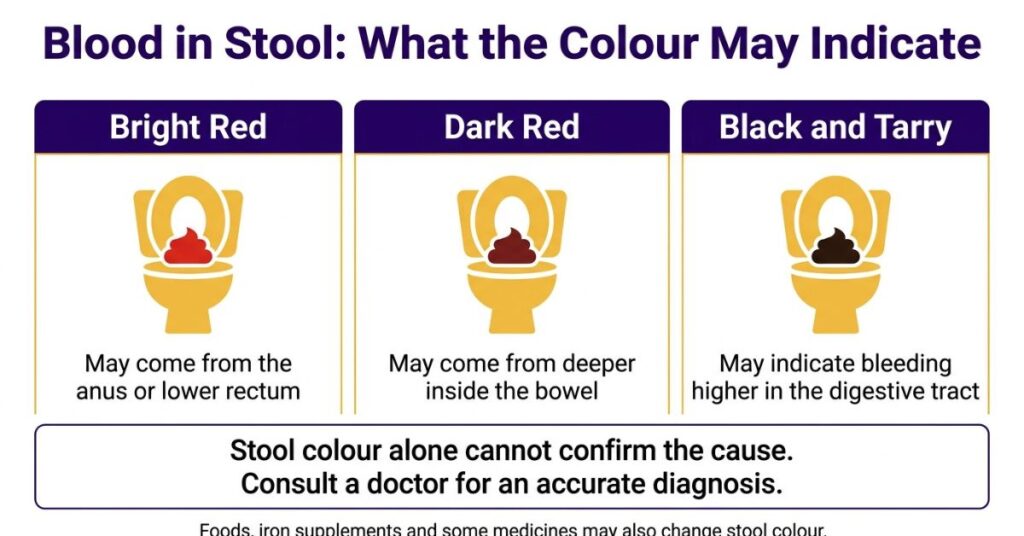
A small streak after passing a hard stool may result from local irritation. Dark or black stool can sometimes indicate bleeding higher in the digestive tract, although foods, iron supplements and certain medicines can also affect stool colour.
Because appearance alone cannot provide a diagnosis, appropriate blood in stool treatment in Dhaka begins with a clinical assessment.
Bright Red Blood in Stool
Bright red blood in stool often comes from the lower rectum or anus. It may be associated with piles, an anal fissure or another lower bowel condition.
The pattern offers useful clues. For example, blood on the toilet paper is different from blood mixed throughout the stool. Nevertheless, patients should not assume every episode of bright bleeding is caused by piles.
What Can Dark Blood in Stool Indicate?
Possible causes of dark blood in stool include bleeding from deeper inside the colon or another part of the gastrointestinal tract. Black, tar-like stool may be associated with bleeding higher in the digestive system.
Dark red or black stool deserves prompt medical assessment, particularly when accompanied by dizziness, weakness, shortness of breath or abdominal pain.
What Causes Blood in Stool?
There is no single treatment for rectal bleeding because treatment depends on its source. Common blood in stool causes include the following.
| Possible cause | Common pattern or accompanying symptoms |
|---|---|
| Piles or haemorrhoids | Bright red blood after a bowel movement, itching, swelling or discomfort |
| Anal fissure | Sharp pain during or after passing stool, often following constipation |
| Constipation | Hard stool, straining and small amounts of fresh blood |
| Gastrointestinal infection | Bloody diarrhoea, cramps, fever, nausea or recent unsafe food exposure |
| Inflammatory bowel disease | Recurrent diarrhoea, blood or mucus, abdominal cramps and urgency |
| Diverticular disease | Painless bleeding or lower abdominal discomfort, especially in older adults |
| Colorectal polyps | May cause visible or hidden bleeding without obvious pain |
| Colorectal cancer | Persistent bleeding, bowel changes, unexplained weight loss, fatigue or anaemia |
| Upper digestive bleeding | Dark, sticky or tar-like stool, sometimes with weakness or vomiting |
This table is for general education and cannot determine the cause in an individual patient.
Blood in Stool with Constipation
Blood in stool with constipation may occur when a hard stool damages the delicate lining of the anus or aggravates piles. An anal fissure often produces fresh blood and a cutting or burning pain during bowel movements.
Helpful measures may include drinking enough water, gradually increasing dietary fibre and avoiding prolonged straining. However, recurrent bleeding still requires assessment. Laxatives or other medicines should be selected according to a clinician’s advice, especially if abdominal swelling, vomiting or severe pain is present.
For a detailed comparison of two common anorectal conditions, read Anal Fissure vs Piles.
Blood in Stool with Stomach Pain
Blood in stool with stomach pain can occur with infection, bowel inflammation, diverticular disease or other digestive conditions. The urgency depends on the amount of blood and associated symptoms.
Seek prompt care if the pain is severe or persistent, or if there is:
- Fever
- Repeated vomiting
- Abdominal swelling
- Bloody diarrhoea
- Weakness or dizziness
- Inability to pass stool or gas
- Unexplained weight loss
Blood in Stool Without Pain
Blood in stool without pain should not be ignored. Internal piles can bleed without causing much discomfort, but polyps, diverticular disease and some colorectal conditions may also cause painless bleeding.
An absence of pain does not prove the condition is harmless. Recurrent painless bleeding is a good reason to consult a blood in stool doctor, particularly if the blood is mixed into the stool or bowel habits have changed.
Blood in Stool: When Should I See a Doctor?
Arrange a medical consultation when bleeding:
- Happens more than once
- Continues or returns over several days
- Appears mixed throughout the stool
- Occurs without an obvious reason
- Is accompanied by constipation or diarrhoea that persists
- Occurs with abdominal pain or a lump
- Is associated with unusual tiredness or shortness of breath
- Appears together with unexplained weight loss
- Starts while taking blood thinners or medicines that increase bleeding risk
- Occurs in a child or older adult
A doctor for blood in stool in Dhaka can determine whether a local anorectal examination is enough or whether further investigation is appropriate.
See a doctor if the bleeding is recurrent, unexplained or accompanied by pain, bowel changes, weight loss, fever or fatigue. Go to the nearest emergency department for heavy, continuous bleeding, large clots, fainting or signs of shock.
When Is Blood in Stool an Emergency?
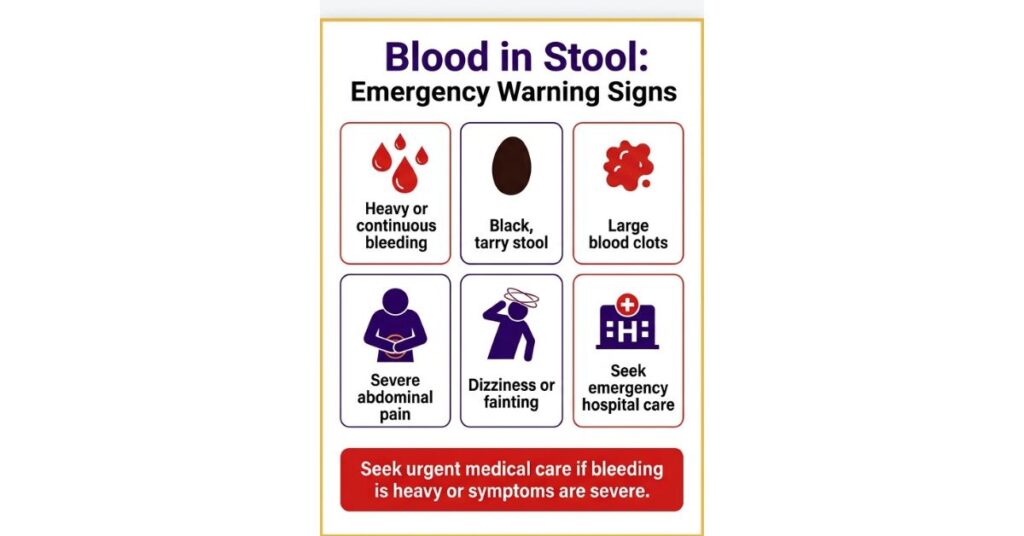
Go to the nearest hospital emergency department immediately if:
- Bleeding is heavy or does not stop
- The toilet water becomes red
- You pass large blood clots
- Stool is black and tar-like with weakness or dizziness
- You faint, feel confused or become unusually drowsy
- Your skin becomes pale, cold or sweaty
- You have a rapid heartbeat or breathing difficulty
- Bleeding occurs with severe abdominal pain
- You vomit blood or material resembling coffee grounds
The National Institute of Diabetes and Digestive and Kidney Diseases identifies fainting, confusion, rapid heartbeat, pale skin and cold or sweaty hands as possible signs of severe gastrointestinal bleeding and shock.
Is Blood in Stool Always Serious?
No. Blood in stool is not always caused by a serious disease. Piles and anal fissures are frequent causes of fresh rectal bleeding. Even so, a symptom can have several possible explanations, and visual inspection at home cannot reliably distinguish between them.
The question many patients ask is: blood in stool piles or cancer? The honest answer is that either may cause bleeding, but there are also several other possibilities. Bleeding from piles is often bright red and may appear after a bowel movement. Colorectal cancer may cause blood that is bright or dark, persistent changes in bowel habits, fatigue, anaemia or weight loss—but it may not produce every symptom.
The National Cancer Institute lists blood in the stool and changes in bowel habits among possible signs of colon cancer. These signs can also result from non-cancerous conditions, so examination and appropriate testing are essential.
Early assessment is preferable to prolonged worry or repeated self-treatment.
How Is Blood in Stool Diagnosed in Dhaka?
A specialist does not select blood in stool treatment in Dhaka from one symptom alone. The process usually begins with a private discussion covering:
- When the bleeding started
- Whether it is bright red, dark red or black
- Whether the blood coats the stool or is mixed into it
- The estimated amount and frequency
- Pain, itching, swelling or mucus
- Constipation, diarrhoea or changes in stool shape
- Abdominal pain, fever, tiredness or weight loss
- Family history of polyps or colorectal cancer
- Current medicines, including aspirin, NSAIDs and blood thinners
- Previous bowel or anorectal conditions
What Examinations or Tests May Be Needed?
Depending on the patient’s symptoms, age and risk factors, the doctor may recommend:
- Physical and abdominal examination
This checks for tenderness, swelling, masses and signs of anaemia or dehydration. - Anorectal examination
A visual or digital rectal examination may identify piles, fissures or other local problems. - Anoscopy or proctoscopy
These examinations allow the lower anal canal or rectum to be viewed more clearly. - Blood tests
A complete blood count may help detect anaemia or evidence of significant blood loss. - Stool tests
These may check for infection, inflammation or hidden blood. - Colonoscopy or other endoscopic assessment
A doctor may recommend this when bleeding is unexplained, recurrent or associated with concerning symptoms or risk factors.
The NIDDK diagnostic guidance explains that medical history, physical examination, laboratory tests, endoscopy and imaging may be used to locate gastrointestinal bleeding.
What Is the Best Blood in Stool Treatment in Dhaka?
The best treatment is the one directed at the confirmed cause. There is no safe universal medicine for every case.
Cause-Based Treatment Options
For constipation or a minor fissure:
Treatment may include hydration, dietary fibre, stool-softening measures, local medicines and bowel-habit changes. Persistent fissures may require additional procedures.
For piles:
Management may range from fibre and medicines to office procedures or surgery, depending on the grade, bleeding and other symptoms. Learn more about piles treatment in Bangladesh and the possible laser piles surgery cost in Bangladesh.
For infection:
Treatment depends on the organism and severity. Antibiotics are not appropriate for every case and should not be taken without medical advice.
For inflammatory bowel disease:
A clinician may use anti-inflammatory, immune-modifying or other specialist medicines. Monitoring is often required.
For polyps:
A polyp may be removed during colonoscopy and sent for laboratory analysis.
For significant gastrointestinal bleeding:
Endoscopic treatment, angiography, medicines, hospital monitoring or surgery may be needed. According to the NIDDK treatment overview, some bleeding can be diagnosed and treated during endoscopy, while severe or persistent cases may require other interventions.
Pros and Cons of Self-Treatment
| Approach | Possible benefit | Main limitation |
|---|---|---|
| Increasing water and fibre | May help constipation-related straining | Does not diagnose the bleeding source |
| Using an over-the-counter piles cream | May temporarily reduce local discomfort | Can delay diagnosis if the cause is not piles |
| Taking painkillers | May reduce pain temporarily | Some NSAIDs can increase gastrointestinal bleeding risk |
| Seeing a colorectal specialist | Allows examination and cause-based care | May require tests depending on symptoms |
A clinical evaluation is the best option for recurrent or unexplained blood in stool. Treatment should follow diagnosis rather than an assumption that the bleeding is caused by piles.
Choosing a Blood in Stool Specialist in Mohammadpur
Patients often delay care because they feel embarrassed about discussing bowel symptoms. A professional consultation should be confidential, respectful and focused on identifying the cause with the least necessary discomfort.
Dr. Reshma Aziz provides care in breast, colorectal and family medicine and has over 20 years of stated clinical experience across surgical and family-practice settings. Her professional background includes colorectal surgery training, a postgraduate diploma in colorectal surgery, colonoscopy experience and LASER training in proctology.
Dr. Reshma Aziz is registered with the Bangladesh Medical & Dental Council under registration number A-24611. Her registration can be checked through the official BMDC credential record.
Patients seeking a female doctor for blood in stool in Dhaka may find it easier to discuss sensitive symptoms with a female physician. You can also learn more from Dr. Reshma Aziz’s professional profile.
A blood in stool specialist in Mohammadpur may recommend an examination, basic tests or referral for colonoscopy depending on the bleeding pattern and accompanying symptoms.
What Should You Do Before the Appointment?
Prepare a short record of your symptoms before visiting a colorectal surgeon for blood in stool Dhaka patients can consult.
Note the following:
- Date the bleeding started
- Colour and approximate amount
- Whether the blood was on paper, coating the stool or mixed inside it
- Stool consistency and frequency
- Pain, itching, swelling, fever or mucus
- Recent constipation or diarrhoea
- Unexplained weight or appetite changes
- Medicines and supplements
- Family history of bowel disease or colorectal cancer
Do not stop a prescribed blood thinner unless the prescribing doctor tells you to do so. If possible, bring recent test reports and a complete medication list.
Frequently Asked Questions About Blood in Stool
1. Blood in stool: when should I see a doctor?
See a doctor when the bleeding returns, persists, is mixed with stool or occurs with pain, bowel changes, fever, weight loss or fatigue. Seek emergency help for continuous or heavy bleeding, large clots, fainting or black tar-like stool with weakness.
2. What causes blood in stool?
Common causes include piles, anal fissures, constipation, gastrointestinal infection, bowel inflammation and diverticular disease. Polyps, colorectal cancer and bleeding higher in the digestive tract are other possibilities.
3. Is blood in stool always serious?
No. Minor conditions commonly cause rectal bleeding, but the cause cannot be confirmed from appearance alone. Recurrent, unexplained or painless bleeding should be medically evaluated.
4. Why is there blood in stool after a bowel movement?
Blood in stool after bowel movement may result from a fissure, piles or irritation caused by hard stool and straining. If it happens repeatedly or the blood is mixed into the stool, arrange an examination.
5. Can piles cause bright red blood?
Yes. Piles can produce bright red blood on toilet paper, on the surface of stool or in the toilet. Other conditions can create a similar pattern, so repeated bleeding should not automatically be labelled as piles.
6. How much does blood in stool treatment cost in Dhaka?
The cost depends on the consultation, required tests and confirmed condition. A simple anorectal examination costs less than care involving laboratory tests, colonoscopy, endoscopic treatment or surgery. An accurate estimate can be given only after initial assessment.
7. Which doctor should I consult for blood in stool?
A general physician can perform the initial assessment. A colorectal surgeon or proctologist is particularly relevant when bleeding appears to come from the anus, rectum or colon, or when piles, fissures and other colorectal conditions are suspected.
Key Takeaways
- Blood in stool is a symptom, not a diagnosis.
- Bright red blood often comes from the lower bowel or anus, but colour alone cannot identify the cause.
- Piles and fissures are common explanations, although infection, inflammation, polyps and cancer are also possible.
- Recurrent bleeding deserves medical evaluation even when there is no pain.
- Heavy bleeding, large clots, fainting, or signs of shock require emergency care.
- Effective blood in stool treatment in Dhaka depends on finding and treating the underlying condition.
Get a Confidential Colorectal Consultation in Dhaka
Do not allow embarrassment or an assumption about piles to delay proper assessment. If bleeding has returned, changed, or appeared with other symptoms, consult an appropriately qualified doctor.
To discuss blood in stool treatment in Dhaka with Dr. Reshma Aziz, contact the clinic and request an appointment. Seek immediate hospital care instead if the bleeding is heavy, continuous, or accompanied by fainting, severe weakness, or intense abdominal pain.